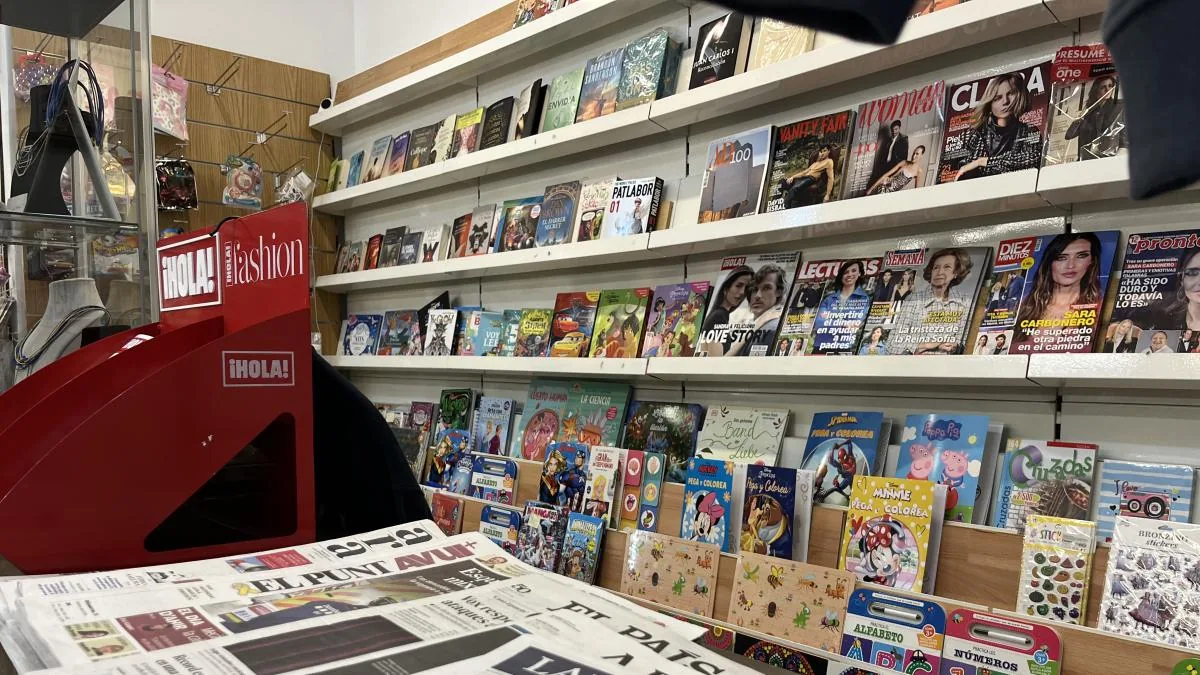
The heat of July in Valencia has not been just any heat for some years now. It is a heat that clings to the skin like a second shirt, that makes the asphalt shine like a distorted mirror, and that keeps the metal shutters of shops down until well into the afternoon. Pedro knew this well. He had spent forty-five years watching how summer devoured the streets of Patraix, turning the neighborhood into a concrete desert where only the boldest or the most desperate dared to walk in mid-morning, at noon, or early afternoon. Some days, not even the night gave respite.
Read more Things that can only be done in August on the Costa Blanca
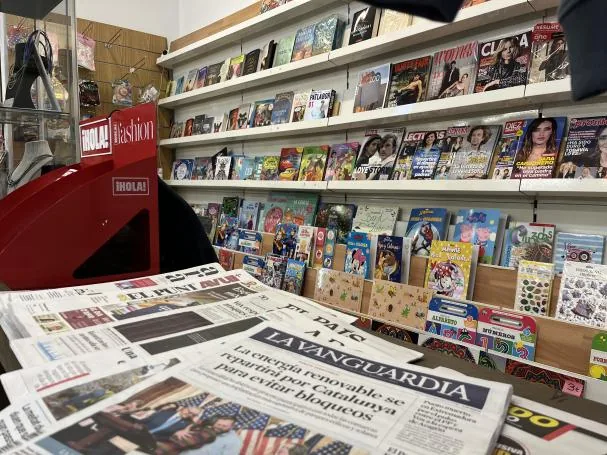
The kiosk had been his life. He had inherited it from his father, just as his father had inherited it from his, in a time when newspapers sold like hotcakes and on Sundays you had to work double shifts to serve the customers. Pedro remembered those Sunday mornings with a mix of nostalgia and amazement: the lines of people waiting for their copy of Las Provincias or Levante, children clutching their pesetas eagerly to buy the latest Mortadelo and Filemón comic, retirees arguing about football while leafing through sports chronicles.
Now all that was dust and memory.
The kiosk was practically empty. The metal shelves, once overflowing with magazines and newspapers, showed their rusted insides. Some back issues were piled on the floor, awaiting their final fate in the recycling bin. Bags of chips and sweets, the few products that still sold, occupied a ridiculous space compared to what the business had been in its golden years.
Pedro wiped the sweat from his forehead with the back of his hand. He was sixty-seven years old, with gray and sparse hair, and hands that had handled thousands of newspapers throughout his life. Hands that now trembled slightly when he lifted a box full of unsold old calendars.
—What a shitty business —he murmured to himself, although deep down he knew it wasn’t the business’s fault, but the times.
He had put up the “For Transfer” sign three months ago, but had only received two calls. The first was from a young entrepreneur who wanted to open an organic products store and who, upon hearing the rent price, hung up without saying goodbye. The second was from a real estate agency representing foreign investors. They were interested. Very interested. They talked about renovations, tourist apartments, profitability. Pedro didn’t understand much about those things, but enough to know that his father’s kiosk, the kiosk that had been the center of his universe for almost half a century, would soon cease to exist.
The kiosk’s air conditioning was old and noisy, but at least it worked. Pedro had installed it fifteen years ago, when things were still going well, and it was one of the few luxuries he allowed himself. At home, in the apartment on Carcagente Street where he had lived all his life with his wife, there was no air conditioning. They didn’t need it, she said. And now that she was gone, he saw no reason to install it.
He had been widowed five years ago. The cancer had been fast but cruel. Like a thief who enters your house and takes the most valuable without you being able to do anything to stop it. His son, Javier, had moved to Germany long before, pushed by a scholarship that later became a job, then a girlfriend, and then a life that did not include his father. They barely spoke twice a year: at Christmas, a brief and forced call, and on Pedro’s birthday, which Javier always remembered thanks to his phone alarms.
Pedro couldn’t blame him. Life was like that. People left, things changed, and one was left alone with their memories. He had known this since he was a child when his mother died and melancholy settled strongly in his father.
That afternoon, while emptying one of the last boxes from the storage room, Pedro felt the heat starting to take its toll even with the air conditioning. He sat on the wooden stool he had been using since his father’s time and closed his eyes for a moment. The hum of the old air conditioning unit was almost hypnotic.
It was then that he heard the jingle.
It was a sound he knew well: the kiosk door opening. The small bell his father had hung decades ago and that he had never had the heart to remove. Pedro opened his eyes and stood up with an effort his knees protested.
—Good afternoon! —he said, putting on the professional smile he had practiced for forty-five years.
But the smile froze on his face when he saw the visitor.
It was a boy. He couldn’t have been more than ten years old, maybe nine. He wore short tergal pants with suspenders, a short-sleeved blue and white striped shirt, and moccasins that reminded Pedro of the ones he wore as a child. His brown hair was cut in a bowl style, like the Beatles, with bangs falling over his forehead. He had very lively hazel eyes that shone with their own light.
—Hello —said the boy, looking around curiously—. Do you have Captain Trueno?
Pedro blinked.
—What did you say?
—Captain Trueno —the boy repeated, as if it were the most natural thing in the world—. My father told me they used to sell them here.
—But that… —Pedro ran his hand through his hair—. Those comics aren’t made anymore. They haven’t been published for decades.
The boy nodded seriously, as if he had expected that answer.
—And do you have Pulgarcito? —he then asked, with the same naturalness.
Pedro felt a chill that had nothing to do with the air conditioning.
—Look, kid, I don’t know what joke this is, but Pulgarcito disappeared a long time ago too. Who sent you? Is this some kind of…?
He stopped. The boy was scanning the kiosk with his gaze, and there was something in the way he moved, in how his fingers brushed the stacked magazines and newspapers, that seemed vaguely familiar. Too familiar.
The boy approached a pile of back issues and began leafing through them with a delicacy uncharacteristic of his age.
—Hey —said Pedro, noticing his voice sounded higher than usual—, where is your mother? Did you come with someone?
The boy looked up from the newspapers and looked at him with those hazel eyes that seemed to see everything.
—I don’t have a mother —he said simply.
—What do you mean you don’t have a mother? —Pedro approached the boy, feeling his heart beating harder than it should—. We all have a mother.
—I don’t —the boy insisted, and went back to focusing on the newspapers.
Pedro stepped out of the kiosk and looked both ways down the street. It was a desert. The asphalt vibrated with the heat, and there wasn’t a soul in sight in any direction. The shops were closed, the shutters down, and even the cats had hidden somewhere cool. There was no adult looking for a child. No suspicious car. Nothing.
He returned inside and found the boy standing by the counter, leafing through a back issue of El País.
—Listen to me —said Pedro, trying to stay calm—. You have to leave. I have a lot of work and I can’t…
—Pedro —said the boy, and the way he pronounced his name made Pedro freeze—. Will you come with me to read comics?
—How do you know my name? —he asked, feeling his voice tremble—. I’ve never seen you before in my life, how do you know what my name is?
The boy smiled. It was a warm, sincere smile that lit up his whole face.
—Come with me —he said, and started walking toward the back of the kiosk, toward the storage room where Pedro had been working—. Let’s look for old newspapers and comics.
—Hey! —Pedro took a few steps behind him—. Stop! You can’t go in there! There’s nothing there that interests you!
But the boy had already crossed the storage room door. Pedro followed him, feeling a mix of anger and fear he couldn’t control.
—Look, I have to ask you to leave —he said, and his voice sounded firmer than he expected—. This is private property and I…
The boy had stopped in the middle of the storage room, next to a pile of boxes Pedro had stacked that very morning. He looked at him intently.
—Deep down —he said, pointing with his arm toward the back wall, where boxes and junk from decades accumulated—, there’s a suitcase. It’s your father’s suitcase. The one he used when he went on vacation with your mother.
Pedro felt the ground move beneath his feet.
—There’s no suitcase there —he said, but his voice sounded uncertain, as if he himself didn’t believe what he was saying.
—There is —the boy insisted—. It has always been there. Your father left it there when you were my age. He forgot it, then went on vacation, and never came back for it. It has always been there, waiting.
—How do you know that? —asked Pedro, feeling his knees weaken—. I’ve been here all my life, I’ve emptied this storage room dozens of times, and I’ve never seen any suitcase.
—Because you haven’t looked properly —said the boy with infinite patience—. Come. Come and you’ll see it.
And without waiting for an answer, he ventured into the chaos of the storage room, moving among the boxes with a skill that didn’t seem possible for a child his age.
Pedro stood still for a moment, breathing heavily. The scene was absurd. This boy appeared out of nowhere, those eyes that seemed to have known him forever, that suitcase that according to him was there waiting. It had to be a joke. It had to be some kind of… what? A dream? A hallucination caused by the heat?
But the boy was there, alive, moving among his things, touching the boxes with his small hands, and Pedro felt something inside him, something that had been asleep for a long time, begin to awaken.
He approached the boy with slow, almost fearful steps.
—Look —said the boy, pointing to a dark corner behind a shelf Pedro hadn’t moved in years—. There it is.
Pedro knelt down, feeling a crack in his knees, and moved the boxes aside with trembling hands. And then he saw it.
It was an old, dusty brown leather suitcase, with two leather belts that closed it. Pedro recognized it instantly. It was his father’s suitcase. The same one he had seen in old photographs, the one his father took when they went on vacation to the beach in the sixties. The same one that disappeared without explanation one summer, and that his mother always said had been lost on the train.
—It can’t be —whispered Pedro, feeling tears fill his eyes—. How…?
The boy sat on the floor, crossing his legs, and looked at him with a serene smile.
—I told you —he said simply.
Pedro took a handkerchief from his pocket and gently wiped the dust off the suitcase with a tenderness he didn’t know he still had. The belts were worn, almost broken, but still held firm. He unbuckled them carefully, as if handling a sacred object, and lifted the lid.
The inside was full of treasures.
Dozens of old comics were neatly stacked: Captain Trueno, Pulgarcito, Roberto Alcázar y Pedrín, El Guerrero del Antifaz. All in perfect condition, as if they had been carefully stored just a few days ago and not decades. Alongside them, several cardboard folders contained newspaper clippings cut with surgical precision. Pedro leafed through them with trembling fingers and discovered they were sports chronicles of Levante UD, his father’s team, with goals and plays from the most important matches of the sixties and seventies.
—This… —Pedro couldn’t speak—. This belonged to my father. He collected this. He always said he would keep it for when he had a son who shared his passion for football. But I was never interested, I preferred…
—Comics —said the boy, and his voice echoed Pedro’s.
Pedro looked up and saw the boy sitting on one of the two old chairs by the storage room table. Chairs that had been there for decades, and that Pedro barely remembered using. The boy held a copy of Roberto Alcázar y Pedrín, leafing through it with a mix of concentration and joy that felt deeply familiar.
—Sit down —said the boy, pointing to the empty chair—. Come, let’s read together.
Pedro obeyed like an automaton. He sat in the chair, feeling the old, worn wood beneath his weight, and picked up the first comic he found in the suitcase. It was an issue of Captain Trueno, the same one he had read dozens of times in his childhood, the one his father bought him every Sunday before going to mass.
—This was my favorite —said Pedro, and his voice sounded strange, as if it belonged to another time—. I loved the adventures of the Captain and his friends. I wanted to be like them, travel the world, live emotions…
—I know —said the boy, without looking up from the comic.
Pedro looked at him. In the dim light of the storage room, illuminated only by the faint light coming through the windows facing the light well, the boy seemed almost unreal. Like an old photograph that had come to life.
—What’s your name? —asked Pedro, and the question came out as a whisper.
The boy looked up. His hazel eyes shone with an ancient, millenary light, and at the same time incredibly young.
—Pedro —he said, and his smile was that of a child sharing a wonderful secret—. Haven’t you really met me yet?
It was then that the man sensed it, and he brought his hand to the boy’s bangs and pushed them aside over his right eyebrow. A scar, in the same place and shape as the one he got when he fell off his bike. A scar that time and wrinkles had erased from his face.
Time stopped.
Pedro felt the air condense around him, the walls of the storage room vanish, the summer heat and the hum of the air conditioning and the smell of dust and old paper merge into a single sensation that pierced his chest like an arrow.
And then he understood.
He remembered the first time his father bought him a comic. He was five years old, maybe six. He had entered the kiosk and been mesmerized by the amount of colors, stories, entire worlds waiting to be discovered. His father had smiled and said: “Choose one, son. Whatever you want.” And he had chosen Captain Trueno, sat on the floor, and read the whole story without getting up once.
He remembered Sundays of football with his father, watching the game at the corner bar, sharing an orange soda and discussing the plays. He remembered summer afternoons at the beach, family vacations, birthdays, laughter.
He remembered his wife, whom he had loved with all his soul, and the day he met her in the neighborhood square, and the open-air summer movie nights, and Sunday mornings with the newspaper and coffee.
He remembered his son, so small, so his, who had gone so far away, but who was still his son, his blood, his life.
He remembered that he had been happy. That he had been much more than a retired kiosk owner waiting for death in an empty apartment.
And so they spent the afternoon. The sixty-seven-year-old man and the ten-year-old boy, sitting on two old chairs in the storage room of a Patraix kiosk, reading comics from the sixties and sharing stories that no one else in the world knew.
And so they spent the afternoon. The sixty-seven-year-old man and the ten-year-old boy, sitting on two old chairs in the storage room of a Patraix kiosk, reading comics from the sixties
When the sun began to set, dyeing the sky orange and pink, little Pedro closed the last comic and stood up.
—I have to go —he said.
The older man felt a lump in his throat.
—Will you come back?
Pedro wanted to stop him, wanted to shout at him not to leave, that he needed more time, that he couldn’t say goodbye like this. But when he opened his mouth, no sound came out.
And when he blinked, the boy was gone.
Pedro left the storage room and looked at the “For Transfer” sign still hanging on the door. He locked up and began walking down Gaspar Aguilar Street toward his home. Just then it began to rain.
Read more Alicante plans a greenway connected to the central park after removing the coastal tracks