It increasingly seems evident that we have wasted time and energy asking the wrong question. Rather than questioning when Artificial Intelligence will surpass human knowledge, it seems more appropriate to place the question on the human part of the statement. Reformulated, it would be something like: “When will humanity surrender to the efficiency, comfort, and fascination generated by AI and lower its levels of intellectual demand and ambition to a clearly inferior plane compared to artificial reasoning?”
Read more Gianni Infantino, defender of the faith?
Because it is likely that we have already reached that point. Why bother writing better, understanding complex reality, memorizing, reasoning, training, or making decisions if there is an app that already does it for us instantly and with an unbeatable facade of clairvoyance? This is not a hypothesis. It is happening and quite widely.
‘Human made’ cultural products will be considered premium
In the cultural field, the specter of indiscriminate use of AI looms over books, art, music, or movies. Only theater and dance, essential arts, are spared. The alarm has spread especially in the publishing field. Publishers admit that their organizations are not prepared to detect and contain a possible tsunami of manuscripts created with artificial intelligence.
Some go further and pose an uncomfortable question: What if the reader did not care whether the book was written with more or less AI involvement? What sense would there be then in trying so hard to contain it?
In that “not caring” lies the crux of the matter. Because, at some point, the market itself will clarify how many consumers find the algorithmic origin of the book or record in their hands irrelevant. And, in turn, how many value the human origin of the proposal.
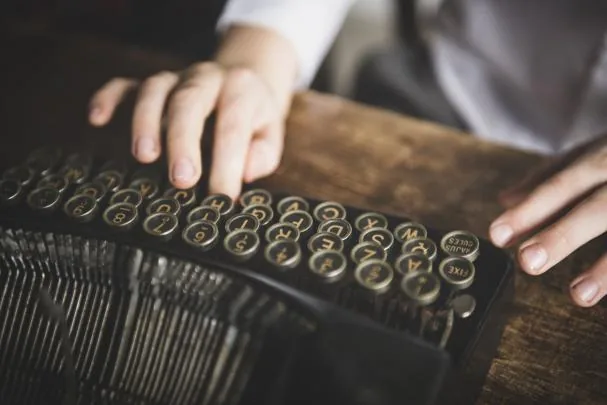
It is not far-fetched to think that this second group will have to pay more for culture. AI lowers prices, simplifies processes, and allows effective and massive distribution. In contrast, the imperfect—and therefore authentic—contribution of people will always entail an additional cost compared to algorithmic competition, which inevitably must be reflected in the final price. Human intervention will turn the product into a premium one, a luxury that will require a greater outlay.
Barcelona could take a step forward and become a laboratory for AI and culture
Assuming there will be an audience willing to pay more for this authenticity, young researchers from the University of Cambridge have just published a study (more of a position statement) suggesting a methodology to make the most of what they consider an opportunity.
Read more Sánchez’s challenge to the EU
Erin McGurk and David Khachaturov argue that it should not be limited to detecting and publicizing that a product is made without a decisive AI contribution, but that an infrastructure should be created to establish fair rules of the game and help obtain the greatest possible economic benefit from human authorship, in the style, if we may allow the comparison, of the role played by designations of origin in the agricultural sector. With two clarifications: the entire creative process must be certified (not just the result) and mechanisms must be created to verify that human authenticity.
The doubt
Expanded human intelligence
Any generative AI language model would disagree if asked about the appropriateness of the term human made, since they too have been designed and developed by human beings. They have allies. The prestigious philosopher from the University of Sussex Andy Clark, who has lectured at the CCCB, argues that we should remind ourselves that “it is in our basic nature to build hybrid thinking systems that fluidly incorporate non-biological resources.”
Everything is yet to be done… or to be allowed to happen. But this changing process not only involves individuals and corporations. Cities can also play a role by becoming laboratories to experiment with those infrastructures of human cultural resistance.
Barcelona, why not, could take a step forward by pooling the adaptation work to the new AI reality already being developed by different cultural sectors. Creators, companies, festivals, cultural, scientific, technological, and social institutions could join efforts to develop a verifiable model of interaction between humans and AI that can be exported to other realities.
A transparent and fair model that goes far beyond stamping a label with the expression human made .
Read more An explosion in a Moscow restaurant leaves 3 dead and 21 injured