








The instructions given to school principals regarding the exclusion of students in the PISA 2025 test were not clear enough, which sparked the first flame of a fire that has burned the statistical validity of Catalonia’s results in the report that the OECD will present on September 8.
Nevertheless, the principals’ error could have been corrected weeks before the test was conducted because the Ministry of Education and the Generalitat had the information about the excess exempt students, but no one responsible warned of the fire in time, even though the company contracted for data analysis warned of the smoke. The result is known: the OECD has deemed inadmissible 23.2% of the exempt students, an “exceptionally high” proportion over the 5% maximum limit. And the results obtained by Catalonia are neither representative nor comparable with those of other economies or previous editions.
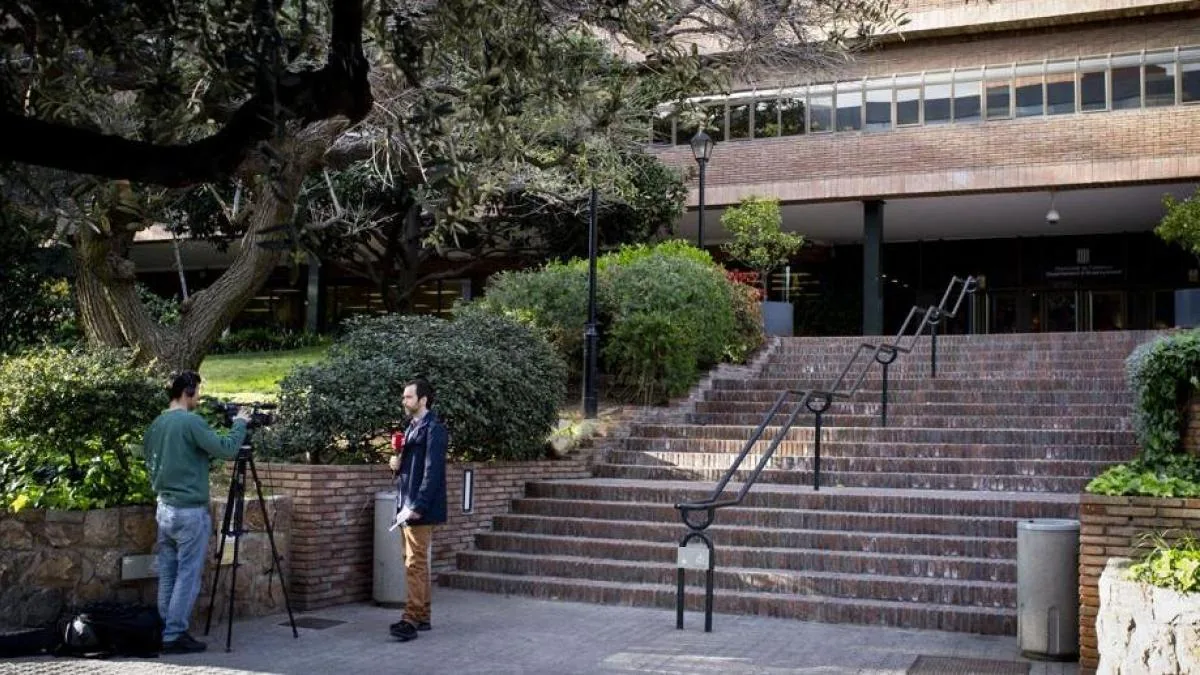
On March 11, 2025, the Departament d’Educació gathered the principals of the 51 centers selected by the OECD in the assembly hall of the Via Augusta headquarters in Barcelona. They are chosen randomly but representatively of the educational system, and each edition they are different.
“What did it mean that they could exclude students ‘according to the opinion of qualified personnel’?”
La Vanguardia interviewed two principals who attended that informational meeting. Both agree that the instructions were lax regarding the criteria for excluding students and that at no time was it indicated that they could not exceed 5%.
However, with the same instructions, they adopted different exemption criteria with different results. In one case, 13% of the students were excluded and in the other, 3.6%.
The first principal recounts that he understood they had to exclude all those unable to be in front of a computer for three hours. The young people had to take two knowledge exams (mathematics, science, or reading) and answer a context questionnaire (personal, family). They had breaks between tests.
This principal read the document summarizing the instructions he received by email the same day as the informational meeting at Via Augusta in the afternoon. The criteria stated that they could exclude those students who presented a cognitive, behavioral, or emotional disability “according to the opinion of qualified personnel” and that, in any case, “could not follow the general instructions for the test.” What did they mean by “qualified personnel”? What meaning did they give to “not being able to follow the test instructions”?, he reflected.
So he excluded eleven students in total. About ten with diagnoses of cognitive, learning, behavioral difficulties, or insufficient reading skills were left out.
For immigrant students, the instruction was very clear: not mastering the language and having arrived less than a year ago. There was only one.
The second principal consulted kept the guideline that “all students born in 2009” had to participate except for “extreme” cases.
He excluded two students. “I had no doubt about a boy who had arrived a month ago without speaking any European language. But another student, the second, made me doubt. He was a boy with autism, unable to sit through an hour of class consecutively. So I called the organizing company to be sure I could exclude him, and they told me yes.” The rest, some with diagnoses, participated. His center, he explains, does not have the difficulties of others, with more students with special needs.
“I understood that the guideline was everyone in, except the most extreme cases”
The centers filled out the Excel sheet with all students born in 2009 and their characteristics and sent it on March 19 to the organizing company that selected the sample. There were high schools with more than 100 students and others with many fewer. The company prepared the list and assigned 53 students to each center. The selection is random and is made from the initial sample. Therefore, all are included, both included and excluded.
The ministry and the Consell received the final list. The company warned of the high exclusion rate, but the information remained, according to the ministry, at “a technical level” without decision-making capacity. No one validated the exceptions before the students took the exam. That is the period in which it is analyzed whether the students are truly unable to take the tests. And corrections are introduced in the sample.
The exams were held between March 31 and May 16. In total, 591 students out of 2,545 were excluded, the vast majority due to cognitive, emotional, or behavioral disabilities.
The informational meeting attended by these principals was convened by the then executive secretary of the Consell Superior d’Avaluació, Mar Alonso. At that time, the presidency of the Consell was vacant. The last president was dismissed by the ERC councilor Anna Simó in January 2024, precisely for saying that the poor results of PISA 2022 were due to a sampling error that had overrepresented immigrant students.
Months after that dismissal, in September 2024, Esther Niubó took the reins of the conselleria and the first thing she decided was to create an Agència d’Avaluació i Prospectiva with professionals under her charge and methodology adjusted to international standards. She approved the decree, with the draft designed by Simó, and the Agency was launched in meteoric political terms, in July 2025, ten months later.
These dates are important because until then, the Consell was without a president. Responsibility was assumed by the Curriculum director Mercè Andreu, who depends on the Secretaría de Mejoras Educativas, led by Josefa Beltrán. During that period, both had to deal with the curriculum crisis with the mandatory merger of sciences in high school, which generated strong protests among teachers.
The Generalitat was warned of the PISA blunder by the ministry, which in turn was alerted by the OECD last March. Immediately, it opened an informative inquiry that has not yet been closed and about which the public knew nothing until last week. The opposition has criticized the lack of transparency by the conselleria and the slowness of the inquiry.
Part of the difficulty in the investigation apparently lies in gathering information from that transition period from the Consell to the Agency, with the loss of documents and emails, as well as the departure of Mercè Andreu and Josefa Beltrán (October 2025) and Mar Alonso (April 2026).
Read more Trump warns that the U.S. will suffer an “invasion” like Ceuta if the Democrats win