










Europe faces a structural challenge in its bet on hyperconnectivity. The expansion of next-generation networks, the need to strengthen the resilience of infrastructures, and the investment pressure required by technological deployment place the telecommunications sector at the center of the economic debate. In this scenario, digital infrastructure ceases to be a support element to become a strategic lever for competitiveness, productivity, and technological autonomy.
Read more The soul of Barcelona
Market consolidation appears as a necessary response to this reality. Less fragmentation, greater investment capacity, and better resource allocation allow building more efficient networks better prepared to absorb the growth of data traffic and the evolution towards increasingly demanding services. For Europe, the challenge is not only to connect more but to do so with infrastructures capable of sustaining the next innovation cycle.
‘Ready to connect’: Cellnex’s vision for the market
Within this framework is “Ready to connect,” Cellnex’s initiative aimed at investors and analysts where the evolution of the infrastructure business and the company’s short, medium, and long-term vision are explained. Through various conversations with its management team and other key players, Cellnex brings to the table the factors that weigh most in the market reading: growth, operational efficiency, financial capacity, stock market value, and industrial return.
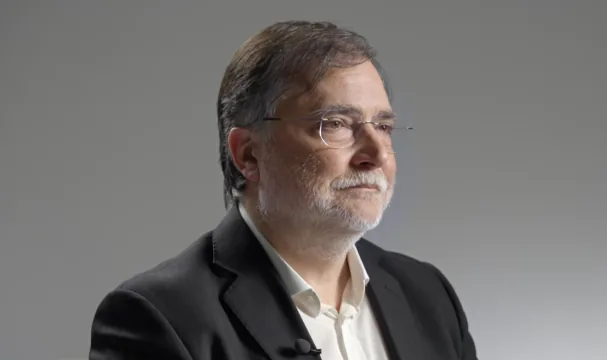
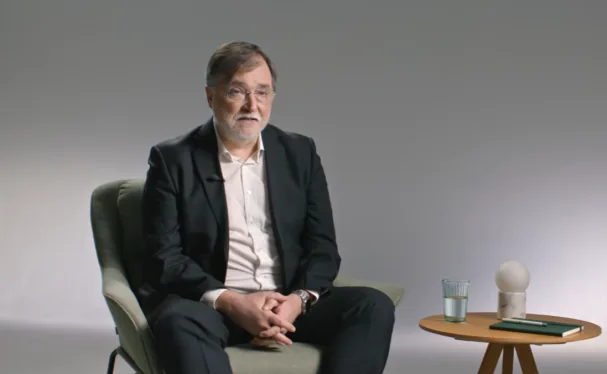
The goal is clear: to convey a business narrative based on data, roadmap, and sector vision. On this occasion, the leading voice is that of Alfonso Álvarez, CEO of Cellnex Iberia, who offers a very defined reading of the direction the sector is taking in Spain and Europe.
“Ready to connect” is Cellnex’s initiative aimed at investors and analysts where the evolution of the infrastructure business and the company’s short, medium, and long-term vision are explained
Consolidation and more investment
Álvarez’s thesis starts from a central idea: consolidation should not be understood as a threat but as an opportunity to strengthen the quality of the telecommunications ecosystem. According to the expert, in a market with fewer operators but more investment capacity, the sector can move towards a more sustainable structure better prepared to face the demands of digitalization.
“The key was to find an agreement that allowed fitting both the needs of the clients and those of Cellnex,” explains the executive referring to the merger between MasMovil and Orange in 2024. For the company, this type of operation not only reorganizes the network but also opens the door to new forms of industrial collaboration, more aligned with the real evolution of demand.
Álvarez’s thesis starts from a central idea: consolidation should not be understood as a threat but as an opportunity to strengthen the quality of the telecommunications ecosystem
Álvarez argues that consolidation allows rationalizing infrastructures but also requires new investments to sustain service quality. In this sense, the challenge is not to reduce the sector’s ambition but to better channel capital towards those assets that truly add long-term value.
Cellnex as an industrial partner
Cellnex’s position in this process is especially relevant. The company does not present itself as a mere site provider but as an industrial partner, capable of accompanying operators in the evolution of their networks. “This reinforces our role as a long-term partner for digital infrastructures,” says Álvarez, summarizing a strategy that combines stability, adaptability, and service diversification.
Read more Illa defends diversity from Singapore as a «source of wealth» against discourses of fear
This approach translates into solutions such as small cells, to reinforce coverage in specific points, indoor connectivity, and new hosting services in sites previously unavailable to certain operators. The logic is clear: value no longer resides only in the tower but in the entire ecosystem that allows improving coverage, density, and network performance. For an investor profile, this vision offers a particularly interesting reading because it places Cellnex in a favorable position to capture structural growth.
Small cells allow reinforcing coverage in specific points, indoor connectivity, and new hosting services in sites previously unavailable to certain operators
A reading for Europe
The reflection of the CEO of Cellnex Iberia goes beyond the Spanish case. His thesis is that Europe needs less fragmentation and more operators capable of assuming ambitious investments. “For Europe, it is more important to have fewer clients capable of making investments than many who do not adopt the necessary measures,” says Álvarez, focusing on the quality of deployed capital rather than the number of actors present in the market.
This approach fits with a long-term vision of the infrastructure business. Consolidation does not eliminate the need for investment but redefines its priorities: greater density, better coverage, higher quality, and a network prepared for the continuous increase of data traffic. In this scenario, cooperation between operators, infrastructure providers, and administrations becomes essential.
For Europe, it is more important to have fewer clients capable of making investments than many who do not adopt the necessary measures
Alfonso Álvarez
CEO of Cellnex Iberia
Resilience and critical communications
Another major message of the chapter is the importance of resilience. The April 2025 blackout highlighted the relevance of having networks that continue to operate in tense situations. Álvarez recalls that much of the radio and television broadcasts, as well as emergency networks under Cellnex’s umbrella, remained operational, evidencing the strategic value of infrastructures designed to withstand.
Based on that experience, the company is intensifying dialogue with the administration and mobile service companies to promote investments in more resilient networks with greater electrical autonomy. The message is clear: digital infrastructure must not only be fast and efficient but also reliable, especially when it comes to critical communications.
More network, more quality, more investment
The focus is on the underlying thesis: consolidation, investment, network quality, operational resilience, and stable relationships with clients are part of the same industrial strategy. In this scenario, Cellnex seeks to consolidate itself as a key player, capable of anticipating needs and providing structural solutions to the market.
This perspective is especially valuable for investors and analysts because it allows understanding the business beyond punctual cycles. What Alfonso Álvarez proposes is a coherent vision of the sector: less fragmentation, more efficiency, more investment, and a digital infrastructure prepared to sustain Europe’s growth in the coming years.
Read more Inflation rises to 3.5% due to gasoline and electricity