








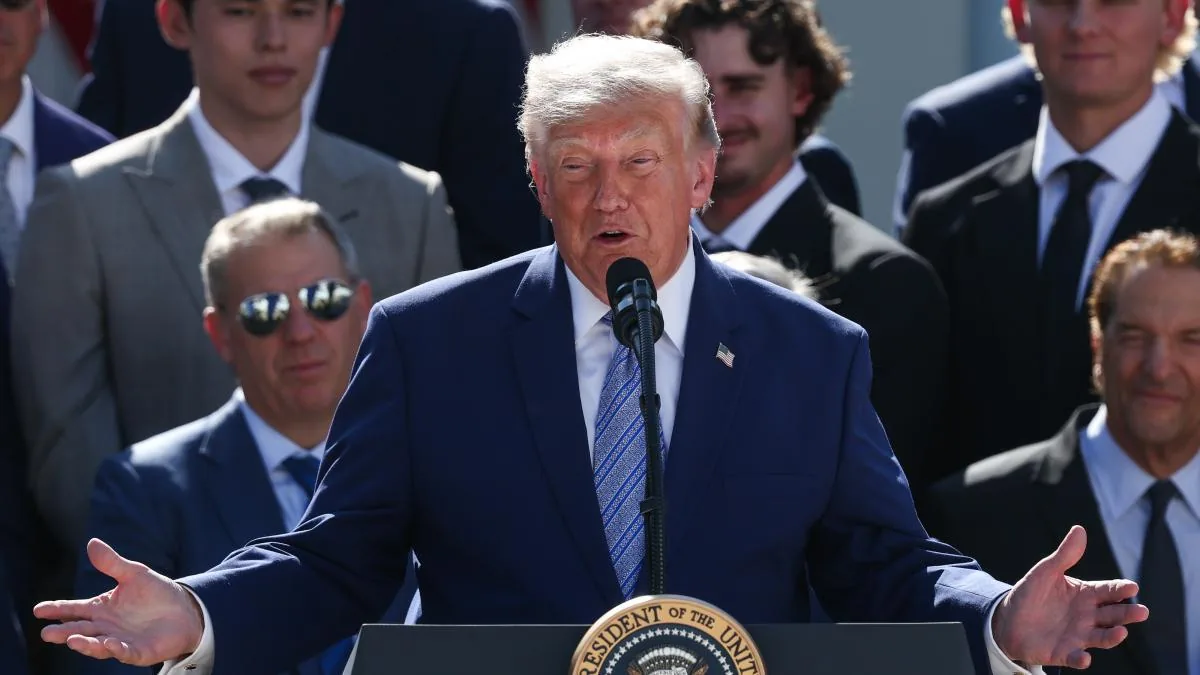
The Trump administration will impose new tariffs of 10% and 12.5% on Friday on 60 trading partners, including the European Union, due to accusations of lax enforcement of forced labor bans, just as a temporary global tariff of 10% expires, senior government officials said on Thursday.
Read more Ayuso requests that the Government take over the management of the fires declared in Madrid
This measure is the White House’s latest attempt to reclaim President Donald Trump’s campaign vision of a near-global tariff, after the U.S. Supreme Court in February overturned “reciprocal” tariffs of 10% to 50% imposed last year under a national emergency law to try to reduce the U.S. trade deficit.
Trump responded to that ruling by imposing a temporary 10% tariff for 150 days, expiring at 12:01 a.m. EDT on Friday (04:01 GMT), invoking Section 122 of the Trade Act of 1974, a law intended to mitigate balance of payments crises. The new tariffs will take effect at that same instant, with the exception of goods in transit until 12:01 a.m. EDT on July 28.
A senior Trump administration official refuted suggestions that the forced labor tariffs — invoked under Section 301 of the 1974 law — were simply a direct replacement for the expiring tariffs, despite the temporal coincidence, similar tariff rates, and broad coverage of nearly all U.S. imports. The official stated that the United States has stricter import bans on products made with forced labor and enforces them more rigorously than any other country, giving its rivals an unfair trade advantage.
Both Democrats and Republicans in Congress have been calling for the eradication of forced labor from global supply chains, “so we are answering that call.”
The official added that Trump “will always use the tools at his disposal to achieve his trade policy goals, and that includes tariffs.”
Read more The Congress has approved fuel discounts against the impact of the war
The administration official indicated that many products will be exempt from the tariffs, including oil and gas, fertilizers, certain foods, and products already subject to Section 232 national security tariffs, such as automobiles, steel, aluminum, and copper.
Other products that comply with the United States-Mexico-Canada Agreement (USMCA) on trade will also be exempt due to the high integration of the North American supply chain and the high U.S. content in such products.
The final tariffs for unfair trade practices, under Section 301, largely follow the forced labor tariffs proposed on June 1. Products from countries that have enacted adequate forced labor laws will be subject to the lower rate of 10%, while imports from those with insufficient prohibitions will be subject to the higher rate of 12.5%.
Recent measures and legislation adopted by some countries, including India, led them to the 10% tariff rate since these tariffs were initially proposed.
Read more The Government saves three laws, but loses the deficit path again