It was Yevgeny Prigozhin, the ill-fated head of the Wagner mercenary group, who first began recruiting soldiers from Russian prisons to send them to fight in Ukraine. In mid-2022, he personally toured penal colonies, promising pardons to those who joined his ranks. A year later, the Russian army also began recruiting and now, in need of personnel to advance on the front and take control of the entire Donbass, it is once again looking to those who have lost their freedom due to their criminal acts.
Read more The ECB keeps rates on hold awaiting solution to Middle East crisis
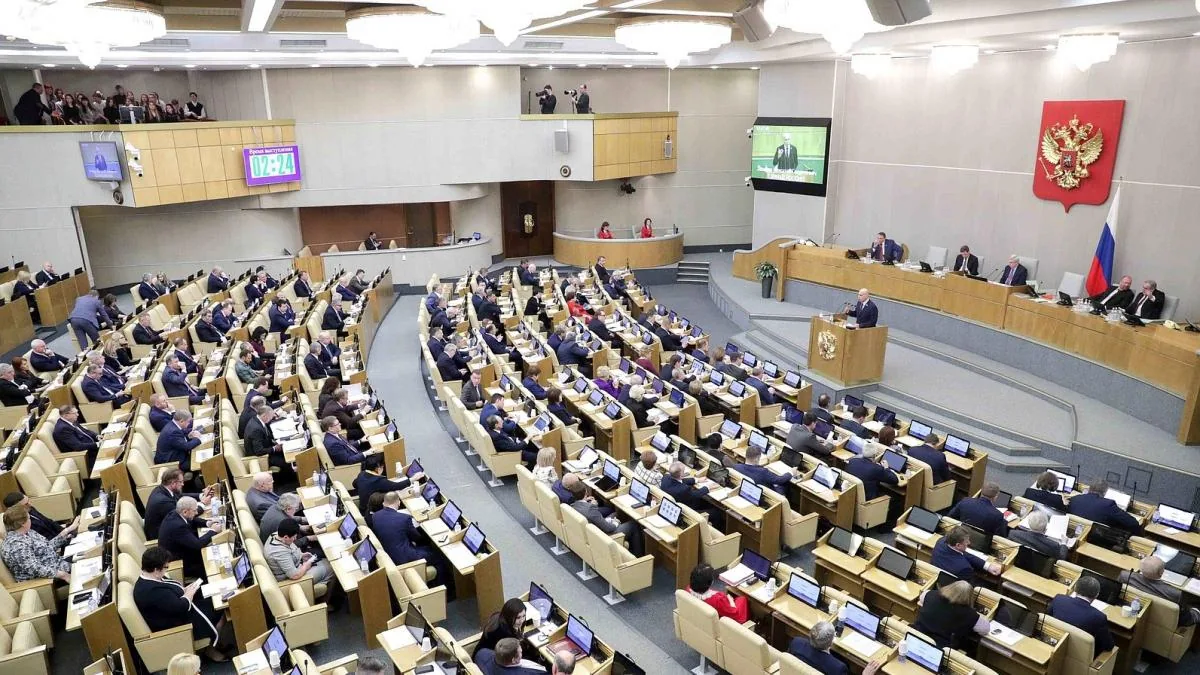
The military’s objective is not just to seek, but rather to scour for new recruits. The Duma (the lower house of the Russian parliament) has approved a law that expands the categories of individuals with criminal records who are allowed to sign a contract with the Ministry of Defense to join the army.
Previous regulations excluded several groups who, due to the crimes for which they had been convicted, were considered problematic, untrustworthy for the state, or simply faced significant social rejection. Following the law approved by the deputies, those who have been convicted or are accused of drug trafficking, belonging to an armed gang or criminal organization, or losing state secret documents will now be able to sign contracts with the army.
Fear of the “Wagner syndrome”
General Viktor Goremikin, Russian Deputy Minister of Defense, assured the Chamber that applying these exceptions will help meet the recruitment needs set for this year 2026.
The new norm, which reached the Duma on July 17, was approved at full speed this Wednesday afternoon, with hardly any public discussion, and only with questions from some deputies. At one point, the Speaker of the Duma, Vyacheslav Volodin, stopped the debate and declared that help must be provided when the army asks for it.
“Given that six fairly serious categories (of crimes) are excluded, how will these people be controlled so that the ‘Wagner syndrome’ does not repeat itself?” asked Nikolai Kolomeitsev, coordinator of the Communist Party parliamentary group. Goremikin replied that the bill had been coordinated with all levels of power and “appropriate measures are provided” to avoid “a situation similar to Wagner’s.”
In June 2023, Yevgeny Prigozhin’s mercenaries, who had already publicly expressed their enmity with the Ministry of Defense over the way troops were led in Ukraine, rebelled and took the city of Rostov-on-Don, in southern Russia.
Then the controversial oligarch announced a march to Moscow, 1,100 kilometers away. The troops under his command passed through the Voronezh and Lipetsk regions, where several clashes between the army and the rebels were recorded. They only ceased their actions after negotiating a pact with the Kremlin with the mediation of Belarusian President Alexander Lukashenko. They returned to their bases in the Russian-controlled area of eastern Ukraine in exchange for guaranteed security and pardon.
Prigozhin died on August 23, 2023, when the private plane he was traveling in with other Wagner Group commanders crashed in the Tver Oblast, north of Moscow. Since then, the mercenary company has gradually been integrated into the Russian Armed Forces.
Ministry of Defense promises to create separate units with soldiers convicted of sensitive crimes
Many deputies were concerned that the new soldiers the Russian army can recruit thanks to the new law might lack sufficient loyalty. When Anatoly Wasserman, from the Just Russia party, asked Deputy Minister Goremikin to list the categories of criminals excluded by the new law, Volodin urged him to wait for meetings in a more closed format.
Communist deputy Nina Ostanina asked if the new military personnel would not betray their comrades at the most crucial moment, and her colleague Vyacheslav Markhayev wanted to know how they would be controlled.
To calm these reservations, Goremikin promised that these new military personnel would not be integrated into already formed army units. “I can inform you that they will serve in special units, separately from military personnel serving under contract who do not have such records,” he assured. Furthermore, their superiors will maintain special control over them.
It was then that Volodin intervened and said that these issues should be discussed in more closed formats, meaning they “should not be available to enemies.” “The uniformed personnel are doing everything. And us, are we not going to lend a hand?” he rhetorically asked the deputies.
Putin included the conquest of the Donbass region among Russia’s objectives
The Kremlin’s first declared objective on the ground is to conquer the entire Ukrainian province of Donetsk, which would allow it to control the Donbass region (also formed by the Luhansk province, already in its hands). As Kremlin spokesman Dmitry Peskov periodically reminds, two years ago Russian President Vladimir Putin included the withdrawal of Ukrainian troops from this region among the conditions for stopping the fighting.
Ukrainian President Volodymyr Zelenskyy considers this a surrender and has always refused. Many analysts believe that if Russia wants to take this territory in a short period, given the stagnation on the front and the minimal advances of its troops, it needs more men.
Contract recruitment allows the Kremlin to avoid a new mobilization like the one Putin decreed in September 2022, in which 300,000 reservists were called up.
It was the first military mobilization in Russia since World War II and so unpopular that nearly a million military-aged men left the country.
Since then, the Kremlin denies having plans for a second mobilization. As an alternative, it has resorted to generous bonuses for those who sign contracts and high salaries (up to 5.5 million rubles, about 61,000 euros, per year of service).
However, as parliamentary elections approach next September, rumors are growing in the press about a new mobilization to compensate for losses on the battlefield. According to Western sources, the Russian army had already suffered nearly 1.5 million casualties, of which half a million were killed in combat.
According to former Russian President Dmitry Medvedev, in the first three months of this year, 80,000 Russians enlisted in the army through contracts with the Ministry of Defense, which was “a pretty good pace.”
But independent media in exile IStories and Vyorstka have reported that this type of recruitment has fallen by a third this year compared to 2025.
The Meduza portal assures that authorities are discussing the possibility of a mobilization, although no decision has been made.
Read more Imaz, “very concerned” about diesel and kerosene supply problems in the coming months in Europe