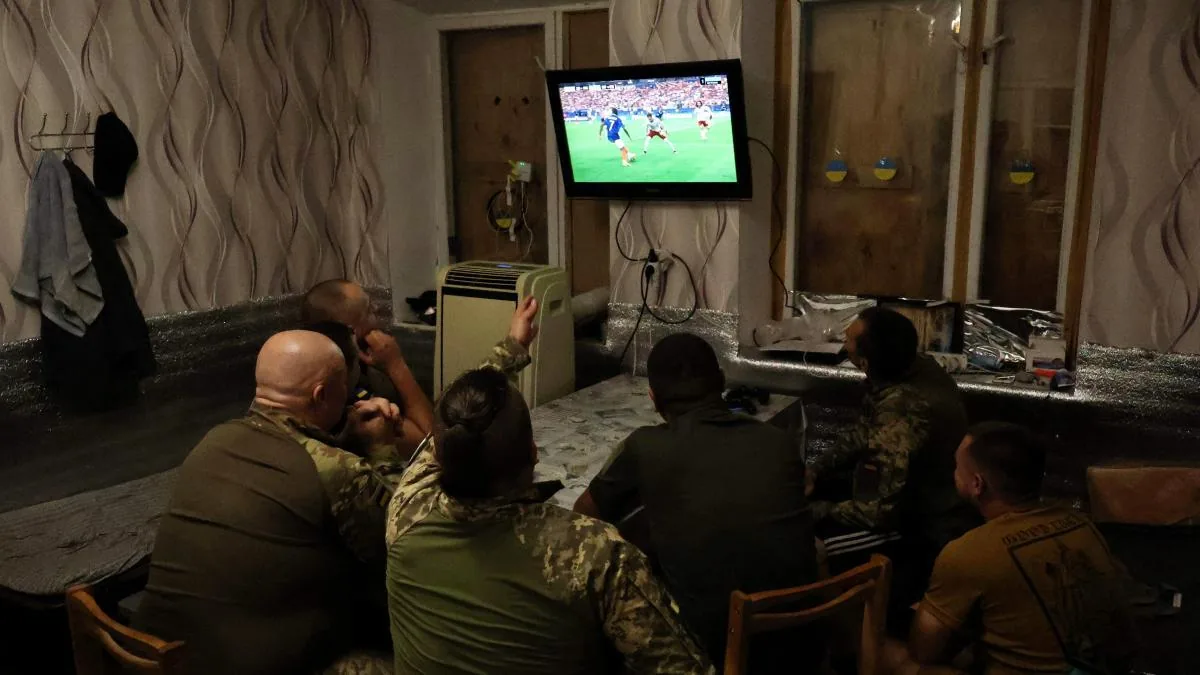
That the FIFA World Cup 2026 causes a stir and moves masses internationally is no surprise. But, aside from the broadcasts and social events that traditionally come with this event, this World Cup has had a special place on the Internet.
Read more Summer is already here at RAC1
Social networks have massively supported the teams and their players, praising and commenting, with their characteristic humor, on the various milestones of the teams. And, more innovatively, streaming platforms — which traditionally have had a somewhat distant relationship with sporting events — have fully committed this time to the World Cup, generating a type of coverage and commentary on the matches very different from the traditional, and which has served to bring the passion for football to new players.

The World Cup is now watched on Twitch
If streaming platforms have not traditionally had a very close relationship with sporting events, it is for a relatively obvious reason: broadcasts on these types of sites and apps are open, and a license is needed to be able to air a football match in this way.
The broadcasting rights for the World Cup are managed by FIFA and belong to different broadcasters in each country. In Spain, the World Cup is seen through the public channel, RTVE, and the DAZN platform in collaboration with Mediapro. Therefore, matches cannot be broadcast on Twitch, YouTube, or similar platforms.
However, various online video services have tried to promote, on this occasion, a series of alternative content that allows creators to experience football alongside their communities. For the first time, Twitch has enabled the “Football Fest” category, a space dedicated to commentary, reaction, and even live broadcasting of impressions and sensations, from the stadium itself, of the matches.
In Spain, creators with mainstream profiles like DjMaRiio or El Xokas are broadcasting reactions to the different matches, designed so that their community watches the match on a second monitor or on television while enjoying the extra commentary through Twitch. Others with a more professional profile, like rubenmartinweb or sirolopez56, are complementing the coverage offered by traditional media with interviews, talk shows, comments, analysis of plays, and strategy.
Internationally, on the other hand, major creators like iShowSpeed, with more than 58 million followers on his YouTube account, or Marlon, whose live videos accumulate millions of views, are providing full coverage of the matches from their seats in the stadium itself. The idea, however, is not that these videos replace the usual way of enjoying the World Cup, through television or radio, as has always been done; it is to find different ways to connect with other people through sport.
Read more ‘Foros de Vanguardia’ is established as an agora for reflection on current affairs
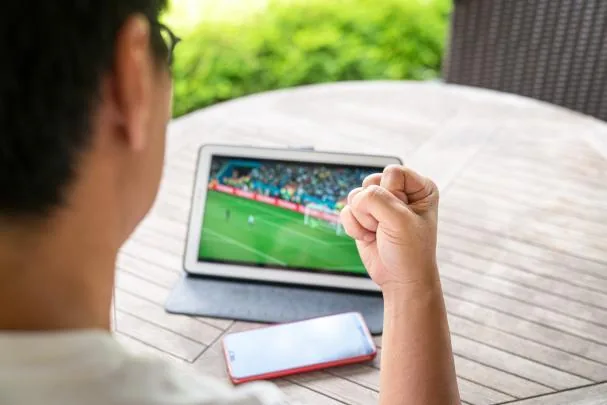
The bar is replaced by the mobile or tablet
Because, in the end, much of what makes football, or sports, something so emotional and important for those who follow them is precisely the feeling of community and belonging that is generated around them. For new generations, this feeling of belonging often revolves less around the traditional bar and more around screens and platforms.
But the connection is not, therefore, less valuable. Marcos F., 27 years old, who has followed the World Cup through the channels of some of his favorite streamers, tells us that “I talk in this chat almost daily for years. Some of its members have actually become my real-life friends. When there is a match, the people I want to share it with are them.” Ainara N., 21, says that her friends are not very interested in the topic, “and on the Internet you can always find someone who understands you, someone who lives the passion the same way you do.”
This is the same logic that Dan Clancy, the CEO of Twitch, has used when deciding to promote this type of sports content. In an interview with Digiday, the platform director argues that “people think that sports fandom is about watching the best athletes in the world, but it’s not about that. Sports are about community, and the World Cup is the best example of that.”
For Clancy, “Twitch is a communal platform that focuses on the shared affinity that some people have with a creator. They want to share their experiences. And football, and the World Cup, are the pinnacle of that collective experience.” Still, the important thing is to seek an approach that is different from the existing one. The value of streaming media lies precisely in offering perspectives that have no place in the major mainstream media. “Many times, some leagues simply decide to broadcast their matches on YouTube. That is using the Internet as a distribution channel, but it does not create a social experience. The idea is that it is like a sports bar, where you sit to watch the match and everyone knows you.”
The CEO of Twitch assures that the effectiveness of these broadcasts to bring sports closer to wider and more diverse audiences is already proven by the broader coverage the platform has had of the NBA over recent years. The proliferation of content creators and live formats around basketball generated “a 5% increase in views on Twitch, largely from an audience that I don’t think was watching the match on another platform.” If the World Cup figures maintain the trend, Clancy does not rule out that, for the next Eurocup, FIFA and Twitch may have an official collaboration.
Read more Watermelon is the fruit with the favorite flavor of summer, according to Catalans