The iPhone has been declared dead for 19 years, but Apple is already preparing a grand celebration for the 20th anniversary version of its phone, which will arrive next year. Shortly after its launch in 2007, when then Microsoft CEO Steve Ballmer was asked about the new Apple phone, he laughed out loud: “it’s the most expensive phone in the world. And it doesn’t attract business customers because it doesn’t have a keyboard, which makes it not a very good email machine.” A very short-sighted view.
Read more Josep Santacreu: “The Chamber is not just the Chamber of SMEs, it is for all companies”
In the following years, Apple with its iPhone and iOS operating system, and Google along with companies like Samsung with the Android operating system, created solid ecosystems that integrated applications and services that made the smartphone a universal machine omnipresent in all areas of digital life. Along the way, giants like Nokia’s mobile division, BlackBerry, and other companies that also failed to understand the change in time fell.
In the last 19 years, all attempts to undermine the supremacy of iOS and Android systems have failed
Since then, nothing has threatened smartphones, but artificial intelligence has accelerated attempts to replace them. If the richest man in the world, Elon Musk, set out to make a phone connected to his effective Starlink satellite communication network, could it threaten the reign of current smartphones?
The Wall Street Journal has revealed that Musk’s aerospace company, SpaceX, recently showed a group of investors a device thinner than an iPhone, with a Qualcomm Snapdragon chip, designed for xAI artificial intelligence, accessed via the Grok chatbot in an app, on the social network X, and in Tesla cars.
So far, Musk has been ambiguous about the phone and has even denied that his company is developing it.
SpaceX’s phone would not have to connect primarily to a carrier data network, as it would be linked to its satellite network, although it would require agreements with telecommunications companies because it would need them to work indoors, without direct access to the sky.
The world through glasses
Although the history of consumer technology shows that every attempt to put glasses on users ends in failure, fashion trends mark a resurgence of smart glasses. Although many companies are trying to carve out a niche, the leader is Meta, which is already several generations ahead. Even Apple, which has developed a prodigious but expensive and bulky device with the Vision Pro headset – which it calls a spatial computer – is developing glasses that allow understanding the user’s environment and providing answers to daily life challenges, from identifying an object, product, or landscape, to indicating a route on a path or translating any text or voice from an interlocutor. AI is there to respond to all that. Now we just need everyone to wear glasses.
Read more The barn of the world, in danger
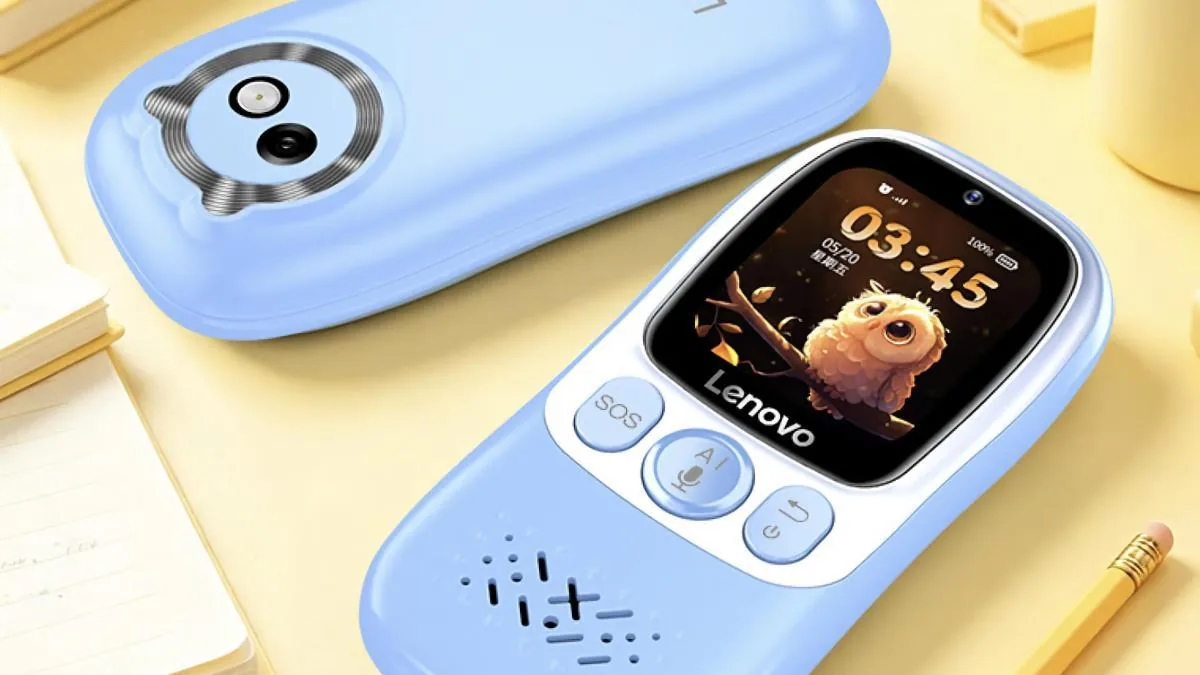
Another initiative. The debate about the first phone for minors is a tricky issue in families. Perhaps artificial intelligence has some answers. The multinational Lenovo, better known for its computers, has launched in China its AI student phone – AI Student Phone. It is a simple-looking device that costs the equivalent of about 39 euros.
It is a phone that aims to replace distractions from other phones with AI-assisted homework help and strict parental controls. A physical button activates an AI voice assistant. It comes pre-installed with a library of English vocabulary and mathematical formulas. Parents can track the phone via GPS in real time and set alerts if the device leaves a designated area.
This AI-focused phone has a class mode that makes it show only the time during school hours and only allows emergency calls. Apps blocked by parents cannot be reinstalled.
The consumer technology sector is closely watching the device (or devices) that will come from the collaboration of Sam Altman, CEO of OpenAI, with Jony Ive, former design head of Apple’s golden era under Steve Jobs.
The device will be called io – the relationship of tech companies with capital letters is curious – and can be worn as a pendant. The first device to come from Ive’s mind would be permanently connected to OpenAI’s AI models. That is one of the essential features of these contenders to end the smartphone. Continuous connection and device access to all private life. It seems that the iPhone, and Androids, have several generations ahead.