Not even in their best forecasts did the independence movement believe that the European court’s ruling on the amnesty law would be so clear-cut. The delaying maneuver by the Spanish judges – not only the Supreme Court – has been challenged by the setback dealt by the EU body. No matter how much one tries to reduce its resolution to a mere consultation on two specific questions, the wording of the CJEU leaves no doubt: the amnesty as approved is in accordance with European law. Probably no one in the judicial world will self-criticize the delay in its application and there will always be technical justifications to cling to, but the credibility lost by the judiciary in Catalonia is enormous. It goes beyond the independence supporters, it has its roots in the Estatut ruling and has only grown with the delay in applying the amnesty.
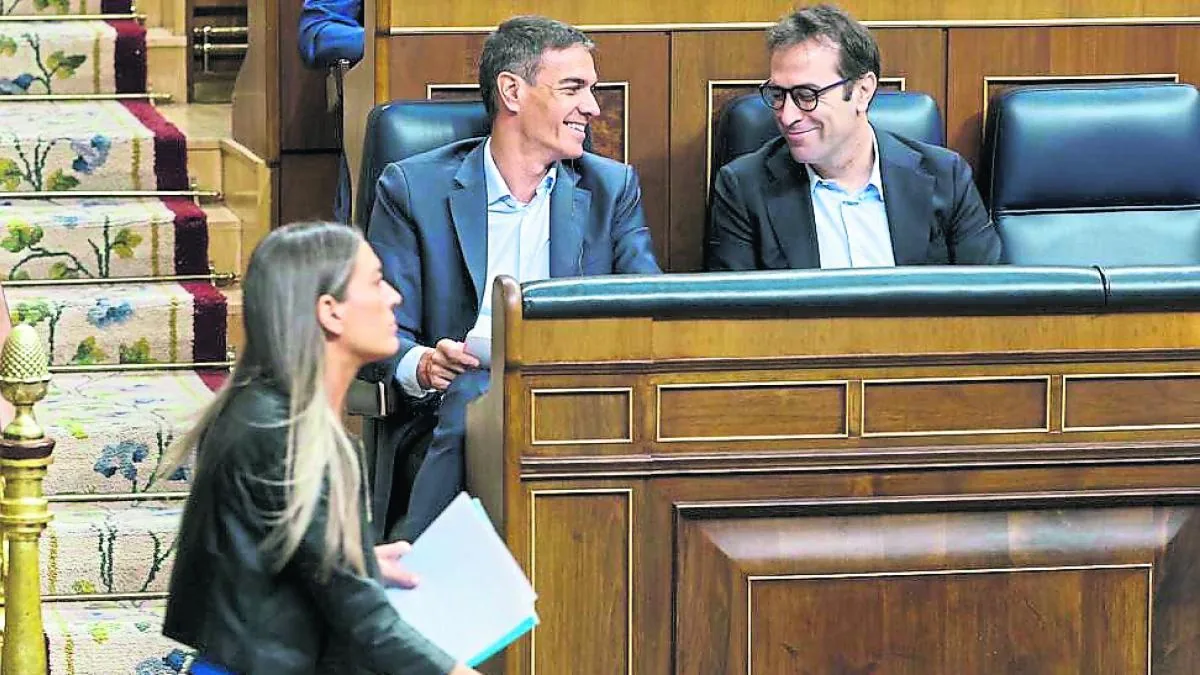
Beyond the judicial sphere, where the independence crisis probably should not have reached, the endorsement of European law for the amnesty has other political readings. In 2023, an unprecedented situation occurred in Spain after a general election: the winner could not form a government. The key that reopened the door to Moncloa for Pedro Sánchez was the amnesty law. The PSOE had not only denied it months before, but had insisted repeatedly that it was unconstitutional. If it agreed, it was driven by the need for the seven votes of Junts. Even so, the CJEU disregards those circumstances and assumes the motivation stated in its wording: the general interest of political and social reconciliation in Catalonia. And it cannot be assumed that the judges of that court are unaware of how Sánchez came to power.
It can be debated whether calm has returned to Catalonia by virtue of that law or for other reasons, for example the failure of the unilateral path itself, which crashed against reality, or even the heavy prison sentences imposed by the Supreme Court. It is likely that these last two factors were decisive, but it must be admitted that coexistence would not have been fully restored without the clean slate favored by the amnesty law, since the procés was not only the affair of a handful of leaders, but of many transversal sectors of Catalan society.
What would have happened if the amnesty had been applied two years ago? Would there have been at least a budget?
This has been the legislature of the amnesty, for better or worse. Not only because it started with that law and ends with the European endorsement of it and, presumably, its full application, but because one can wonder what would have happened if it had been fully realized two years ago, when it was approved. Would the relationship between the PSOE and Junts have evolved more smoothly? Would the dialogue table in Switzerland have advanced in proposals to improve Catalonia’s political fit in Spain? Would a budget have been approved? Or perhaps that collaboration would have ended even earlier, once Junts no longer had any incentive to maintain support for Sánchez? The Supreme Court’s action, whether politically motivated or convinced of doing the right thing, has delayed its application by more than two years and that has had consequences for governability.
If the PSOE changed its mind for political interest, the PP is immersed in contraction. The amnesty had given Sánchez the key to Moncloa, so the PP considered it should be denounced with all possible arguments. At that time, the legal argument was the most effective. Conservative leaders, led by José María Aznar, called the norm an attack on the Constitution to exonerate “the coup plotters.” After the CJEU ruling, Aznar insists that “the seditious aggression against the law must not go unpunished.” Using the term “seditious” he appeals directly to the Supreme Court, which convicted for sedition. All this while Alberto Núñez Feijóo calls to “turn the page” on the procés and limits himself to criticizing the amnesty law not for being unconstitutional, but for being “immoral” as it was the price for support of Sánchez’s investiture.
Read more The duel between Shakira and Madonna will compete with that of Messi and Yamal
Mariano Rajoy also did not want the imprisonment of the leaders of the procés. It was Attorney General José Manuel Maza who pushed the rebellion charges. He set the bar high and the judicial ball started rolling… The PP has experienced the Catalan independence crisis as a struggle between two souls. Rajoy complained in private about the pressures he received to apply a hard hand in Catalonia, including the deployment of the military. Feijóo is heir to that internal struggle that gave rise to Vox. If now the PP leader seems to be approaching Junts it is because he knows that independence is not now the main concern of Catalans and because Sánchez gains much of his strength in that territory. Feijóo proposes to forget the past and talk about other things… We will see if they let him. Rajoy did not finally send the Army, but he did end up sending 6,000 police officers and civil guards.
Aznar presses against “the seditious” and Feijóo turns the page. Rajoy was asked to send the Army
Sánchez has borne the erosion of an amnesty law from which Feijóo will benefit if he reaches Moncloa, a capital we will see how he manages if he obtains the presidency. The independence movement presents the CJEU ruling as a victory, but it has also suffered wear, especially Junts. A political space that squandered a decade dedicated to a “revolution of smiles” that led nowhere and many more years trying to reverse the criminal consequences of those acts.
Some final notes: first, a reason for reflection. It is curious how an amnesty that has helped calm politics and ease division in Catalonia managed to provoke so much rancor and confrontation in the rest of Spain. And second, the CJEU ruling should not make the independence movement forget how deeply divided Catalan society was nor the Spanish parties, who now somewhat dismiss the secessionist longing of part of Catalonia, the enormous concern that the procés caused them at the time. The PP, which once alarmed with the specter of Spain’s breakup and a coup d’état, now tiptoes around it. Some are so forgetful that they only remember Santa Bárbara when it thunders.
Read more The World Cup seen from beyond