The slow digestion of the Amnesty law has received a European tonic this week, an herbal liqueur from Luxembourg. An unequivocal ruling from the Court of Justice of the European Union (CJEU) has endorsed the law approved by the Congress of Deputies on May 20, 2024, and sealed by the Spanish Constitutional Court on June 26, 2025.
Read more The State invested more than twice as much in Madrid as in Catalonia in 2025
In fact, the Constitutional Court has issued twenty rulings in favor of the aforementioned law, in response to as many appeals of unconstitutionality filed by various bodies. The last two rulings dismissed the appeals filed by the Government of Aragón and the Junta of Castilla-La Mancha. Favorable vote from Congress, twenty verdicts of constitutionality from the Constitutional Court, and now a favorable ruling from the Court of Justice of the European Union, in response to preliminary questions raised by the Supreme Court and the Court of Auditors.
The amnesty for Catalan separatists has contributed to greater reconciliation in Spain, does not violate European law, and does not affect the economic interests of the European Union. This is the summary of the ruling announced on Thursday in Luxembourg. A clear, clean verdict, without adversities, without reservations. If there had been any, there would be no other topic being discussed in Spain today. This is where the digestion stands.
The European endorsement of the law
The behavior adopted by some Madrid media outlets, usually very agitated about the Catalan issue, is striking. Headlines with a long history behind them chose yesterday not to mention the European endorsement of the Amnesty law on their front pages.
Everyone is free to summarize the country’s current events as they see fit, but that silence is surprising after the great upheaval that the processing of the Amnesty law caused in the Spanish capital between 2023 and 2024, an upheaval partly fueled by those same media. Six consecutive demonstrations between those years, daily demonstrations in front of the PSOE headquarters on Ferraz Street, under the heading National November (2024), gatherings of judges in robes before some provincial courts, political mobilization of judges never seen before in Spain; continuous calls for general mobilization, the famous slogan, “those who can, do; those who can move, move,” an unprecedented climate of agitation that defines the current legislature. The 2023-2027 period will be described by historians as the Amnesty legislature. If the CJEU had raised any objection to the law, today there would be no other topic in Spain. Such objection has not occurred, and the response of some has been silence on their front pages. It is a childish attitude that illustrates the degree of sectarianism reached in this country. It is hardly possible to promote a “national consciousness” by avoiding the news that defines the evolution of the “national current events.”
“We also want to turn the page on the ‘procés’,” said Alberto Núñez Feijóo fifteen days ago in Barcelona, anticipating the CJEU ruling. These were significant statements considering that the Popular Party has been the main instigator of street protests and appeals of unconstitutionality before the Constitutional Court. Objectively, Feijóo’s words were important. The opposition leader considered the main drama of the legislature closed and extended a hand to Junts. Feijóo wanted Junts’ support in a motion of no confidence against Sánchez that he still does not dare to present. He sought the support of Catalan businesspeople and the Catalan middle classes who have sympathized with sovereigntism, just as he has traveled to the Basque Country to gather support from Basque businesspeople. Feijóo adopted an intelligent attitude.
We must not forget that there is consensus among electoral sociologists about the reasons why the PP could not achieve a sufficient victory in the last general elections, on July 23, 2023: the last-minute mobilization of thousands of Catalan voters who concentrated their vote on the PSC in the face of Vox’s threat to apply Article 155 of the Constitution more harshly in Catalonia, and the last-minute vote of many young women in favor of the PSOE out of fear of a reversal of their rights. It is logical that Catalonia and the female vote worry the PP leader.
Read more Do not freeze Messi
Vox has also spoken these days. It has questioned the authority of the Luxembourg Court and announced that if it is part of a future governing majority in Spain, in line with the regional government coalitions formed in recent months in Extremadura, Aragón, Castilla-La Mancha, and Andalusia, it will do everything possible to reverse the Amnesty law. There is a significant warning for the times ahead. The reversal of the Amnesty law could be one of Vox’s conditions to grant investiture to Feijóo.
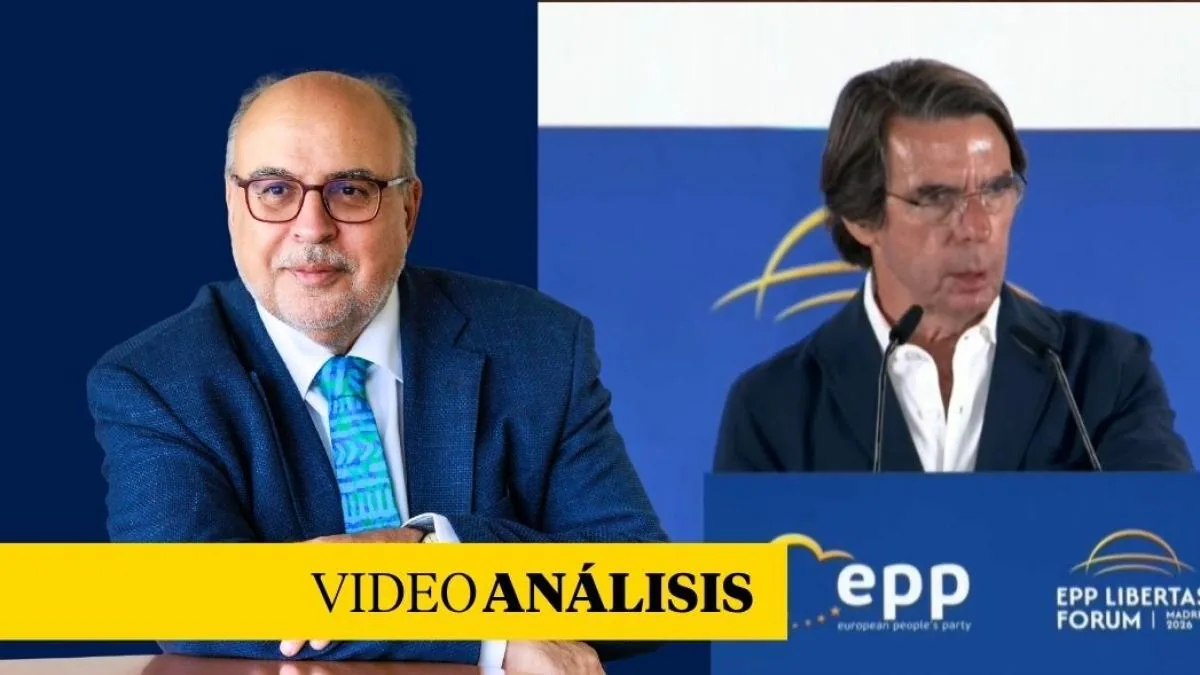
Days after the current president of the Popular Party showed willingness in Barcelona to “turn the page,” he was corrected by José María Aznar, author of the slogan “those who can, do,” which will also be inscribed in the history of these years. Very possibly, Aznar currently considers himself the main intellectual guide of the Spanish right. He has always wanted to play that role. He called for a general mobilization of the State apparatus against Pedro Sánchez’s government, and that mobilization has occurred. The former president corrected Feijóo, emphasizing that the PP’s alternative should be the formation of a “national bloc,” capable of attracting PSOE voters disillusioned with Sánchez, capable of attracting votes that today go to Vox, without concessions to Catalan and Basque nationalists. “The alternative will be national or it will not be,” he hammered home.
Also read
There are four living former presidents in Spain. Two work as sentinels, another is in serious legal trouble, and another just caused a stir at the Football World Cup with an article questioning the national identity of the French players. Fortunately, the brilliant victory of the Spanish team over France has buried the controversy. The two sentinels are Felipe González and José María Aznar. The first would strangle Sánchez with his own hands if he could, for having embarked on the Amnesty law and for other reasons. González believes Sánchez should never have reached the position of secretary general of the PSOE. The second watches his successors’ steps sleeplessly, first with Mariano Rajoy, soon despised Pablo Casado, and now publicly corrects Feijóo, with polls on the table indicating that the PP has not managed to grow in recent months despite the phenomenal judicial storm looming over the PSOE.
After the Strasbourg Court ruling became known, Aznar said that “the seditious aggression against the law must not go unpunished,” which can be understood in two ways: an invitation to the Supreme Court to continue opposing the application of the Amnesty law to Carles Puigdemont, seeking tricks under stones if necessary; a call to the PP to reverse the Amnesty law when it governs, encouraging the opening of new judicial processes in Catalonia. Both conclusions are not mutually exclusive. Obstruct now, to attack later.
Feijóo says he wants to turn the page, Aznar and Vox want to reopen the process, no matter what European justice says.
Read more What a Hispanic Day celebration…
Who rules the Spanish right?