




The master’s program Global Challenges for Sustainability, designed by nine European universities led by the University of Barcelona (UB), has received the quality label created by the European Commission to highlight degrees born from European university alliances. In addition to the UB alliance, the master’s program from the alliance involving the Catholic University of Valencia has also received this distinction.
The Commission is advancing in creating a catalog of European degrees that require coordination and joint work of universities from different countries and allow student mobility between educational centers. Therefore, it is funding European university alliances in various calls. There are about 75 alliances in total involving 64 Spanish public and private institutions, practically 85% of the total. Not all design study programs; some focus on other objectives such as administration or technology.
After promoting these alliances, the Commission has created this quality label that recognizes bachelor’s, master’s, and doctoral degrees designed and taught by several European universities. There are 85 underway.
The new quality label is called Joint European Degree Label and has been awarded to only two programs created by European alliances involving the Barcelona and Valencia entities.
The Global Challenges master’s is taught from any university in the alliance and students rotate through a minimum of two centers
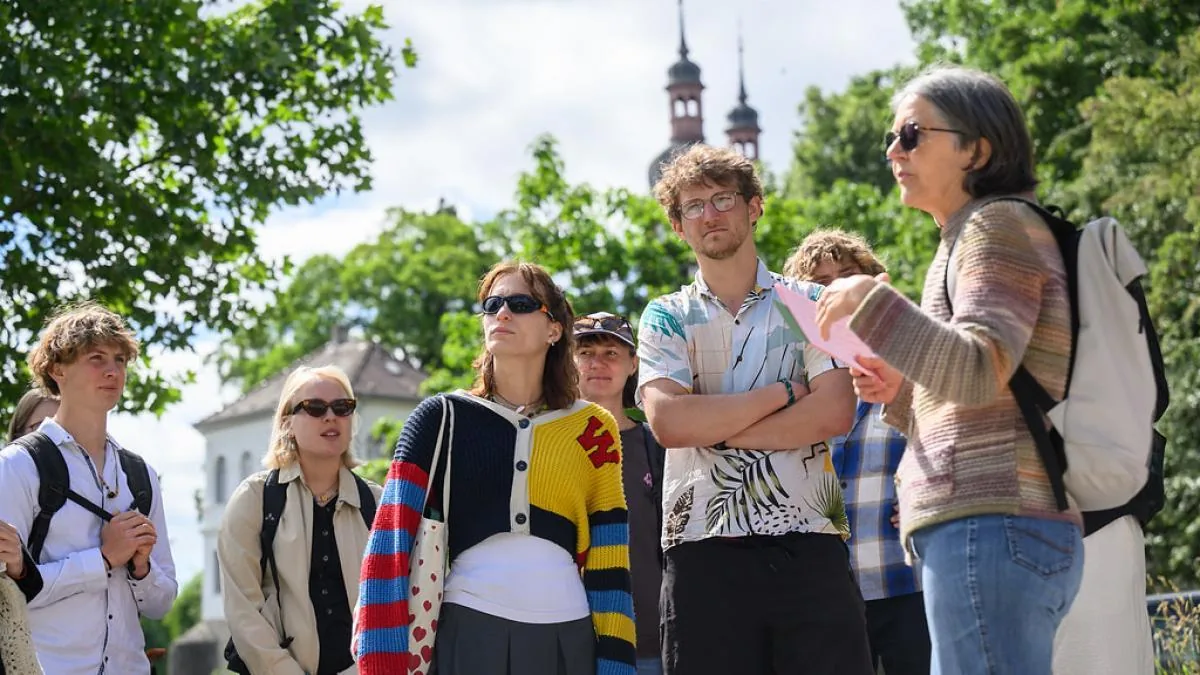
This is the Global Challenges for Sustainability master’s, launched in the 2021-2022 academic year by the EU Charm alliance, led by UB and initially including Trinity College Dublin, Utrecht University, Loránd Eötvös University of Budapest, and the University of Montpellier. Four more universities have now joined this alliance. This 90-credit master’s, designed and taught by professors from all institutions, has about 80 students from different disciplines and nationalities who rotate through two or more European campuses. Learning is based on real challenges that students must face in multidisciplinary groups. The curriculum will be extended to 120 credits (two years) in the 2026-2027 academic year.
Meanwhile, the joint master’s in Marine Biotechnology of EU-Conexus is a 120-credit program coordinated by the Catholic University of Valencia.
The evaluation of this first label was carried out by the quality agency AQU Catalunya, which becomes the first European quality agency to apply the evaluation process and grant this new European distinction. The Basque quality agency, Unibasq, also participated as an observer.
Students who obtain these degrees after the award of this label will receive the certificate accrediting it.
For Esther Huertas, head of the quality evaluation area, this label aims to strengthen transparency, visibility, and recognition of quality joint programs, as well as to promote transnational cooperation and drive criteria aligned with the European Area standards. “For us, it is a qualitative leap because we are the first agency in Europe to evaluate a European degree, which we have done in record time.”
Read more Watermelon: recipes, nutritional benefits, and tips for choosing it at its best
Meritxell Chaves, coordinator of the UB master’s, highlights the commitment to innovation in learning (challenge-based) of this master’s, which attracts strong student demand (almost double the available places).
In the four years, about 250 students have graduated, with a special predominance of women. 50% come from scientific degrees and the other 50% from social sciences and humanities. Currently, graduates of this master’s are employed in consultancies, international organizations, administrative positions, or NGOs.
The joint master’s in Marine Biotechnology of EU-Conexus, coordinated by the Catholic University of Valencia, has also obtained the label
The master’s, taught in English, costs about 5,000 euros for the two years (24,000 if the student is foreign). 90% of the students belong to the EU and the remaining 10% mostly come from Asia and America (including US war veterans whose association offers scholarships).
Students highlight in their evaluation the fact of rotating through several universities, accessing different faculty, being part of diverse groups, and analyzing real challenges about health, water, or energy.
“An important factor is that we make available to the entire European university community the accumulated experience in curriculum design, transnational agreements, and collaboration of professors from different universities.”
The new European Commission call proposes a new funding framework with 7.2 million per alliance. It has selected 20, of which 19 involve participation from some Spanish university (16 public and 3 private). The University of Lleida and Pablo Olavide University are debuting.
On the other hand, the Open University of Catalonia (UOC), together with the Open University of the Netherlands (OUNL) and the National Distance Education University (UNED), have launched a bachelor’s degree in software development within their OpenEU alliance, coordinated by the UOC.
The new degree, of 180 credits, will be taught online and in English from September, and students will be trained by faculty from the 3 universities.
Read more What to do on summer nights in Barcelona: open-air cinema, theater, magic, or historical tours