The president of the Community of Madrid, Isabel Díaz Ayuso, presented this Monday her 40-40 Residential Plan, which foresees the construction of 40 new residences and 40 day centers in the region, which will have 8,000 new places, nursery schools and 300 supported homes integrated into at least five plots and more technology “to better care for” residents and users. Given the great demand for public places, Ayuso has announced this plan, which she has called “very ambitious.”
Read more Madrid doctors resume the third week of strike with protests in large hospitals
She already made the announcement in the debate on the state of the region in 2024, but now she has resumed the initiative. This Monday she did not give execution dates for the aforementioned plan, but two years ago she indicated that they would be until 2030.
These days, various platforms are raising complaints, and have even gone to the Inspectorate, regarding several elderly people who have been asked to leave centers, both public and private, for complaining about the treatment given to the elderly or the poor quality of the food provided to them.
As detailed by the regional leader from the Amavir Valdebernardo Residence and Day Center for the Elderly, there will be 6,000 new residential places and 2,000 day care places. Of these, at least 3,200 will be part of the public network and the rest will be private centers that families will be able to access thanks to a ‘service voucher’ with a private investment of 500 million.
Public-private model
“It is based on a public-private collaboration model so that companies can build and manage new centers more quickly. That is, we expand the care offer without burdening the taxpayer with all the weight,” she claimed.
The first residence will be located in Las Rosas, in the San Blas district, where works have already begun, and the second project will be built in Vicálvaro, specifically, in El Cañaveral.
Thus, she detailed that the residences will be smaller, will have a maximum of 150 places and at least 50% of the rooms will be individual. The centers will be located in 13 districts of Madrid and 18 municipalities of the region.
Read more The improbable reform of the Valencian electoral law longed for by municipalists
Specifically, they can be found in Hortaleza, Fuencarral, Carabanchel, Moncloa-Aravaca, Usera, Villaverde, Villa de Vallecas, Moratalaz, Barajas, Puente de Vallecas and Ciudad Lineal. Beyond Madrid capital, they will be located in the municipalities of Leganés, Móstoles, Alcobendas, Rivas Vaciamadrid, Alcorcón, Alcalá de Henares, Torrejón de Ardoz, San Sebastián de los Reyes, Tres Cantos, Arroyomolinos, Colmenar Viejo, Aranjuez, Boadilla del Monte, Humanes, Brunete, Valdemoro, Morazarzal and Arganda del Rey, and are part of this plan which she has called “historic.”
With home automation and Wi-Fi
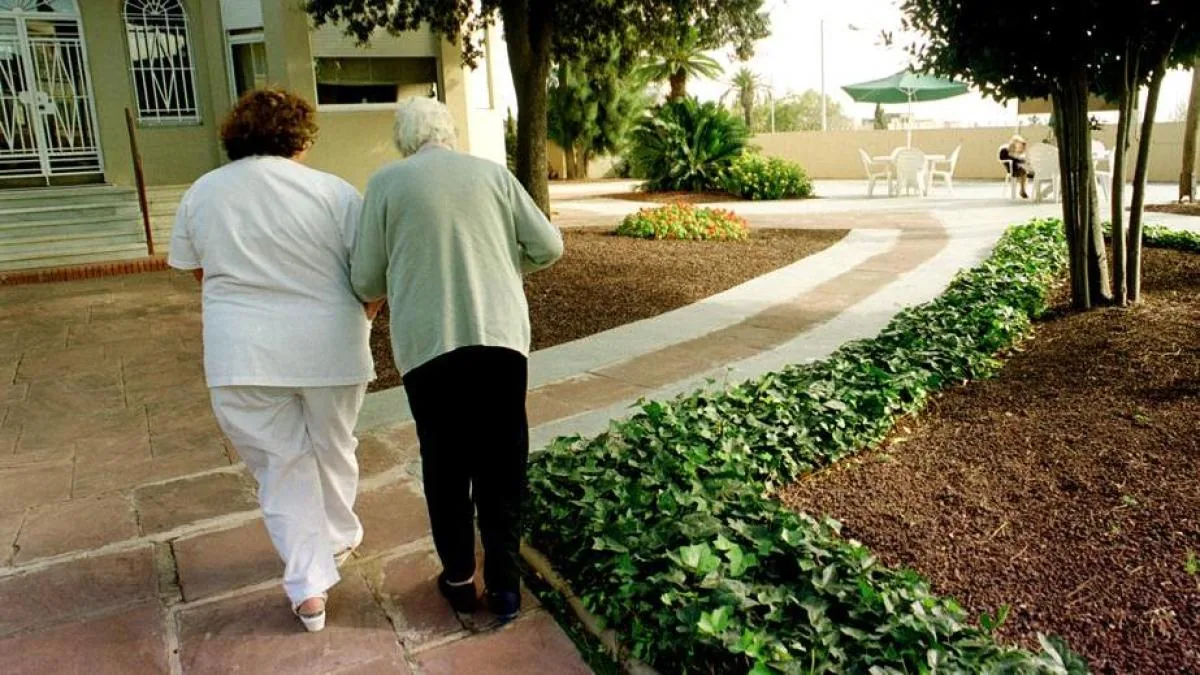
One of the novelties is that some of the residences will include housing so that elderly people with mild or moderate dependence can lead an independent life. In the same way, intergenerational union will be promoted, including nursery schools in several of the residences.
Specifically, new residential formulas are proposed, designed for these elderly people to have differentiated spaces that guarantee their privacy and autonomy, but with help when required. Thus, they will have physiotherapy, occupational therapy, or home care services.
All of them will be automated and will have Wi-Fi, anti-fall safety systems, smoke or fire alarms, and all advances in advanced telecare. And equipped with a kitchen, living room, bedroom, and adapted bathroom, in addition to having common areas to promote coexistence, physical activity, and interpersonal relationships.
For this, they will have a gym, dining room, workshops for leisure and free time activities, and outdoor areas. At the same time, elderly residents in these apartments will be able to use different spaces or services of the residential or day centers.
In addition, there are solutions for parents who have children with disabilities. “And therefore, what we have done is address this reality, and now they and their children will be able to live in the same centers to decide their life plan together,” said Díaz Ayuso. The residences will also have places for people with disabilities with a higher degree of autonomy so that they can be close to their parents.
Read more Valencian employers’ association: in favor of regularization and against «national priority»