
European justice has been clear, without half measures. The amnesty approved in Spain in 2024 to close all judicial cases linked to the procés had one goal: to promote “reconciliation” and reduce “institutional and political tensions.”
Read more And after the amnesty sentence, what should happen?
Based on this premise, the judges who composed the Grand Chamber of the Court of Justice of the European Union (CJEU) have clarified to the Spanish courts that States are “free” to apply an amnesty in the interest of the “general interest.”
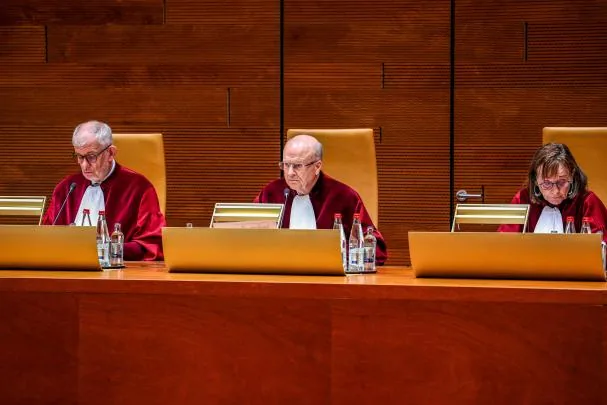
For the CJEU the amnesty was an “instrument to appease a major conflict”
This court has resolved various doubts raised by Spanish courts about the impact of the law of oblivion on community law. Well, according to the European judges, there is none.
When Pedro Sánchez began negotiating in 2023 the approval of an amnesty law to negotiate his investiture with separatist parties, part of the judiciary saw it as a betrayal. After its approval, some courts applied it but others took different measures. The main one was to present preliminary questions, whose primary consequence was that the procedure was suspended until the CJEU ruled.
This was done by the Court of Auditors, which when the amnesty was approved was about to issue a ruling on the accounting process against about thirty former Catalan senior officials to make them return 3.1 million euros for organizing the October 1 referendum and for setting up a network of delegations abroad.
The doubts raised by the responsible counselor were whether European funds were somehow affected and if so, whether it would affect community law, in which case the amnesty would be contrary to a higher norm. Given these arguments, the CJEU has clarified that it is not. That with 1-O the European interests were not harmed, but also, there was not even such an impact in the case of a hypothetical independence of Catalonia. The explanation is that in case of independence and if it ceased to be part of the European treaties, it would stop contributing financially but could not benefit either.
The State, therefore – according to the CJEU -, acted respecting its laws and legislation and this is confirmed by the Constitutional Court ruling that already supported the norm. In fact, it explains that internal courts must assume that an amnesty is combined by “political decisions” adopted by a State and that it implies “weighing divergent interests based on multiple assessments.” The judges clarify that the amnesty “does not violate the principle of primacy” or that of “loyal cooperation” which obliges States to refrain from any measure that could endanger the objectives of the European Union.
Read more The Argentine lover
From the two rulings issued yesterday, what is drawn is that European justice warns Spanish courts that once the political decision has been made to amnesty a specific process during a specific period, and that it has been approved by the legislature without violating any higher norm, what remains for them is to apply it. These courts must issue a resolution of “extinction of liability” without evaluating any evidence.
Another point that the law values is that it gives the courts the power to assess whether the cases they have open fall within what is amnestiable. However, if so, there is no turning back, they must apply the law of oblivion. What is clear is that what Sánchez did with the rest of the parties that supported the amnesty, in the eyes of European justice, was to apply an “appropriate instrument to appease a major political or social conflict,” which even justifies amnestying serious crimes, such as terrorism.
This is explained in the second ruling issued yesterday. The National Court had expressed doubts about whether amnestying acts of terrorism — specifically in a case involving twelve members of the Committees for the Defense of the Republic accused of belonging to a terrorist organization and manufacturing explosives — could contradict the obligation to impose “effective and dissuasive” sanctions. However, the CJEU is categorical in clarifying that Spanish legislation does not contravene Union law by excluding from its application those acts that have caused “intentionally serious violations of human rights,” thus allowing the most serious crimes to still be prosecuted.
One of the open questions was whether the definition of amnestied crimes in the Spanish grace measure was too abstract. Although the ruling recognizes that the law uses an open formula, the CJEU also does not consider that this implies a lack of clarity or legal precision, since it believes that national judges have sufficient tools to interpret the intention or seriousness of the facts in a predictable manner.
In its view, the law “objectively and abstractly determines” the scope of application of the amnesty” and this determination “does not seem to involve elements that could raise difficulties either in terms of its interpretation by the competent judicial bodies, or in terms of its predictability for the litigants.” For the court, concepts such as “intention, causality and seriousness” are tools of criminal law that national judges can apply unambiguously to exclude acts from the benefit of the grace measure.
Furthermore, for the Grand Chamber, the Spanish law respects the fundamental principles of equal treatment and non-discrimination. With the same aim of promoting “political reconciliation in the exclusive context of a particular political movement,” these crimes cannot be “comparable” to others committed in different scenarios. Therefore, the differentiated treatment established by the norm complies with European legality, understanding that the legislator acts within its margin of competence to resolve a rooted political and social conflict without compromising the effectiveness of community directives against terrorism.
Read more Endorse reconciliation