Good morning,
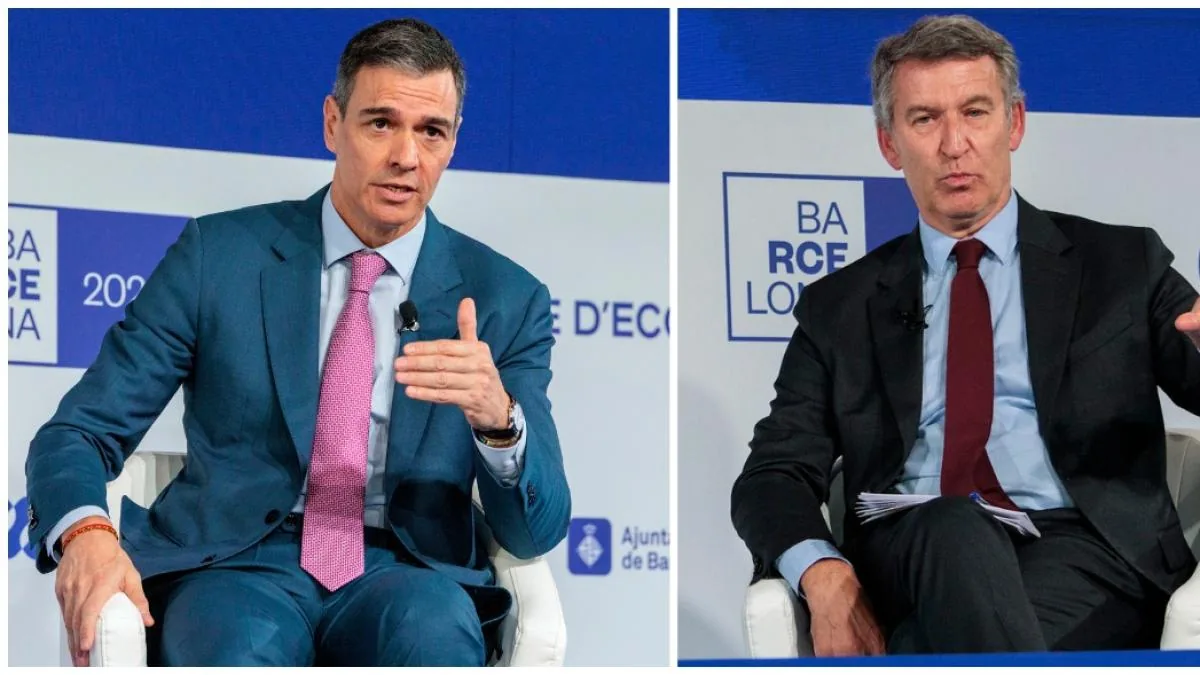
The Cercle d’Economia begins this afternoon its 41st annual meeting under the motto “Europe’s strategic autonomy: myth or reality?”. A crucial topic, no doubt, but the existing political crisis in Spain means that all eyes of those present are focused on the interventions that Pedro Sánchez and Alberto Núñez Feijóo will make throughout this week. First to speak on Tuesday will be the leader of the PP, who has never left his audience indifferent since his debut in May 2023, shortly before the general elections, where he defended a “calm and serene change” and a tax reduction. At that time, the popular victory seemed certain and the business community enthusiastically supported the popular leader’s speech. However, three years later, Núñez Feijóo remains in opposition. There is anticipation to hear his speech this year, in which conditions similar to those in 2023 are present: access to Moncloa seems near. The Galician leader is awaited with expectation and it is not about merely covering the basics, as he did a year ago, when he left the audience cold when, asked about BBVA’s takeover bid for Sabadell, he let slip that “my opinion is irrelevant.”
The next day Pedro Sánchez will speak to close the sessions. Surely his speech will be much more focused on his management in economic matters and will resemble little the rally yesterday at the Congress of the Socialist Youth, where he went on the attack and accused the “tricky opposition” of the PP and Vox of trying to bring him down with “dirty tricks.” It will be an opportunity to sell government achievements. In the words of one of his ministers, “the government’s action and the results we are delivering are spectacular. We cannot allow this campaign of harassment and takedown against the Government to hide that we are the fastest-growing economy in Europe.”
Sánchez will elaborate on figures and data about the Spanish economic evolution and it is possible that, before the business audience awaiting him, he will gloss over the institutional crisis the country is experiencing or the international conflicts. We will see, however, where Núñez Feijóo goes. Whether he takes the opportunity to explain his projects for the future or prefers to spend more time criticizing Sánchez and calling for an election. In recent weeks, it is true that the popular president has made a greater effort to announce measures for the day he governs, but the headlines always go to the confrontation with the Government.
The popular leader knows that Catalonia is important to consolidate his victory in the general elections, not so much to win, which he has quite accepted, but to gain a large advantage over Vox that allows him to govern alone. In the last general elections, he fell just short of obtaining more deputies in Girona and Lleida and hopes to do so now when Sánchez calls elections, whether this year or next. It should not be forgotten that Catalonia played a decisive role in preventing Núñez Feijóo from being invested president. The 13 deputies’ difference that the PSC had over the PP – 19 versus 6 – allowed Sánchez to compensate for the difference that the popular party had over the socialists in other communities. The great challenge for the PP now is to increase those 6 deputies and try to approach the record obtained by Josep Piqué in 2000 with 12 seats. Then the difference between both parties was only five and José María Aznar was invested president. Tomorrow, Tuesday, then, he has a great opportunity to launch his economic and social message and earn the trust of the Catalan business community.
However, attention must be paid to the judicial activity that will take place throughout this week and that may affect these Cercle d’Economia sessions. Today, Monday, the secrecy of the summary affecting the investigation into former socialist member Leyre Diez could be lifted, and it remains to be seen if the National Court will disclose to the parties the summary of a separate piece that could end in an accusation of illegal financing of the PSOE. Moreover, journalistic sources speculate that Judge Santiago Pedraz will end up summoning Pedro Sánchez himself to testify in this case in his capacity as party secretary general. Police investigations point to the PSOE having paid Leyre Díez 15,000 euros with false invoices.
As has happened in other cases of this type, journalistic speculation and political statements run ahead of judicial activity and it is taken as a given that there will be a formal accusation of irregular financing of the PSOE. When this happens, pressure to demand early elections from Sánchez will intensify, but Moncloa’s intention is to respect judicial independence and wait for the case to go to trial, if it does. As Republican deputy Gabriel Rufián summarized, “if it is confirmed that there is irregular financing, there should be elections,” to immediately clarify “when there is a final sentence.” Until then…
Therefore, the Government’s usual activity may be seriously affected, as has happened in recent days, by ongoing judicial investigations. The Executive wants to isolate itself from this situation and the Council of Ministers plans to approve tomorrow, Tuesday, a series of initiatives in education and housing to show that life goes on and that the Executive is not paralyzed. The problem is that many of these projects then lie dormant in Congress due to lack of support to approve them. The Government has resorted to the shortcut of royal decrees to approve many measures without needing to be ratified by the Cortes. More than a hundred in recent years. So far this year, the Government has approved ten royal decrees and no organic laws. And the budgets? Nobody knows anything and it has even stopped being news.
Regarding the activity of our newspaper, we must highlight that last week we held another edition of Foros de Vanguardia featuring communicator Iñaki Gabilondo. Here you can listen to his entire intervention, which was very brilliant and well worth following very closely. In Madrid, our Magazine presented its Beauty awards, which were a vindication of the cosmetics sector. As the Magazine’s director, Joana Bonet, said, “Spain exports more cosmetics than wine and oil combined.”
It is also worth noting that a new edition of the Vanguardia de la Ciencia award has started, celebrating its fifteenth edition. Here you can see the eight finalist research projects, all led by women. And finally, congratulations to the colleagues at La Contra, who have been awarded the prestigious Luca de Tena prize, granted by the newspaper ABC.
Read more The miracle
AS EVERY MONDAY, HERE IS A SERIES OF REFERENCES PUBLISHED THIS WEEK IN ‘LA VANGUARDIA’ THAT YOU CANNOT MISS
AI has been in the news this week. On multiple fronts, the most important has been due to Pope Leo XIV’s encyclical. Here are articles by Ramon Aymerich and Maria-Paz López where they comment on it.
Regarding the risks of this technology, I recommend these three interviews conducted by Francesc Bracero with Giuliano da Empoli, Carissa Véliz, and Richard Marko.
Regarding the Pope’s visit to Spain next week, La Vanguardia produced a special supplement, from which I would like to highlight the interview with the Archbishop of Barcelona, Juan José Omella, and a profile of the pontiff by our correspondent in Rome, Francesco Olivo.
Today marks one hundred years since the birth of the cinema myth Marilyn Monroe and here you can find a visual narrative with a text by writer Carlos Zanón.
Mayka Navarro has published various exclusive reports on the case affecting the death of Isak Andic. The most striking was the discovery of footage of a fall the businessman had ten months before his tragic death, which will be used by the defense. Here is the first report and a reconstruction of how this video came into the hands of Jonathan Andic.
At the local level, a group of Catalan engineers has written an article warning of the need to update infrastructures. They call for a national agreement to plan major projects with a 50-year outlook.
And finally, two news items about climate change that concern us. The first is a report by Andrés Actis concluding that Spain is not safe from another drought, despite having had a winter with heavy rainfall. The other is an analysis by Antonio Cerrillo on the heatwave Europe is suffering. Various correspondents explain the problems they face in their countries.
AND THESE ARE MY ARTICLES FROM LAST WEEK:
-Tuesday, May 26: Enough for elections?
-Wednesday, May 27: Press like drinking water
-Thursday, May 28: Insufficient for Sánchez
-Friday, May 29: We don’t deserve all this
-Saturday, May 30: No one dares with the motion
-Sunday, May 31: A generation without a home