Artificial intelligence is transforming cyber threats in an unprecedented way in just a few months. It is not just that AI models capable of finding hundreds of flaws in browsers and operating systems have appeared. In recent months, the OpenClaw project has demonstrated that AI agents can act without human intervention and persistently, making them more dangerous. The combination of reasoning ability with access to control privileges of computer systems has alerted global experts.
Read more The Badajoz Court decides today whether the trial against David Sánchez will proceed
An OpenClaw agent acts based on skills ( skills ). Through these specialized add-ons, it can do things that people do in their daily routine, such as reading and responding to emails, browsing websites and filling out forms, or scheduling meetings, but also more dangerous activities, such as stealing passwords, emptying cryptocurrency wallets, installing malware, or finding vulnerabilities in a system.
According to the cybersecurity company ESET, which recently organized the global cybersecurity conference ESET World in Berlin, about a thousand malicious skills were found among 60,000 scanned in March. Just two months later, in May, the number of malicious skills was already 3,000 among the 800,000 found.
“There is no longer a clear separation between cyberattacks and physical attacks,” says a NATO colonel
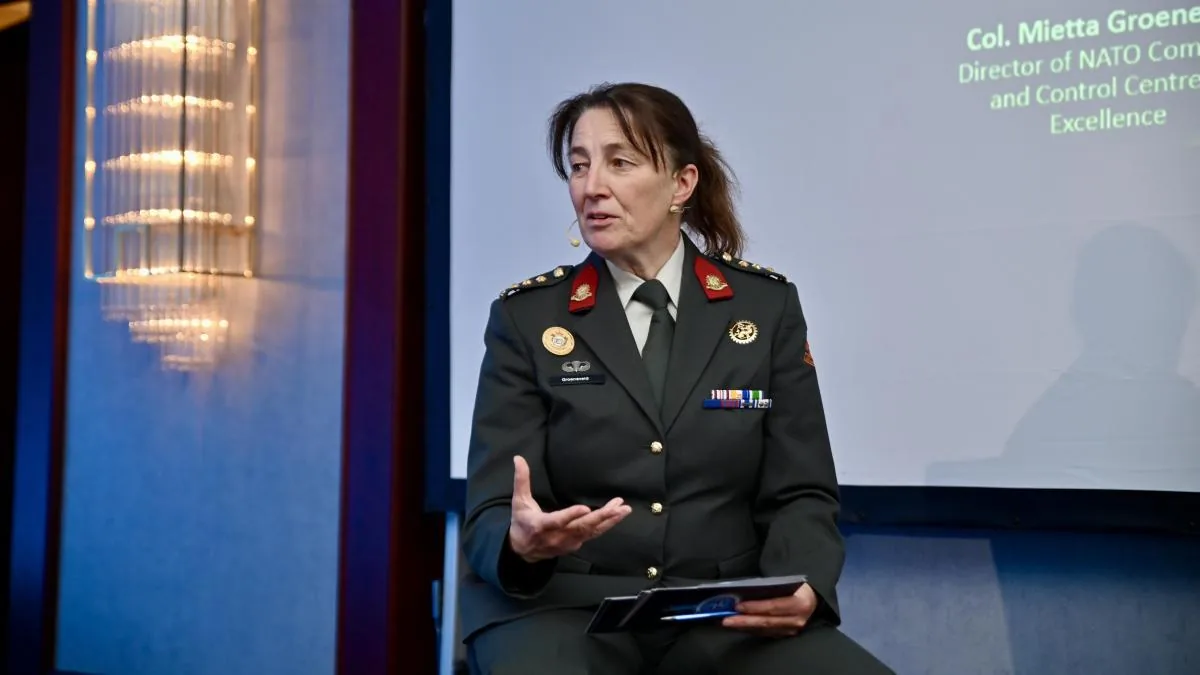
At the Berlin cybersecurity conference, Colonel Mietta Groeneveld, director of NATO’s Command and Control Centre of Excellence, warned that artificial intelligence enables a type of coordinated attacks on different fronts that make it difficult to understand how they work. “There is no longer a clear separation between cyberattacks and physical attacks,” she said.
Groeneveld recounted in Berlin that drones, thanks to AI, have gone from being remotely controlled machines to fully autonomous flying attack devices. For the NATO military officer, the new stage with machines that decide strategies and targets without human intervention “is really a frightening step.” To complicate the situation further, the colonel warned, “these drones are becoming very cheap and will be able to reach distant targets with great precision.”
The director of the European cybersecurity agency (Enisa), Hans de Vries, described that “the world has changed drastically in the last three or four months.” From his point of view, “the arrival of AI, especially cutting-edge AI, models that not only detect subtle vulnerabilities but also find ways to exploit them, has really changed the process.”
At the Berlin conference, the AI model Claude Mythos from the American company Anthropic was a recurring topic of debate; it has not reached the general public and has only been offered to a handful of large companies and banks in the United States because it is capable of finding vulnerabilities that have gone unnoticed in internet browsers and operating systems for decades. Other AI models may pose the same type of threat, such as GPT-5.5 from OpenAI.
Read more A girl injured by a stray bullet in a shooting in Badalona
The chief operating officer of the United Kingdom’s National Cyber Security Centre (NCSC), Paul Chichester, pointed out a positive aspect of new AI models like Mythos, which discover problems now hidden in cyber defenses, because they will allow “proper application of security by design and by default.”
“Now,” he observed, “there is no reason for any company to say ‘we didn’t know about our flaw, our current patch, or the vulnerability of our application,’ because in reality it can be seen and fixed at that very moment.”
“In Europe we are doing very well”
Colonel Groeneveld indicated that now, with AI, other things must be taken into account “beyond the tactical battlefield.” At the operational level, NATO is capable of collecting a large amount of data. For example, in Ukraine there are about 2,000 layers of data integrated into more than 100 command and control systems.
In a modern war, early detection of enemy actions leads to integrating AI to make the best decisions.
“Now,” the military officer commented, “we are facing the first use of decision-making tools that really allow you to plan longer term.” With this procedure, “winning a tactical battle has nothing to do with winning a war.”
“Our adversaries are beginning to use cyberspace as their main domain of combat,” warned the military officer. And that includes the dissemination of manipulated information.
“Keep in mind,” she pointed out, “that when you hear all those bad news that everything is going wrong, it is part of that cognitive belief they want to instill in you. The reality is that, in fact, in Europe we are doing very well and we are able to bring many people together and establish quick connections.”
“These algorithms,” she explained, “also allow a kind of narrative war in which AI can be used to, with the speed of technology, change the narrative that will be pushed on Telegram, then spread to TikTok, and reach conventional media.”
Groeneveld indicated the need for some automation in decision-making processes, because “if you are attacked at machine speed, you cannot wait for everyone to sit in a room to make a smart decision.”
Allie Mellon, senior analyst of Forrester’s security and risk team and ex-hacker, recalled in Berlin that AI does not yet have a high degree of accuracy and that using it can be inefficient in some cases.
“Studies have been published showing that, overall, response actions have taken longer with generative AI than without it,” Mellon pointed out before noting that, “like it or not, even if we do not use AI well, attackers will, as they are currently using AI to overcome their limitations.”
Also read
The analyst explained that an organized group of cyberattackers “sponsored by the Chinese state” is “experimenting with AI agents to automate as many aspects of the attack as possible” and “at high speed right now.” “We are entering a world where cost will be the new filter for the AI technologies and capabilities we adopt once we get there.”