






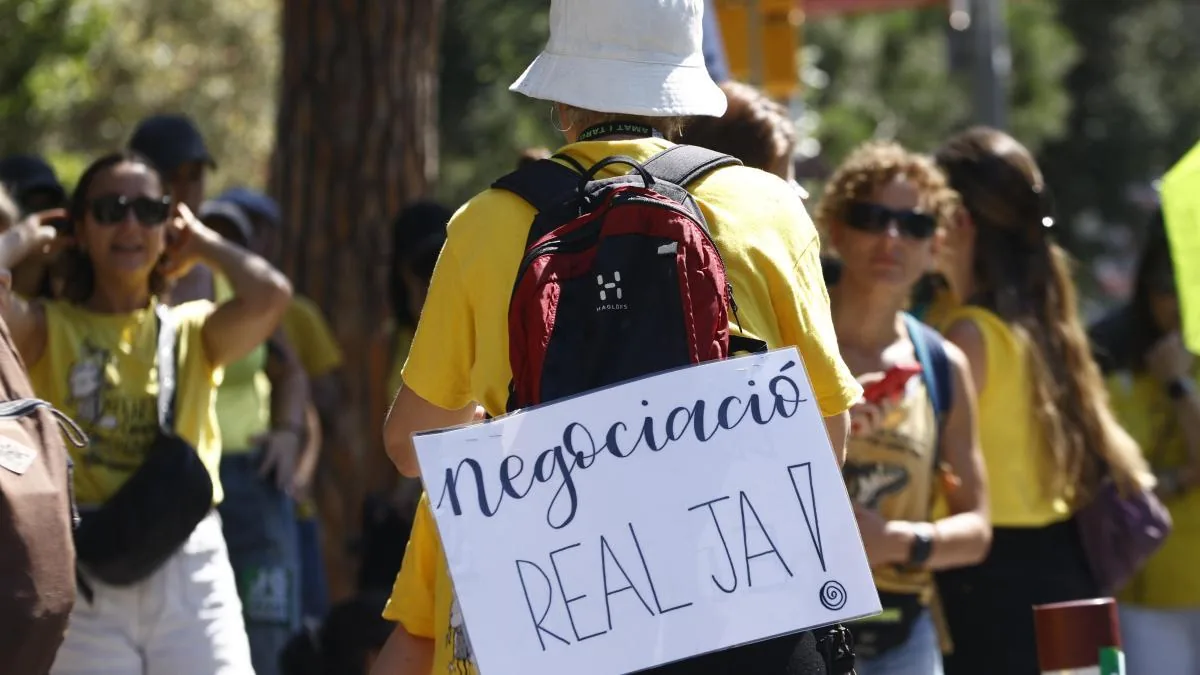
The Ustec union registered a strike call from June 8 to 12 on Thursday night and an indefinite CGT strike starting on the 8th. The registration of the dates took place after no agreement was reached on salary and resource improvements in education following hours of negotiation. This same Friday, amid the exchange of accusations between Educació and unions, the Ustec spokesperson has already warned that if no agreement is reached, they do not rule out coming out with a strengthened schedule of mobilizations.
About twenty union leaders spent the night locked in the department’s headquarters, and Segura warned that “they will not move from here” until the officials of Educació show a willingness to negotiate. Before starting the meeting, Ustec spokesperson Iolanda Segura told reporters that she expected to find more “negotiating willingness” from Minister Niubó, after the brief meeting on Thursday night, and lamented that the previous day’s negotiations had “got stuck on the issue” of “addressing the complexity of classrooms.”
Segura has defended the protests of the teachers these days and even spoke of expanding them if positions do not come closer. “We do not rule out leaving here with a mobilization proposal far beyond what we already have on the table,” she warned, recalling: “We have announced for a long time that we will not finish the school year normally.”
The unions on strike expressed this Friday their desire that Minister Esther Niubó improve yesterday’s proposal, which included another 400 gross euros and 7,000 new allocations in four years, ahead of the new meeting that began today or they will consider presenting another strike schedule.
The 400 euros is an inflated figure, according to the unions
In yesterday’s meeting, the administration conveyed to the unions calling the strikes – Ustec, Secondary School Teachers, CGT, and Intersindical – its latest proposal: a salary increase of about 400 gross euros more per teacher per month over four years and more than 7,000 new allocations in the next four school years.
Read more This is Barça’s economic plan to sign Julián Álvarez
However, the unions on strike claimed that the department “inflated” its pay offer, arguing that these 400 euros included salary increases planned at the state level that reduced the total amount to about 330 euros, and a total of 17 union representatives locked themselves in the department’s headquarters as a form of protest.
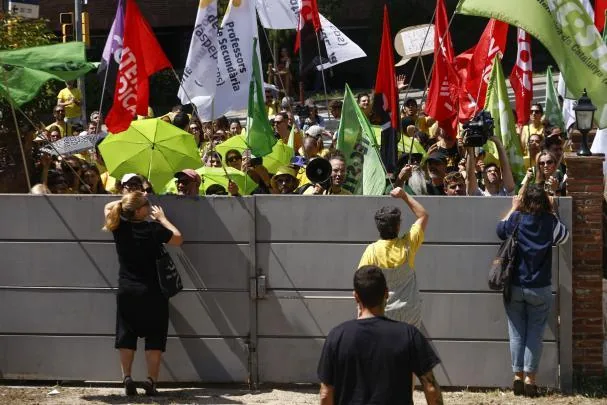
Before attending the new meeting, which is taking place in an annex building to the department, Ustec spokesperson Iolanda Segura explained that yesterday “there were many expectations” to unblock the conflict, but no agreement materialized. The spokesperson for the Secondary School Teachers’ Union Action, Ramiro Gil, described the role of the Education officials on Thursday as a “blockade” and even called the attitude shown by the minister “arrogant.” Gil pointed out that, besides the salary issue, there are many others they want to address regarding an “education system that is in collapse.”
For her part, the general secretary of the CGT Education Federation, Laura Gené, also urged Niubó to “truly dialogue” and “leave ego and arrogance behind.” Gené criticized the Government’s policies, especially due to the recent controversies involving the Mossos d’Esquadra in the educational field. “If there are resources to raise the salary of the Mossos or for absolutely unnecessary infiltrations, or to expand the airport, there must be for public education,” she countered.