Israel momentarily looks away from Iran, stuck in an agreement that has not been reached with the United States, and refocuses on its two main nearby fronts: Gaza and Lebanon.
Read more Alexia Putellas: “Yesterday I felt a huge emptiness and today I am full of love”
Israeli Defense Minister Israel Katz reiterated this Wednesday the government’s willingness for the voluntary expulsion of Palestinians in Gaza, an initiative promoted at the beginning of 2025 but which had been put on hold due to the evolution of the military offensive and the negotiations of the current ceasefire.
Various Middle Eastern governments, as well as international organizations, maintain that the real intention of the Israeli government is to generate a population exodus in the strip. “The voluntary migration plan for Gaza will also be implemented, all in due time and in the right way,” Katz wrote on the social network X.
The proposal arose after the U.S. president, Donald Trump, suggested in February 2025, after meeting with Israeli Prime Minister Benjamin Netanyahu, the possibility of displacing Gaza’s population outside the enclave. The idea was quickly adopted by members of the Israeli government, although human rights groups consider it an ethnic cleansing project.
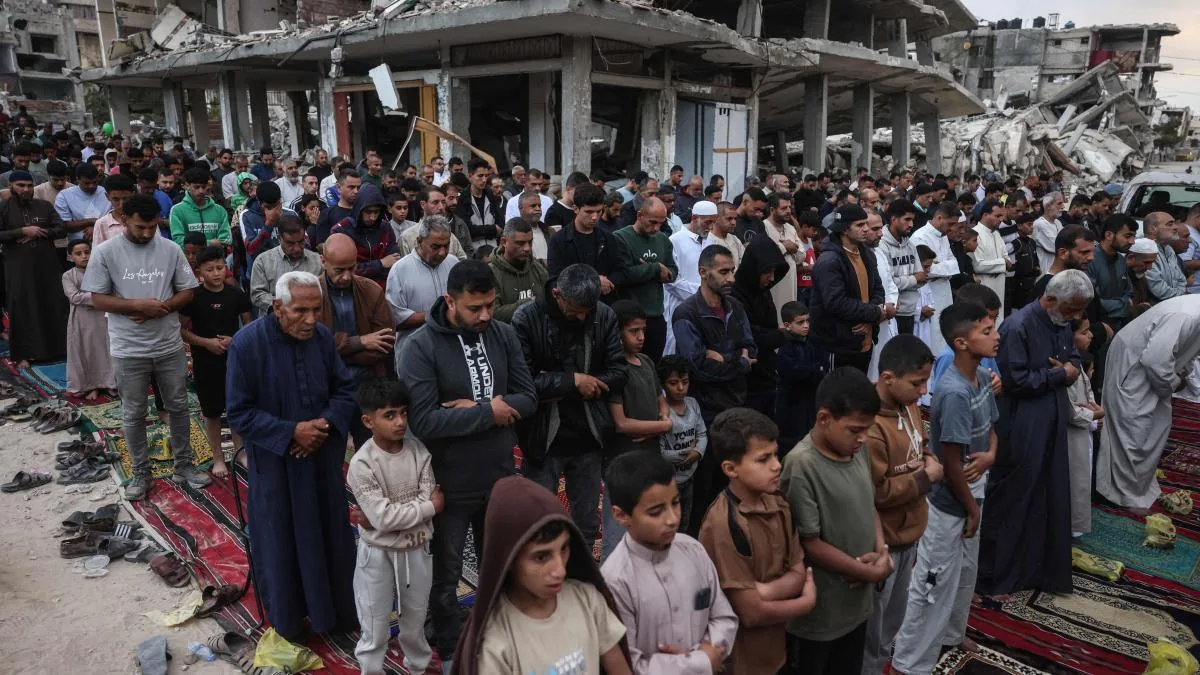
The majority of Gazans survive among tents, improvised shelters, or destroyed buildings, while reconstruction remains stalled
That same month, Katz announced the creation of an office under the Ministry of Defense intended to manage the “voluntary exit” of Gaza residents and assist those wishing to leave the Palestinian territory.
Currently, about 2.1 million people survive in the Strip, many concentrated in the narrow coastal strip after months of Israeli offensive and military occupation of large areas of the enclave. According to the United Nations Satellite Center (UNOSAT), 81% of Gaza’s structures have been damaged since the start of the war on October 7, 2023.
The majority of Gazans survive among tents, improvised shelters, or partially destroyed buildings, while reconstruction remains stalled and the ceasefire does not translate into effective rehabilitation of the territory. According to the Gaza Ministry of Health, more than 72,800 people have died in Israeli attacks since the start of the offensive.
In the latest wave of bombings on the enclave, Israel killed the new military chief of Hamas, Mohammed Odeh, 11 days after killing his predecessor. On the same Wednesday, the Islamist militia confirmed his death as well as that of his wife and children in the attack. Gaza’s civil defense agency, which operates as a rescue service under Hamas control, reported at least three dead and 20 injured in the attack in the Rimal neighborhood, in the west of Gaza City.
Read more The bridge between growth and well-being «has broken» due to housing and prices, says the CES
“The fourth commander of the military wing of the terrorist organization Hamas in Gaza was eliminated yesterday and sent to join his partners in the depths of hell,” said Israeli Defense Minister Israel Katz in a post on X, praising the Israel Defense Forces and Shin Bet for their “brilliant execution.” “We promised to eliminate all those who led the October 7 massacre, and that is what we will do,” Katz wrote. “All are marked to die, everywhere.”
Meanwhile, various media report that the Peace Board – the mechanism promoted by Donald Trump conceived as an international authority for Gaza control – is completely paralyzed due to lack of funds. Although it was announced with the formal backing of multilateral institutions and funding commitments from several states, it has not received effective contributions. Furthermore, its composition – with the presence of Trump’s political allies and actors unusual in Middle East diplomacy – has generated mistrust in European capitals and among traditional donors, who have chosen to stay on the sidelines.
But the front that has gained the most intensity in recent weeks is southern Lebanon. Israel has significantly intensified its military campaign in southern Lebanon with a new wave of evacuation orders and attacks focused on the city of Tyre, one of the main cities in the region. The Israeli Army issued a statement this Wednesday urging residents of Tyre and several nearby towns to leave their homes immediately due to “imminent military activity” which, it claims, is part of its offensive to dismantle Hizbullah’s structure in the area.
Tel Aviv urges the inhabitants of Tyre, the country’s third city, to leave amid increased attacks
The warning was accompanied by a map detailing the affected areas, which included large parts of the city, and was also disseminated by the Lebanese National News Agency. The Israeli military spokesperson in Arabic, Avichay Adraee, asked the population to move north, beyond the Zahrani River, warning that any movement south of the river could endanger their lives. The order was added to a series of mass evacuations issued in recent days in the south and east of the country.
Shortly after the warnings, new Israeli bombings were recorded in various areas of southern Lebanon, including attacks in the Tyre district and other towns that left at least one Lebanese soldier dead and two other fatalities, according to local sources. The Lebanese Army confirmed the death of one of its personnel near a post in the Bekaa region, while Lebanese media reported deaths in Deir Amas and the destruction of homes in Braiqaa.
The attacks occurred alongside clashes in the border area, where Hizbullah claimed to have directly fought Israeli forces beyond the so-called “yellow line,” an Israeli demarcation that defines a security strip in the south and east of the country. The Lebanese group also claimed to have carried out dozens of operations against Israeli military positions, including the use of rockets, artillery, and drones.
The escalation is part of a sustained intensification of violence in Lebanon, where the Ministry of Health estimates more than 3,200 deaths since the start of the campaign in March. On Tuesday, Israeli bombings left at least 31 dead, alongside the entry of Israeli ground forces into the south of the country, according to statements by Prime Minister Benjamin Netanyahu, who said the goal is to consolidate a “security zone” in Lebanese territory.
Read more The housing crisis drives donations to historic highs in Catalonia