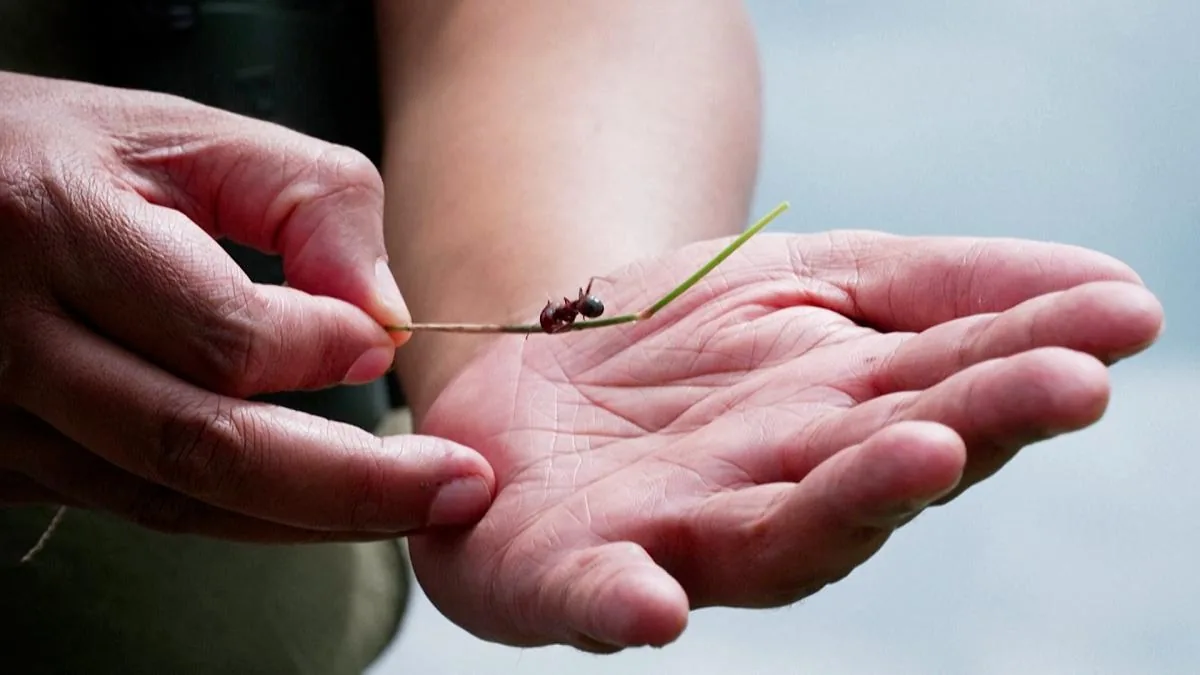
As a child, the movie The Butterfly Effect left me with a disturbing and ingrained idea: that a minimal, almost invisible gesture could completely alter the course of a life. Years later, this chaos theory is glimpsed not in the wings of a butterfly, but in the red and black body of a queen ant.
Read more The prestigious Catalan luthier who saw his career threatened by a rare disease
Ant smuggling has become a lucrative business in East Africa. Their main destination is China, the United States, and Europe, where some specimens fetch prices of around 80 euros each. “When I saw what they were paying for these queens, I was completely stunned,” recalls Kenyan entomologist Dino Martins.
“The tigers of the ant world”
A single queen ant can sell for up to 200 euros
In Europe, interest in these ants is far from marginal. On specialized websites, a single queen can sell for up to 200 euros. Although many are marked as “not available,” obtaining them is becoming increasingly easy for those with the right contacts, according to Ryan, a 25-year-old Frenchman who asked to be identified only by his first name.
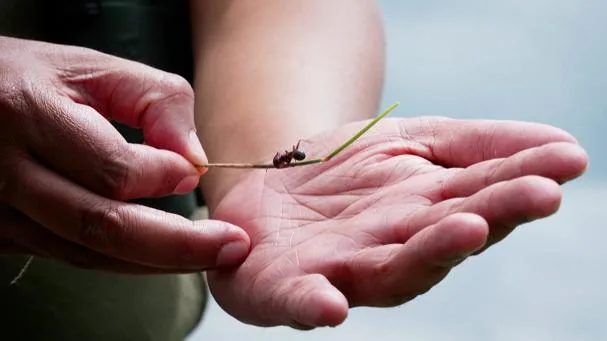
“They are big and bold. They are the tigers of the ant world,” Martins told AFP. The entomologist knows well the species now at the center of an unexpected international smuggling plot: the Messor cephalotes, a giant harvester ant that fascinates collectors worldwide.
Martins has been visiting their nests for forty years. He knows that each one houses a single queen: the colony’s founder, a mother who may have started her underground empire four or even six decades ago. That is why, when he learned that thousands of queens were being ripped from their nests and sent abroad inside syringes and test tubes, the impact was immediate.
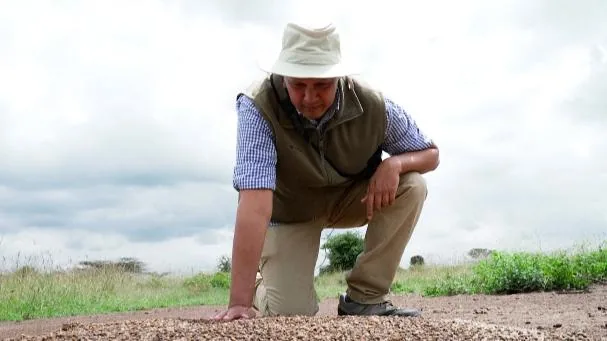
The case came to light in Kenya last year when two Belgian teenagers were arrested with nearly 5,000 queen ants. Authorities accused them of “biopiracy,” a word that is beginning to take on a dark place in conservation vocabulary. In a country historically marked by the fight against ivory and fur trafficking, investigators now fear a new form of poaching: less visible, smaller, but equally lucrative, focused on insects, reptiles, and rare plants.
Read more Was the grandfather a Nazi?
Also read
The judge in the case did not hide the seriousness with which she viewed the matter. In her ruling, she compared the mass capture of ants to slave trafficking. “Imagine being violently torn from your home and locked in a container with many others like you…,” she wrote. The Belgian youths were fined close to $8,000. However, as new cases have emerged, penalties have hardened. Last month, a Chinese citizen was sentenced to one year in prison for attempting to traffic 2,000 ants.
A decade ago, a single queen could cost up to 1,000 euros
Ryan
Former buyer
For Ryan, the attraction to these insects is hard to explain. He describes them as “hypnotic.” He sought the largest harvesters and ended up buying a starter kit with a queen and 12 workers for 450 euros from an authorized seller. It seemed “very reasonable” to him: a decade ago, he says, a single queen could cost up to 1,000 euros. But the fascination was not enough. The colony proved too difficult to raise, and he ended up giving it away.
The absence of ants
A bigger effect than it seems
As ecosystem engineers, ant nests create a structure in the landscape that ensures rainwater filters into the soil and is available to plants. In this way, ants perform multiple functions on which both humans and livestock, including cows, and wildlife depend. Without these ants, the savanna would not exist.
Giant harvester ants are not an isolated rarity. They are found from the Mediterranean to the Cape and work almost 24 hours a day, collecting and cutting grasses to feed their larvae. Their organization, resilience, and discipline have captivated humans for centuries.
But that fascination now has a dangerous flip side. With each queen removed, not only does an insect disappear: a possible colony disappears, a network of tunnels, a food chain, a small underground architecture that supports other forms of life. Perhaps the butterfly effect does not always start with wings flapping in the air; on this occasion, it would begin with an ant torn from the earth.