On April 15, 1945, when the defeat of Nazi Germany in World War II was already imminent, a senior official arrived at Hans Huber’s paper factory on the outskirts of Munich with a strict and secret order. According to the instructions, several trucks loaded with papers would arrive at his factory, which had to be destroyed immediately.
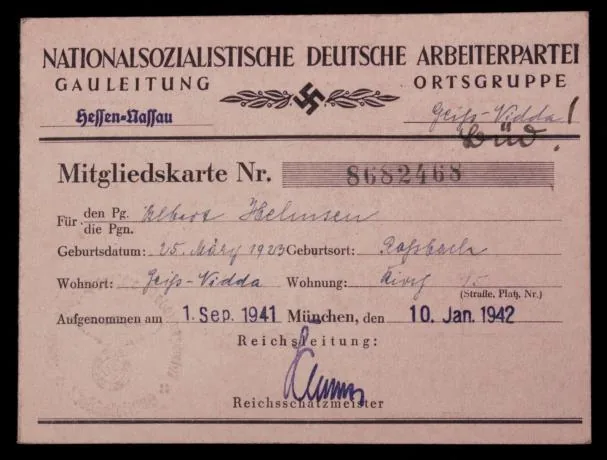
Days later, when they arrived, Huber discovered that they were piles of cards of members of the National Socialist German Workers’ Party (NSDAP) – the full name of the Nazi party – and understood Adolf Hitler and his followers’ will: not a single one of those names should fall into the hands of the war victors.
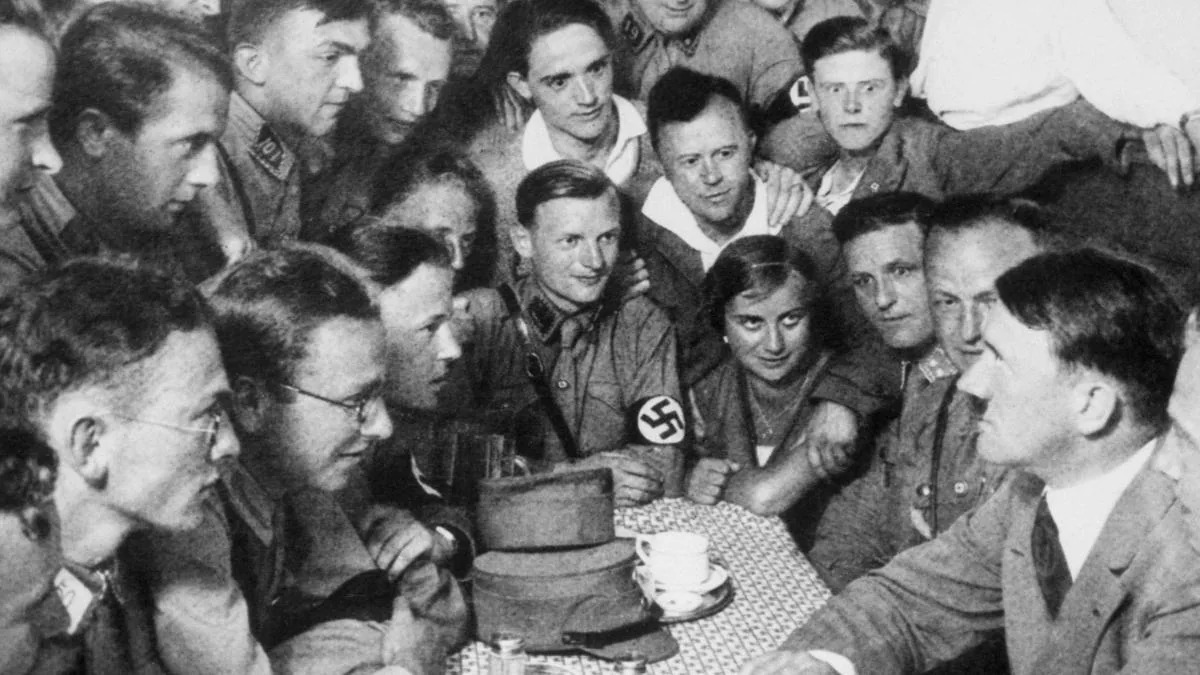
In mid-1945, the Nazi party had 8.5 million members from an adult population of around 65 million people. Hans Huber disobeyed the order and hid the cards among piles of waste paper. Thus, while documents were burning in other parts of the Third Reich to erase the past, 80% of the Nazi party files survived in Munich.
This saving action by Huber has consequences that reach 21st-century Germany, when the grandchildren and great-grandchildren of those who lived at that time wonder what their ancestors did during the Hitler regime. Was the grandfather a Nazi? And the grandmother? Or maybe even the great-grandparents?
The admission date gives clues
Having joined before 1933, the year Hitler came to power, indicates early support and strong ideological identification, while later membership may be due to pressure or opportunism
All those cards, physical property of present-day Germany but also of the United States in their digitized version, were posted online openly last March by the U.S. federal agency National Archives and Records Administration (NARA). The database contains nearly 11 million NSDAP membership cards, digitized on 5,000 microfilm rolls.
Since then, the website has recorded more than 1.5 million searches, mostly by German users, and has occasionally crashed. In Germany, the newspapers Die Zeit and Der Spiegel have included tools in their digital editions to search the U.S. archive, accessible only to subscribers.
“National Socialism continues to have a multifaceted impact on today’s German society. Many people wonder what role their relatives, acquaintances, colleagues, or club members played during that period. The archives offer opportunities for independent research, but sometimes this can be overwhelming,” says historian Johannes Spohr on his website Present Past, which offers historical family research services related to Nazism.
“Of course, it often happens that those searching never got to know the people they are investigating; that distance can make it a little easier to ask questions, but the answers still hurt,” says Spohr, author of the book Present Past. Wie Nachfahren ihre NS-Familiengeschichte erforschen (Present Past: How Descendants Research Their Nazi Family History), published in 2025.
Read more The electoral board validates the endorsement of Enrique Riquelme, who will face Florentino
Germany is rightly praised for how it manages its terrible historical memory of the 20th century, but one thing is monuments and public, general acts of contrition, and quite another is the memory of families, concrete and specific. In the immediate postwar period, the generation of perpetrators wrapped themselves in silence. The second generation – the children of the Nazis – managed the burden in two ways: either through political rebellion in the sixties or through total and persistent denial. Now, the grandchildren and great-grandchildren want to know.
In the membership cards, the admission date is an important clue: having joined before 1933, the year Hitler came to power, indicates early support and strong ideological identification, while later membership may be due to pressure or opportunism.
“There were many reasons why people joined the Nazi party; membership was not mandatory. But joining was a sign of approval, it implied supporting the system; members paid their dues and laid the foundation of the movement,” says Martin Clemens Winter, historian at the University of Leipzig. “The cards cannot clarify someone’s reasons for joining or leaving the party, nor specific behaviors,” he warns. That is, thousands of members did not commit blood crimes, and conversely, there are Nazi criminals who were never party members.
Since 1994, the German Federal Archive has preserved the original and digitized NSDAP membership records saved by Huber, which can be consulted upon justified request. But there is a catch: there is no freely accessible online search. This is due to the strict data protection deadlines established by law in Germany, which are one hundred years from the person’s birth or ten years after their death. The Federal Archive’s plan is, according to a spokesperson, “to make the complete membership register available online in the coming years, once these deadlines have passed.”
Thus, the U.S. database completely bypasses these obstacles, although diving into it, even with the help of Der Spiegel and Die Zeit’s tools, is not an easy task. Searching by name, surname, and date of birth does not lead directly to the person’s card but to digitized microfilms that must be viewed in detail. Sometimes, automatic text recognition misreads names. Also, the archive does not reveal information about membership in the Wehrmacht (armed forces) and the paramilitary SA and SS corps.
Nazism and family history
Grandchildren and great-grandchildren want to know; sometimes they never met the relative they want to investigate, which somewhat facilitates the process, although the answer is ultimately also painful
And why does Washington have this digital database? In 1945, the U.S. occupation authorities transferred the rescued cards in Munich to the Berlin Documentation Center (BDC), founded for this purpose, and used part of those archives to prepare the Nuremberg trials of high-ranking Nazi officials. In 1967, the Americans wanted to return this material to the Federal Republic of Germany (FRG), but it was not accepted until 1994 – that is, years after reunification – as it was initially considered delicate to make them accessible.
The reality is that, in postwar West Germany, many Nazis – those who theoretically had not committed crimes – remained active in professions and politics. Eighty-one years after the end of the war, the times finally seem ripe.
Read more The UDEF places Julio Martínez as Zapatero’s frontman: «He is the boss’s bank»