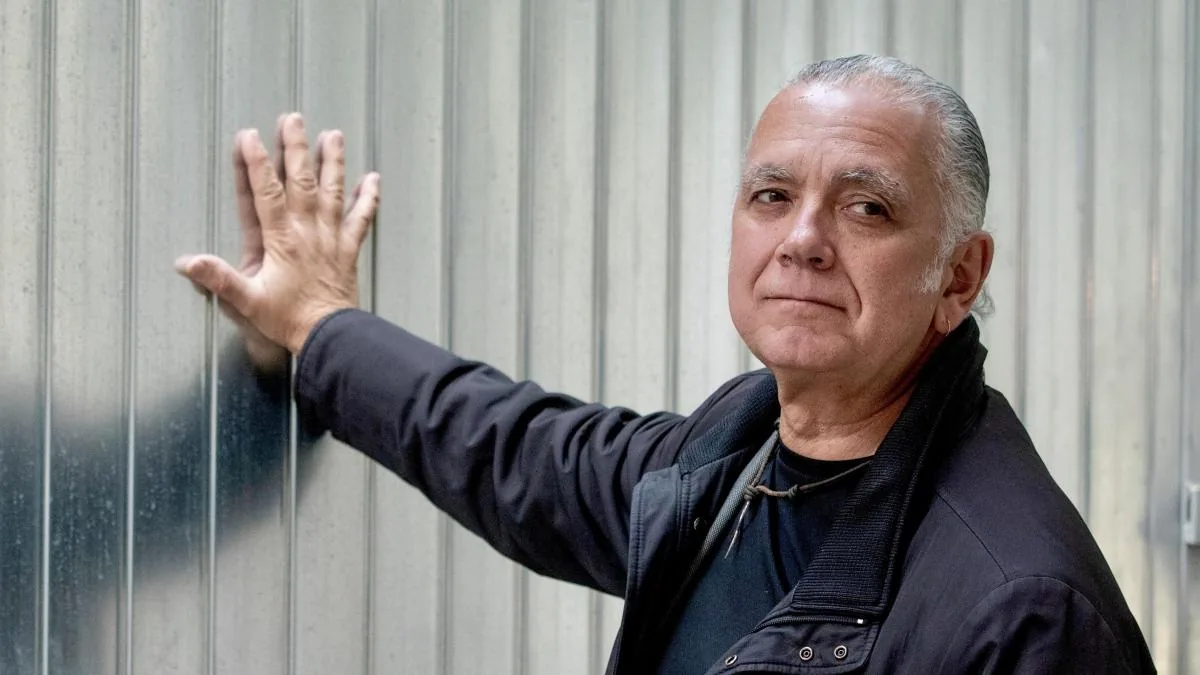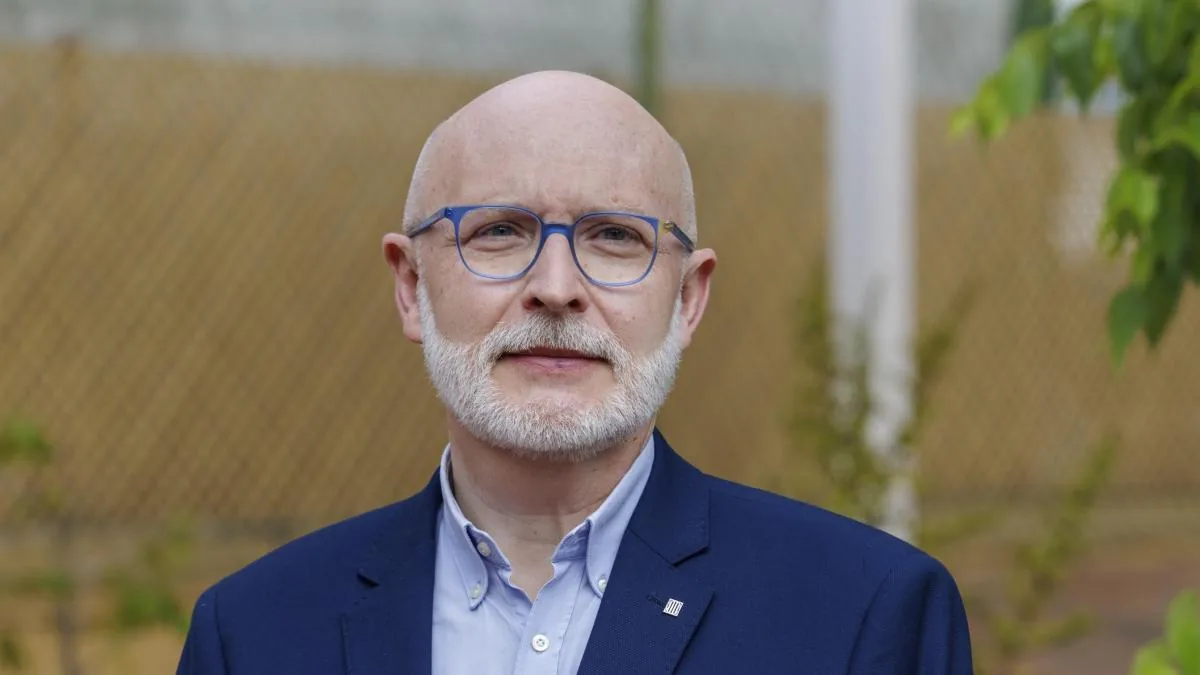
“No, older people are not a big expense. Longevity is an investment; these people have contributed throughout their working lives and will continue to contribute from 65 onwards. And even if they become dependent at 80 or 85, they will still contribute, because the services they need generate economic and social returns.” This is how emphatically Pedro Cano, the first general director of the Gent Gran of the Generalitat of Catalonia, speaks about the great importance of the senior group in our society.
Read more The Tour demands that cyclists stop urinating in their water bottles
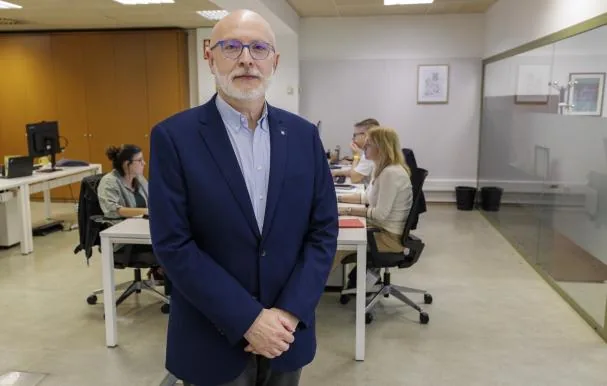
Cano (Barcelona, 1965), a doctor and surgeon with a long managerial and administrative career, worked before his appointment at the Consorcio Corporación Sanitaria Parque Taulí de Sabadell, after also passing through the Bupa-Sanitas group, as coordinator of the care program for people with dementia in Spain, the United Kingdom, Australia, and New Zealand.
The doctor receives La Vanguardia in his office on Aragó street in Barcelona and is optimistic about the new longevity scenario, in which more than 20% of the population is over 65 years old. “I would tell this group to face this stage with calm and enthusiasm, because they can have many years ahead with full capacity. They should not underestimate the change in work status; I am convinced it opens many possibilities to continue enjoying life 15, 20, 25 years more… Why not reach 100?”
The Generalitat has created a Direcció General de Gent Gran, a position you have held since October. Having direct interlocutors in the administration is a demand from seniors that we have explained many times in Longevity. Was the current demographic moment necessary for this?
I believe it is a consequence of reflection by the current government and also the previous one. Demography is stubborn: more than 20% of the population in Catalonia is over 65 years old, and that figure will only continue to grow. Therefore, the weight of older people, in their different stages, will increase. We all have to adapt to this situation, including government policies.
There are people between 60 and 80 years old who rejuvenate, with very full life expectations, wanting to live this stage dedicated to leisure, personal growth, and continuing to contribute
Pedro Cano
Finding the word to define this group is not easy. At 60 years old today, we do not consider a person “old.” In Longevity we talk about seniors… Why “older people” in the title of the general directorate?
Yes, it is complicated. In fact, associations of older people demand not to speak of “people” but of “older persons,” because each one has a different life story. Now this topic has exploded; there are more and more books and people working on it; concepts like “gerontolescence,” used by Pere Estupinyà, appear: people between 60 and 80 years old who rejuvenate, with very full and satisfying life expectations. Many people want to live this stage dedicated to leisure, personal growth, and continuing to contribute to society, without necessarily thinking about dependency, care, or chronic illnesses. Many have good pensions, physical and mental capacity for a full life, to travel, to go out, to enjoy culture…
What is the main task of this new general directorate, considering the diversity of the group of people over 60 years old?
The president Illa’s task is to launch the strategy for a long-lived society and a full life. That is the fundamental part of what is expected from this Direcció General de Gent Gran. We start from the participatory diagnosis made in 2024 working with an advisory council of 19 specialists. Now we are prioritizing about 50 actions, on which an action plan will be made, with a longevity approach, not only from the usual vision of social rights and health. It is a strategy to achieve real changes in society; we want it to be an example for other organizations and companies. A bit, if you allow me, like what the Godó Group did with the Longevity section, when two years ago it decided that these topics were so relevant to its readers that they deserved to have a section,
Where will those priority measures or actions go?
Many of the requests we are receiving have to do with housing. There comes a time when the house where a person has lived all their life becomes too big, and when they are left alone because their partner has passed away, even more so. We need smaller, more adapted housing solutions with services that help to live many more years independently. That will be one of the important lines.
President Salvador Illa recently announced the Pla Cura. What does it mean in relation to the dependency law and older people?
It is a first step in the right direction to review the LAPAD, the Dependency Care Law, which turns 20 this year and needs to be updated. The service portfolio has remained practically unchanged for 20 years, and today we have many more possibilities for people who, when the time comes, need support in daily life activities.
Citizens ask for the model to be closer to home care, so that people who start to be a little dependent do not have to go to a residence…
Yes. We have to rethink the model, bring it closer to the home, the community, the neighborhood. Older people ask for services closer to their environment, and that means having a new generation home help service, with new professional profiles, different intensities, more technological support. Telecare is advancing and changing. If we add housing with services for older people, we will greatly expand the capacities we currently offer to those who need help.
The public administration must more strongly promote the model of housing with services for older people
Pedro Cano
There is much talk about cohousing and senior coliving. Are they a real solution?
They are one more option. Some groups of people decide to start them collectively, but I believe the public administration must more strongly promote the model of housing with services for older people, which will be part of the Govern’s 50,000 homes plan. Cohousing and coliving have pros and cons. Living as a couple is already complicated; living in a community for 10, 15, or 20 years implies that the good initial relationship is maintained over time. And that will generate scenarios we do not yet know well.
One of the big problems remains access to a public residence place. What response can be given to families?
Expand the service portfolio. Residences should not be the only solution to choose, but there should be other lower-intensity modalities that allow continuing to live at home as long as possible. Telemonitoring solutions, for example. And with the new Integrated Social and Health Care Agency, the integration between social services and health will help us develop many more services.
The group denounces the high prices of residences… How do you assess the current situation of these centers in Catalonia?
Residences have evolved a lot in the last 20 years. Those managed today in Catalonia and the rest of the State have nothing to do with those two decades ago. The profile of the people living in them has also changed: today they are people with higher dependency because there are already other options to avoid entering a residence. It is as bad to stay at home needing a residence as to go to a residence having been able to stay at home. The system must be more flexible. We have to change the care model and allow each person to be in the place that best suits them.
Where should they evolve?
Towards a model more focused on the person’s needs. Living units are increasingly smaller, more adapted to community life within the residence. That is the way: to meet basic needs but also social ones. Residences will continue to be necessary, but there will be many more options to choose from.
Read more Rosalía’s Berghain revolutionizes Spanish artistic swimming: This is the striking choreography
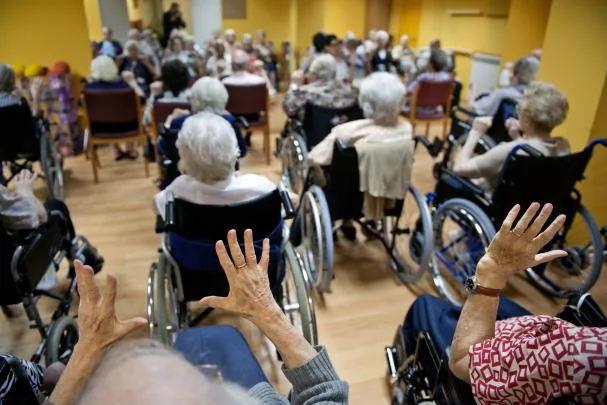
Another big challenge is unwanted loneliness, which affects young people more than older people, contrary to what is usually thought, but it also threatens this group. We talk a lot about it, but not much is done to address it…
Unwanted loneliness has a lot to do with housing, community life, socialization… We are addressing it with an early detection approach. We must take into account that it affects physical condition, mental health, and physical health. Unwanted loneliness is accompanied by more frequent visits to primary care centers and more medication. With social prescription, many of these circumstances can be alleviated.
You are a doctor and surgeon. From your healthcare experience, how has the population over 60 changed?
I am already in that group: I am from 1965! The group has changed extraordinarily. We live in the first generation that can reach 80, 90, or even 100 years. More than 3,000 centenarians live in Catalonia, many of them with great mental and intellectual capacity and still a very satisfying life. We are the first generation that has those extra 20 years to live. And those years are years to live normally if you do not have significant chronic diseases or if you can manage them well with the health system. Older people are a very diverse group; each person has their hobbies and their capacity to continue contributing to society as a mentor, in volunteering, or even professionally if they wish.
There are people who need to retire at 61 because they have had very hard jobs, but there are also those who want to keep working and now cannot always do so
Pedro Cano
Given the change in the demographic scenario, do you think retirement should be more flexible?
Yes. We should facilitate that people aged 65 or older who want to continue contributing can do so, whether as volunteers or in paid activities. It is clear that some people need to retire at 61 or 62 because they have had physically very hard jobs, but there are also many people who want to keep working and now cannot always do so. The State and the European Union are working to have more flexibility, to avoid applying standard suits to everyone, but more tailored suits, partial retirements.
You strongly defend the great role of seniors in volunteering…
Yes, it has immense value. I heard Professor Francesc Torralba say that volunteering in Catalonia would collapse if older people stopped contributing their talent, time, and dedication. And I am not just talking about volunteering for older people, but cultural, linguistic, social, of all kinds.
Unemployment among people over 55 already exceeds that of the 25 to 54 age group, according to recent data. We talk a lot praising senior talent, but in practice, entering the INEM lists is almost labor death…
Society is changing. Talent, in general, is a scarce good, and organizations increasingly compete to have the best talent. I believe more and more companies value people over 55. In a world marked by artificial intelligence, what AI cannot replace today is individual capacity, experience, and creativity. Cases are already occurring of companies revaluing groups that a few years ago had been written off.
Prescribing socializing, having bonds, participating in activities is already being tested in some areas of Catalonia
Pedro Cano
Prevention is still not a priority in the public health system, but Catalonia has now deployed a sports prescription plan to replace drugs with good habits. Where should that more preventive medicine go?
In Catalonia, the PAAS program from the Department of Health has existed for years, dedicated to promoting healthy eating and physical activity. We probably need to communicate it even more. Physical exercise prescription is an important line. And social prescription too: prescribing socializing, having bonds, participating in activities. It is being tested in some areas of Catalonia, and its beneficial effects are being studied, as has already been done in other countries. In the United Kingdom, for example, the NHS has a social prescription catalog that doctors can offer their patients. Pilots are being done in Catalonia.
You also insist on the economic value of longevity. You give it great importance to highlight this stage of life.
Yes, we are not only talking about care and services. We are also talking about the social and economic value of the senior economy. In 2022, ACCIÓ conducted a study on the silver economy in Catalonia and found that more than 50,000 people worked in jobs related to the economy of older people, and that moved more than 10 billion euros. This is very relevant because it is not only about rights, which are very important, nor only about services. We also talk about the added value of innovation and entrepreneurship that can be developed around older people.
More than 50,000 people worked in jobs related to the economy of older people, and that moved more than 10 billion euros
Because older people are often presented as an expense, and this is far from reality…
No, they are not. Longevity is an investment. Older people have contributed throughout their working lives and will continue to contribute. From 65 to 85, they can continue contributing many things to society. And from 85 onwards, even if they have dependency, they will also continue contributing because the services they need generate economic and social returns. If we only see it as an expense, we enter into competition about whether that expense should go here or there.
The discourse attacking public spending on older people and pension increases fuels a generational conflict. In the current discourse, boomers often appear as the great villains of the system.
If we make policies in a certain way, we will have many more opportunities than problems. A better society for the new longevity will be better for the entire population. Let’s think about cities: when urbanism changed to allow mobility for people with different capacities—adapted sidewalks, adapted traffic lights—we all ended up enjoying those cities more. Well, a society designed to allow better longevity and better aging will be more positive and healthy for everyone, not just for older people.
Which countries do well in terms of care for older people and policies for this population, and what do we do better here?
Sometimes we look at Nordic countries, Norway, Denmark, or Sweden, but in reality, we have to focus more on concrete good practices than on global models that are difficult to transfer. Wales has just published a very interesting policy or recommendation on unwanted loneliness. Japan has an enviable aging culture. The United Kingdom has a very strong civil society in developing codes of good practices of free adherence for companies. And there are also things that Catalonia does well and sometimes we do not recognize enough: the new Integrated Social and Health Care Agency is a great line of action. Finland did it before, but there are not many countries in the world going in that direction.
Read more Maradona’s autopsy images break the tenth hearing of the trial