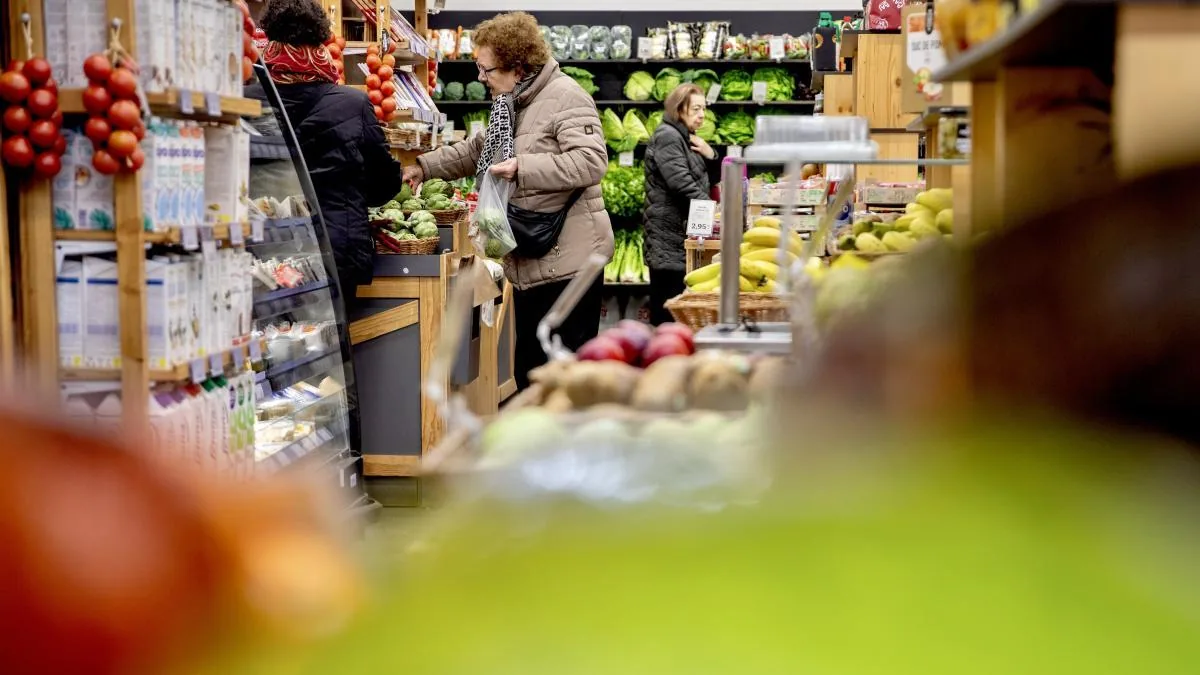
Food manufacturers and supermarkets are starting to assume that they will not be able to continue containing prices for much longer. After weeks of cushioning the impact of rising energy costs, companies warn that the effort has limits and that, if current tensions persist, the transfer to the shopping basket will be inevitable.
The alert was launched this Tuesday in Barcelona, at the general assembly of Aecoc, the employers’ association that brings together more than 35,000 companies from industry and distribution. Its president, Ignacio González, assured that companies are trying to prevent prices from being passed on to consumers, with efficiency plans and by restricting their margins. However, he admitted that this situation “cannot be maintained for a long time”.
The trigger is the same one that has already begun to strain other links in the food chain: the rising cost of fuel and raw materials after the war between the United States and Israel with Iran.
After several months of moderation, the CPI rose in March to 3.4%, while core inflation remains at 2.7%. In the case of food, the increase is more contained – also 2.7% year-on-year – which reflects that the sector is absorbing part of the impact.
“It demonstrates once again that our sector in many cases delays or contracts inflation,” González defended. But that absorption capacity is starting to strain, he continued. The message connects with what farmers and manufacturers had already been conveying in recent days. In any case, the key lies in the duration of the conflict. If the war prolongs, the current balance will hardly be sustained.
Business owners defend measures to boost private spending, such as lowering food VAT
The economic context doesn’t help either. Spain closed 2025 with 2.8% growth and dynamism superior to the European average in the last quarter, but the scenario has changed rapidly. Forecasts now point to a slowdown in growth and a rebound in inflation, with estimates placing the average CPI for 2026 around 3.6%.
Read also
To this external pressure are added internal signs of wear. Consumption is beginning to show signs of exhaustion and consumer behavior is becoming more cautious. “Crises begin and end when the consumer thinks they begin and end,” González noted, referring to the fragility of confidence.
Read more Vance suspends his meeting with Iran hours before the ceasefire expires
In fact, the sector fears a significant drop in private spending in the coming months if the crisis persists. 78.4% of companies in the sector believe that consumers will cut back on their purchases and stay home more to save, according to the report La Voz del Gran Consumo , which gathers the opinion of more than 200 executives from industry and distribution companies and which Aecoc released this morning. For this reason, the consulted business owners advocate for the Government to deflate personal income tax (IRPF) or lower food VAT, so that households have greater spending capacity.
In this way, the sector holds its breath to avoid entering a situation like that caused by the war in Ukraine. The energy shock caused by the Russian invasion in 2022 triggered inflation and, specifically, the cost of the shopping basket. Distribution was then in the public spotlight, while the Government introduced some corrective measures, such as the aforementioned reduction of VAT on certain foods.
Food manufacturers and supermarkets fear a drop in consumption due to the war
Despite everything, the sector maintains a certain optimism. Most companies improved their results in 2025 and have started 2026 positively, although 36% have revised their forecasts downwards and almost half point to increased costs as the main risk.
Mass consumption, which represents nearly a quarter of GDP and employs more than four million people, insists on its role as a strategic sector. But it also recalls its vulnerability to external shocks like the current one.
The rise in oil and gas is joined by that of fertilizers, so the agricultural sector is already suffering the effects of the war escalation. For now, the increase in agricultural production costs has not gone beyond the first link in the food chain. Companies continue to absorb part of the blow. The question is how long they will be able to do so, and everything suggests it won’t be long.
Read more The EU rejects Spain’s request to suspend the association agreement with Israel