José Saramago begins his great novel, The Year of the Death of Ricardo Reis with the phrase “Here the sea ends and the land begins.” There are few places – except for Lisbon’s Cais do Sodré that he evoked – that can be so well described with these few words as Algeciras.
Read more A toolbox reveals the identity of a Pompeii victim
In Algeciras, transoceanic routes end and a domestic sea begins, the Mediterranean. And Europe begins, which inland ends at the Ural Mountains, six thousand kilometers away. Between these two points live 450 million people.
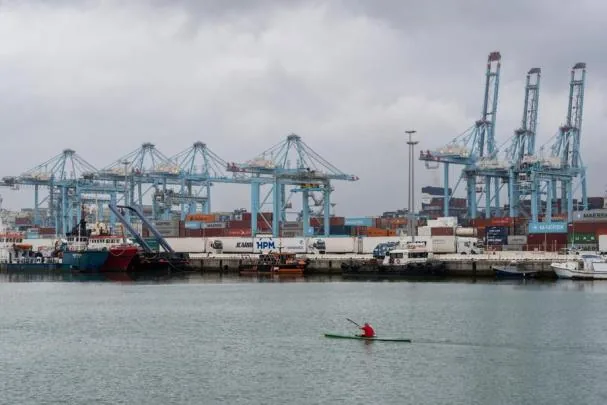
In Algeciras is the port with the highest cargo traffic in Spain, the third in Europe, and one of the twenty-five largest in the world. Neither Barcelona, nor Valencia, nor Bilbao; Algeciras has for many years earned the merit of moving more than one hundred million tons of all kinds of goods annually, far above the rest of the ports in the country.
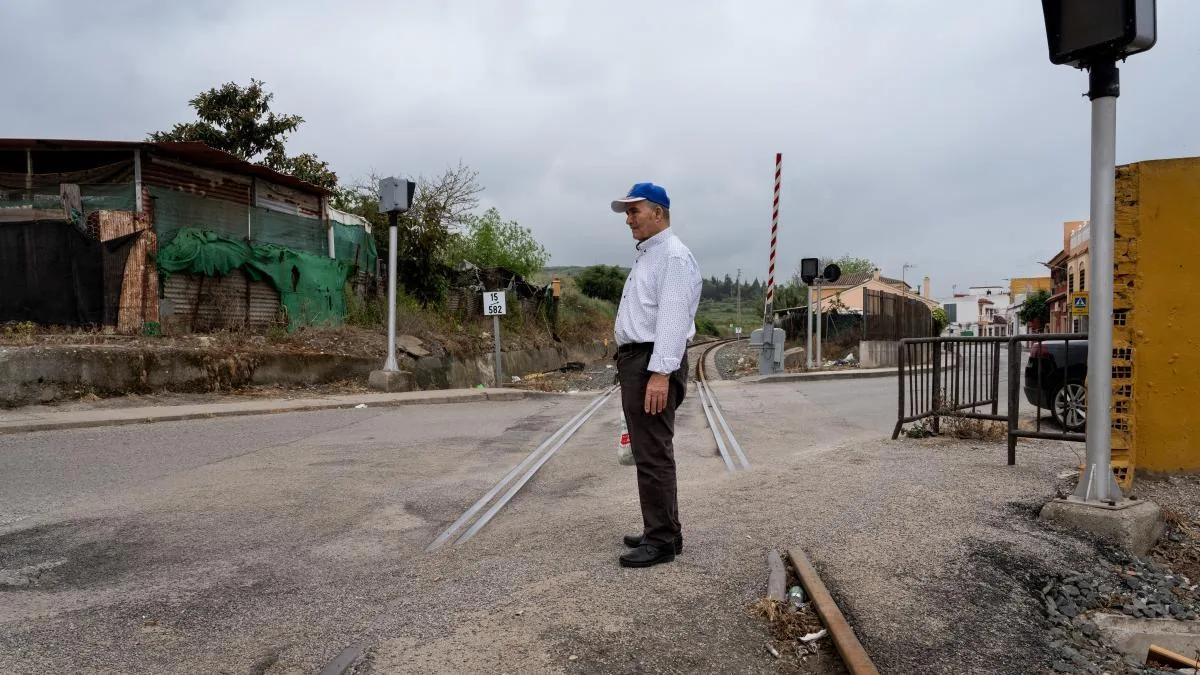
However, and although it is hard to believe, today it is impossible to dispatch a freight train from this port. Traffic is cut off, including passenger traffic. They say that in 2027 the service might be restored. The disastrous storm train of February this year forced the permanent closure of a line that already had very poor traffic – in 2024, 32,400 tons out of a total traffic of more than one hundred million. The route of this line is the same since the 19th century when it was built by a British company. In fact, it is not even electrified yet.
The image of the level crossing on Perlita Street in Algeciras, whose tracks have been buried by gravel, depicts a distant country, as if this were not the edge of wealthy Europe.
The storm train last February forced the suspension of the line whose route is still from the 19th century
The case of Algeciras is the general failure of Spain’s economic geography and particularly of Andalusia. On the map drawn in Brussels offices, it is the starting point of the Mediterranean corridor, an essential piece of the trans-European transport network. But none of that exists in reality.
From here, a new network should depart towards Bobadilla, branching across the Peninsula – one line towards Madrid and Zaragoza and another towards Barcelona – whose ultimate goal would be to carry freight trains from Asia, America, and particularly Africa, from the neighboring port of Tanger-Med, to the heart of the continent.
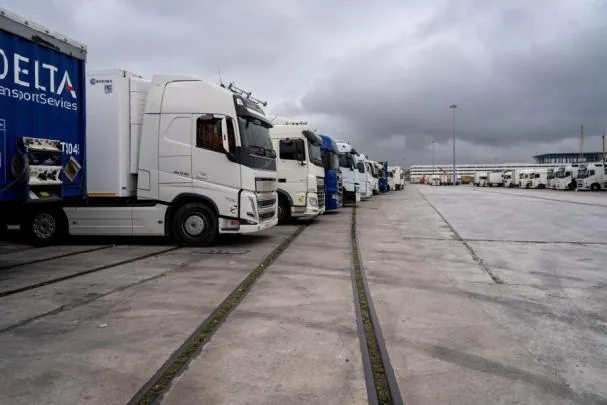
Today, this task is handled each year by one and a half million trucks – in the port’s internal and external traffic – according to the director of the Port of Algeciras, Gerardo Landaluce, plus those from the large factories in the port’s industrial estate. Here are, for example, the steel company Acerinox and the Gibraltar Port refinery.
(Side note: someday it will be necessary to find out what relationship exists between the limited development of freight rail in Spain and the large, unsafe, and polluting road transport business.)
Read more Who will win Eurovision? Finland and Australia, favorites in the bets, with Israel in fourth place
Landaluce places his hope in the rail highway that theoretically should not take too long to enter service and which, based on the current winding Iberian gauge railway route, will carry goods to the logistics area of Zaragoza, the hub of the Mediterranean and Atlantic corridor. A makeshift solution until the Mediterranean corridor is built.
On paper, the port is the starting point of the trans-European corridor crossing the Peninsula
Algeciras illustrates some of the shortcomings of present-day Andalusia. Roughly: fewer goods pass through the port of Barcelona, but ninety percent – the percentages are not exact – of them correspond to import and export activities. Things that are manufactured or consumed inland. The other ten percent are transit goods that are unloaded at the port and transferred to another ship to continue the route. In Algeciras, the proportion is the opposite: ninety percent of the traffic is transshipment, while only ten percent comes from import and export.
It sounds almost old-fashioned, almost colonial. Andalusians provide the muscle for the freight hustle, but the business goes to the final destination ports that produce or consume.
The disastrous situation in Algeciras has much to do with the state of the railway in Andalusia. To get an idea: today, to travel from Almería to Huelva – from one end to the other of the community – it takes 12 hours and two transfers. For comparison: to go from Barcelona to Seville takes eight hours (if lucky) without transfers. Of the eight provincial capitals in Andalusia, only four are connected by high speed.
Not to mention the three commuter rail hubs, those of Seville, Cádiz, and Málaga, with short services – Seville has 38 stations; Barcelona, 228 – where more or less modern trains coexist with medium-distance ones, some slow diesel railcars. Here, fare integration does not exist.
The entire Andalusian railway network depends on the central government and, although some attempts have been made in the Andalusian Parliament to request the transfer of commuter rail, Moreno’s government has never submitted that request to the State. Nor has it considered taking on railway investments as the Basque Country has done with its high-speed network. Nor a consortium of infrastructures as has been proposed in Catalonia. But this is normal here: the Andalusian government has only assumed, we insist, one new competence from 2014 until now.
Despite major deficiencies, Moreno’s government has not requested to take over railway management
The train has little political appeal in Andalusia. It remains the option only for those who do not have a private vehicle. An old idea in the prosperous south of President Moreno.
Read more The complex metamorphosis of El Molino