The Eurovision Festival, a great musical and television show celebrating its 70th anniversary amid a crisis due to the absence of five countries rejecting Israel’s participation, holds the final this Saturday at 9 p.m., which RTVE will not broadcast in line with its decision not to participate. The first festival without Spain in decades takes place in Vienna, the host city, with the normality that the European Broadcasting Union (EBU) strives to impose.
Read more The complex metamorphosis of El Molino
Twenty-five countries compete for the crystal microphone, and after the two semifinals, betting houses have recorded changes in the winning odds. Finland remains the big favorite, but Greece drops to third place, surpassed by Australia. Israel and Romania break into the top five favorites, in fourth and fifth place, respectively.
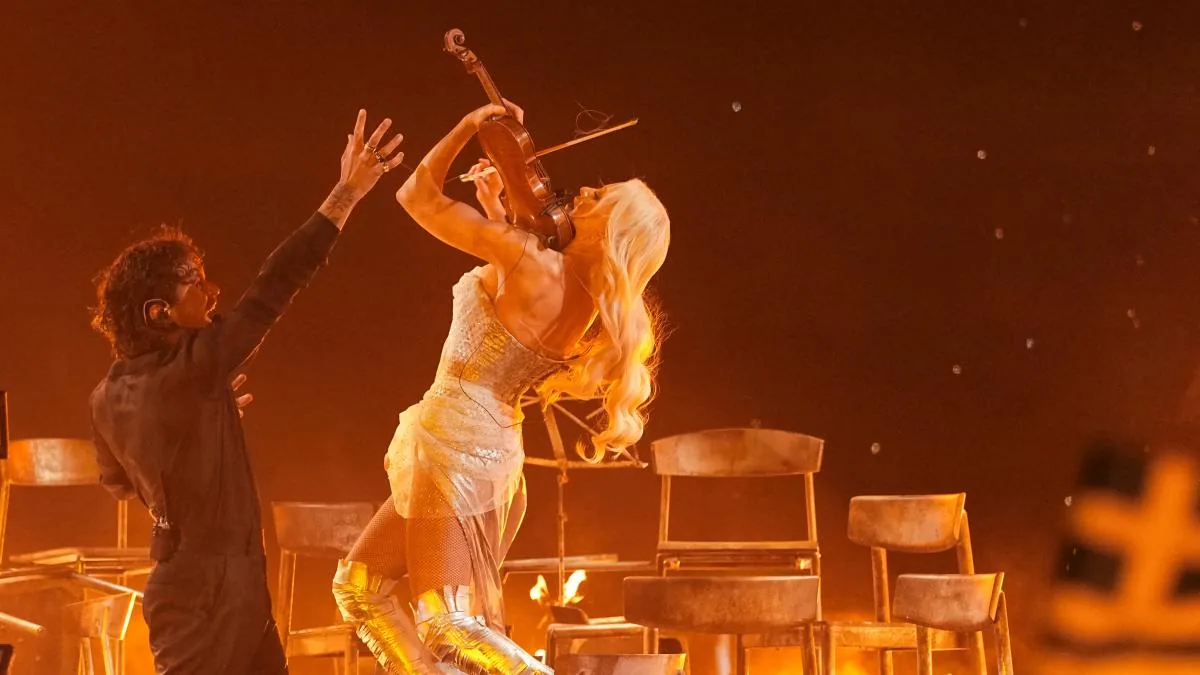
For weeks, Finland has led the favorites table and has reaffirmed itself as such after its impeccable performance in the first semifinal on Tuesday. Performed in Finnish by the duo formed for the occasion by violinist Linda Lampenius, 56, and pop singer Pete Parkkonen, 36, the song Liekinheitin (Flamethrower) tells an unrequited love story in an apocalyptic tone.
Lampenius requested permission from the EBU to play the violin live, something prohibited by the contest rules, and finally obtained permission to do so, an exception that the EBU and Austrian broadcaster ORF justified by stating that “live audio capture of instruments may be exceptionally allowed if artistically justified,” something that has caused resentment among other contestants. Finland has only won Eurovision once: in 2006 thanks to the heavy metal band Lordi with the song Hard Rock Hallelujah.
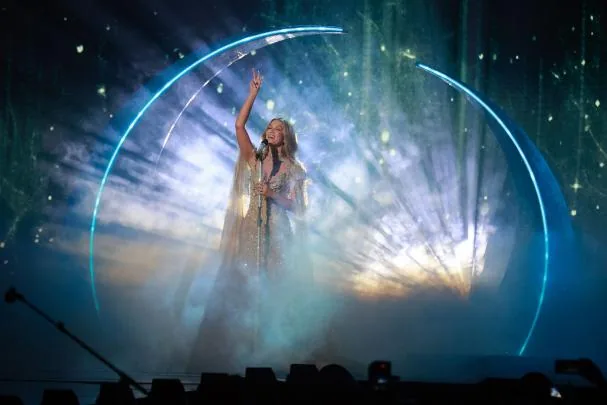
In just 24 hours since her spectacular performance in the second semifinal on Thursday, Australia’s representative, Delta Goodrem, 41, climbed to second place in the betting odds, having been fifth until now. The singer defends with a powerful voice Eclipse, a ballad that evokes a romantic alignment of the planets and combines the intimacy of the piano – which she does not play live – with impressive vocal crescendos.
Australia has competed in Eurovision since 2015, has not yet won, and hopes that Delta Goodrem’s renown, with over nine million albums sold in her career, will make it happen.
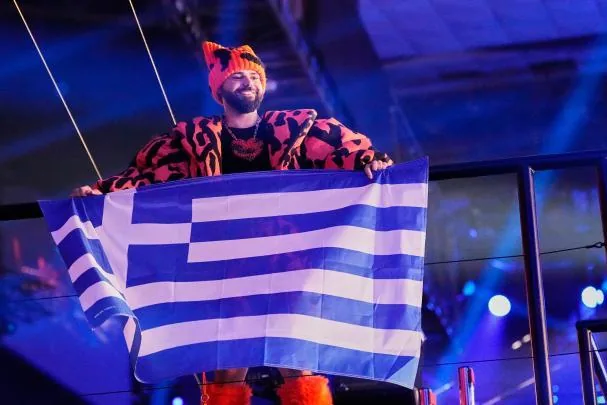
In third place in the odds is Greece’s representative, Akylas, 27, who sings the techno song with Mediterranean airs and video game aesthetics Ferto (Give it back), about the thirst for fame and fortune of a son who wants to provide for his mother, giving her everything they lacked in childhood. Akylas, who identifies as a queer artist, began his musical career on cruise ships. Greece has won the festival only once: in 2005 with the song My number one performed by Helena Paparizou.
In fourth place is Israel, in the eye of the storm for its deadly military response in Gaza to the 2023 Hamas attack and for indications of televoting campaigns in favor of its representative in the 2025 contest. Soloist Noam Bettan, 28, performs a love song, Michelle, with no political double meaning, unlike the Israeli entries in 2025 and 2024.
Read more All plots go through Onlyfans

In the first semifinal on Tuesday, the audience shouted ‘Stop the genocide’ when the Israeli began to sing. Austrian television – responsible for the broadcast signal – did not mute them, as it had announced before the contest, and has reiterated that it will not mute them if they occur during tonight’s gala. Another question is what the EBU will do, since after the first semifinal it posted the video of Bettan’s performance online without the protest shouts, which were audible in the full gala video from minute 59.
Bettan, son of French immigrants, sings his song in French, English, and Hebrew, accompanied by five dancers. In statements before the festival, he explained that he rehearses with people booing him to be prepared. Israel has won Eurovision four times: Izhar Cohen & the Alphabeta with Abanibi in 1978, Milk & Honey with Hallelujah in 1979, Dana International with Diva in 1998, and Netta with Toy in 2018,

The top five favorites close with a last-minute addition, Romanian Alexandra Capitanescu, who mixes rock, electronic, and impressive trills in her song Choke me. Romania debuted in Eurovision in 1994, has been absent some years, and has never won the festival.
The boycott by Spain, Slovenia, Ireland, Iceland, and the Netherlands of the festival for allowing Israel’s continued participation despite the deadly activity of the Israeli army in Gaza means that 35 countries have competed in this edition, the lowest number since 2003.
In this Saturday’s final, the twenty qualifiers from the two elimination rounds and the five countries that qualify directly will compete: the Big Four (Germany, France, Italy, and the United Kingdom, the group of the biggest financial contributors to the contest, formerly called the Big Five because Spain was also included) and the host country, Austria, which is hosting thanks to the victory in 2025 in Basel by countertenor JJ with Wasted love.
In tonight’s gala at the Wiener Stadthalle pavilion, with a capacity for 16,000 spectators, the winner will be decided by combining 50% televoting from the audience and 50% from professional juries from each country. The novelties of this edition – introduced by the EBU after the striking televote flood from countries that Israel received in 2025 in Basel, denounced by RTVE – include a limit of 10 votes per device, down from 20 before, and an increase to seven professional jurors, who must also include at least two people aged between 18 and 25.
Read more Thank you for everything, Florentino