For years you refuse to sign up for one of those tourist routes through the London of the Rolling Stones or the Beatles. Why march in procession listening to unbearable comments, if you yourself are capable of designing an itinerary to your liking? And you switch to guide mode. One day you photograph the houses of Mick Jagger and Keith Richards in Cheyne Walk and have a drink at the Chelsea Potter on King’s Road, where the first Stones fraternized with Jimi Hendrix. Or you take a look at the place where the Chelsea Drugstore from You can’t always get what you want was. Without the unwanted company of anyone. Another day, you stand in front of 3 Savile Row, on whose terrace the Beatles played live for the last time. You look and evoke.
Read more The new cold war
But one day you give in. They catch you off guard and you end up signing up for a pilgrimage called Beatles in my life led by a certain Richard P. It starts at Marylebone train station, where scenes from A Hard Day’s Night were filmed. And the truth, although it is hard to admit, is that you end up having a great time. Because the guide knows everything, because his work has the endorsement of Paul McCartney himself, and because he wears a blue shirt with yellow submarines printed on it and a worn bag with the cover of Abbey Road.
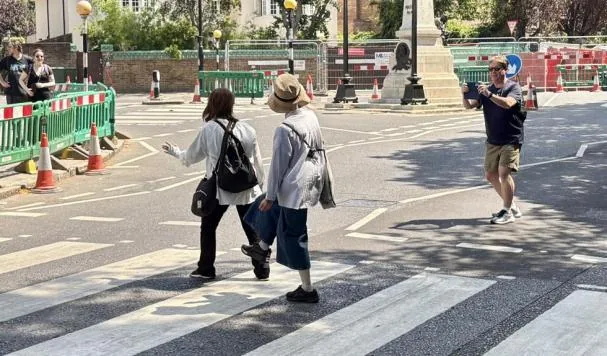
At the crosswalk, the right to do tourism and the resident’s right
to live without stress in their own city collide
Richard P. makes you see things you hadn’t noticed, like that at 34 Montagu Square, where Hendrix, John Lennon, and Yoko Ono lived together, Ringo Starr also lived (and put up with them), only the drummer doesn’t appear on the plaque because he is still alive and recording albums.
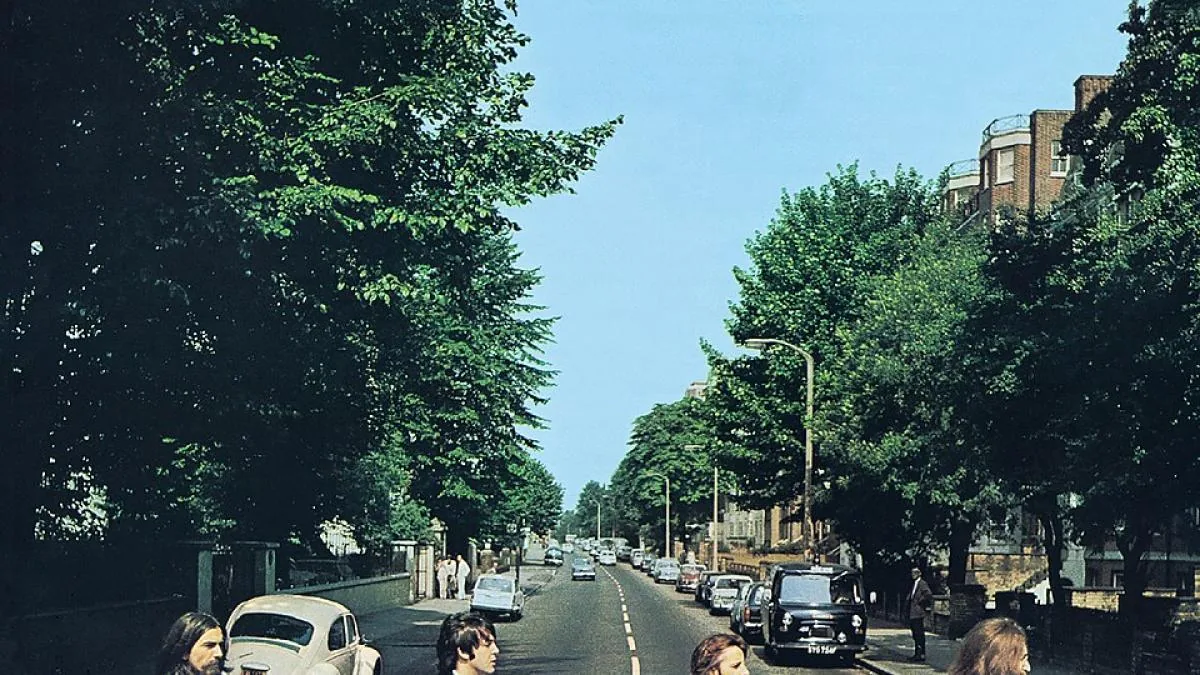
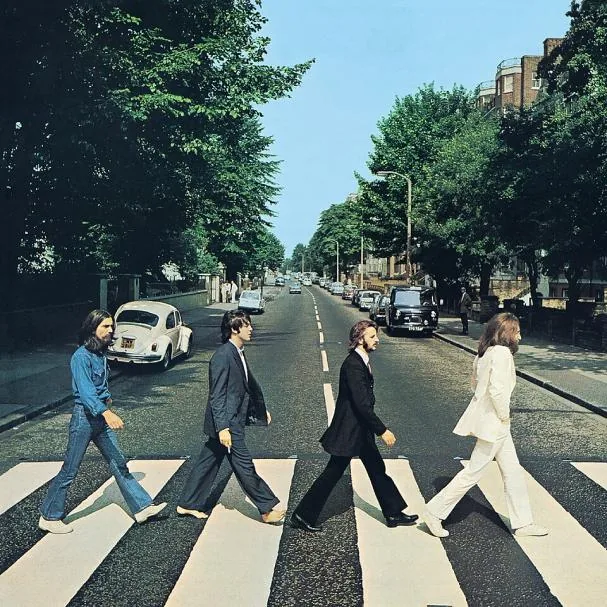
The triumphant closing of the route is the zebra crossing located in front of Abbey Road Studios, where the Beatles improvised the iconic album cover. This finale, for beatlemania, is the equivalent of the Sistine Chapel closing the tour of the Vatican museums, or the bust of Nefertiti as the culmination of the Egyptian itinerary at the Neues Museum in Berlin.
The zebra crossing is a spectacle in itself, a catwalk of “beatles for a day.” But the most interesting thing is to see how the authorities try to harmonize the visitor’s right to fool around with the neighbor’s right to circulate on the street. This is handled by a public employee, stopwatch in hand: “Hurry up, you have ten seconds to take the photo before I let the cars through. You only have nine left, eight…”
Read more Collboni announces the opening of affordable stores in New York
The task of this character is more significant than it seems: his countdown marks nothing less than the collision between the real city and the recreated city. His workplace is the epicenter of the debate about the harm that mass tourism causes to residents.
In Barcelona there is no Abbey Road, but there are places that social networks have turned into mandatory sets for evocation or posing. Let’s focus on one, the Bisbe bridge, located on a crowded alley in the Gòtic. The uninformed tourist (most of those who let themselves be guided by Instagram or TikTok) ignores that there are still living people older than this neo-Gothic monument; they don’t know that the neighborhood was remodeled a century ago to look more Gothic and beautiful and give rise to impossible love legends that would link this bridge with the Bridge of Sighs in Venice, which, by the way, also did not host passionate affairs, but penitentiary ones.
We can assign a public official to time the tourist’s right to possess a piece of the city for a few seconds at Abbey Road (the memory of the Beatles justifies it), but not at every place popularized by social networks. Against that trend, perhaps the weariness of the users themselves will prevail. Because, what merit is there in taking and posting photos that everyone already has, being just another link in a long chain of repetitions? Especially if they are based on misunderstandings.
Also read
After all, taking a photo on the Abbey Road crossing is a symbolic act of reivindication: I was not born in Liverpool in the 40s nor did I change the history of music, but here I am, alive and enjoying the feeling of being a beatle for ten seconds. What’s wrong with that?
Read more Moldova and Luxembourg denounce the illegal presence of drones amid escalating tensions with Russia