







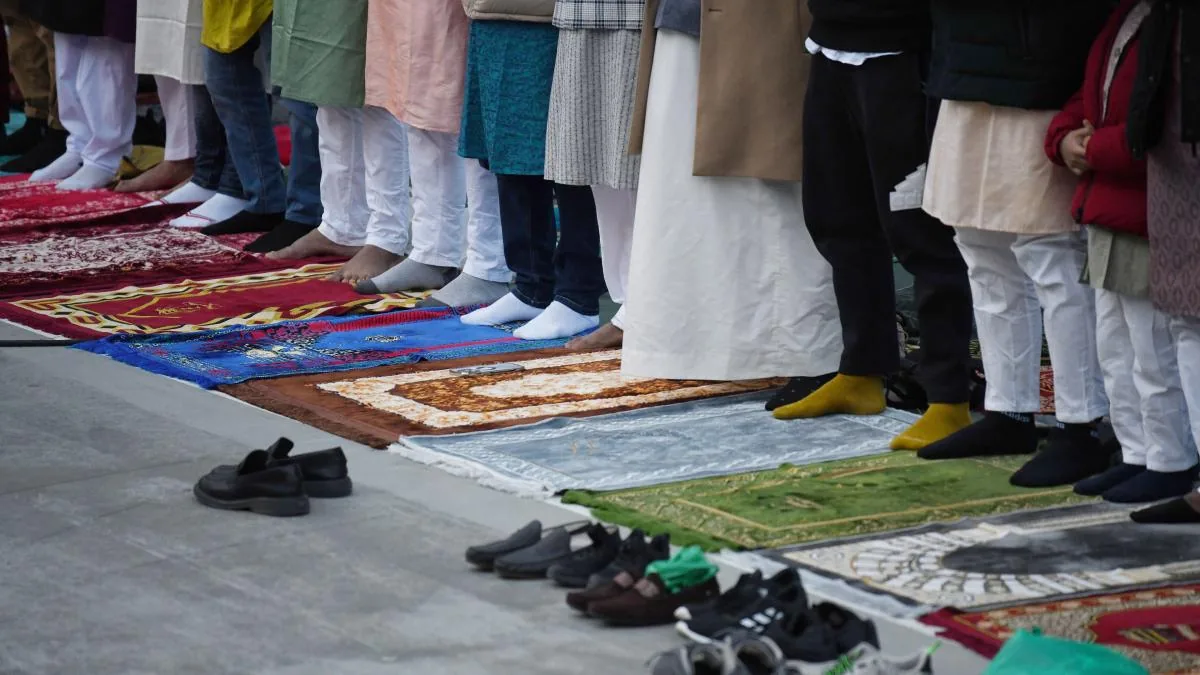
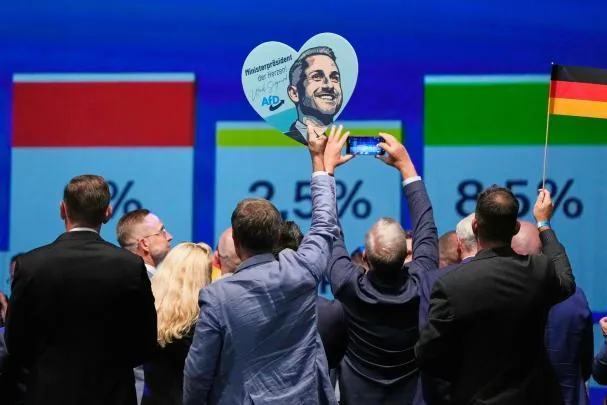
Panic about Islam is spreading across Europe. In several European countries, half of the population already believes it is incompatible with Western values. On September 6, Alternative for Germany (AfD) achieved 44% of the vote in Saxony-Anhalt, its best result to date in state elections, after warning about “Islamization” and promising forced deportations. That same weekend, in the United Kingdom, hundreds of hooded protesters occupied Dover shouting “Stop the boats” and “Christ is king.” In France, Le Pen’s proposal to ban the use of the Islamic veil in public spaces has the support of 60% of voters.
Read more David Lloyd Clubs: where wellness finds its place after summer
The obsession has also taken root in the United States. The fear is no longer so much of terrorists, as it was after September 11, 2001, but of an alleged Islamic plan to conquer Europe from within. Members of the Trump Administration warn of the “disappearance of civilization.”
This perception is harming transatlantic relations. Moreover, it is incorrect. Europe is not facing an Islamic takeover, nor a mass radicalization of Muslims, nor the disappearance of its culture. As our report shows, there are no “no-go zones,” Sharia law is not slowly being incorporated into national legislation, and nowhere is there a “great demographic replacement” taking place.
The real danger for Europe is another: extremism fueled by Islamism (the belief that the state should impose Islamic principles) and by right-wing paranoia driven by social media. The left exacerbates this problem by denying the modest but real threats posed by Islamism. Centrist politicians also do so, preferring to remain silent to avoid accusations of racism. This dynamic could indeed harm European liberal democracies, not by replacing them with a caliphate, but by hindering integration and favoring policies that would cause lasting damage to their freedoms.
The most extreme fears are easily debunked. Even after record migration from majority-Muslim countries, Muslims now represent only 6% of the European population, which exceeds 500 million people. Although newcomers tend to have more children than those born in Europe, birth rates tend to equalize within just two generations. That is far from implying a civilizational erasure.
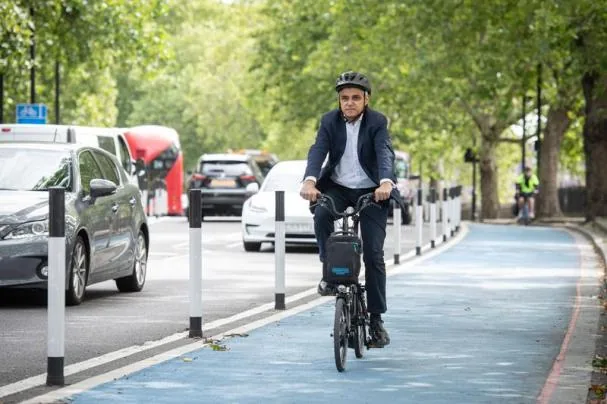
In fact, most Muslim immigrants want to prosper in their new home, not impose a version of the societies they just left behind. Their children often achieve better academic results than their parents. In the UK, 67% of Bangladeshis who took official exams in 2021 were enrolled in university at age 19, compared to 38% of white Britons. Many Muslims actively participate in traditional politics: there is the British Home Secretary and the mayor of London. In important respects, Muslims’ attitudes may resemble those of other Europeans. In a survey we commissioned among British Muslims, we found little rejection of women working.
The confusion between Islam, a religion, and Islamism, a political ideology, is important. Islam is not a problem; Islamism can be
So, what is leading so many Europeans to reject Islam? Many Muslims hold illiberal views and we report on the murder of an openly gay imam in South Africa. In the UK, according to our surveys, 52% of Muslims believe homosexuality is wrong, and among young Muslims (41% of those under 35), they are more likely than older ones (25%) to consider that violence can be justified if someone insults the prophet.
Holding socially conservative opinions does not by itself make anyone a threat; some supposed defenders of Europe on the right are as homophobic as the Muslims they criticize. However, some of these attitudes should concern progressives who have long taken for granted that open societies eventually make people more tolerant. And if the state is too pusillanimous to confront injustices committed by minorities, such as when gangs of Muslim men abused young girls in several English cities, it provokes more than justified outrage.
Equally important is the confusion between Islam, a religion, and Islamism, a political ideology. Islam is not a problem; Islamism can be. Unlike the 9/11 jihadists, most Islamists do not advocate violence. But many practice so-called “entryism”: infiltrating democratic institutions to promote an illiberal agenda. Islamist groups with good contacts can lobby for very restrictive laws against hate speech or against extremism prevention programs. The main danger of entryism is local. Small, well-organized networks can take control of a school, a mosque, a town hall, or a charity, and use these institutions to discourage integration and impose religious conformity on other Muslims living in the area.
Read more Indonesia locates semi-submerged shipwreck that leaves six dead and 129 missing
Concern about these non-violent Islamists has increased among European security services. In France, authorities fear the covert infiltration of the Muslim Brotherhood. An official report published last year warned that Islamism could, over time, threaten secular norms and women’s rights. However, that seems unlikely. The French Interior Ministry estimated that only 139 of the 2,800 Muslim places of worship were linked to the Muslim Brotherhood.
In reality, the main victims are other Muslims. Half of the twelve municipal districts of Blackburn, in northern England, have a Muslim population exceeding 60%; in two of them it exceeds 80%. In these areas, women may feel pressured to let Sharia councils govern their family lives. Gay and liberal Muslims suffer intimidation. Nonconformist Muslims complain that Western authorities—fearful of being seen as racist—do not grant them the same protection as non-Muslim citizens.
There is also a broader harm. Islamists fuel anti-Semitism, especially regarding Gaza. They demand limits on freedom of expression about their beliefs. They intimidate politicians, comedians, academics, and journalists, who end up resorting to self-censorship. They can pressure schools, student unions, charities, and town halls.
What turns these local threats into a continental danger is how they are exploited. Islamists find it convenient to claim that any criticism of their political project is an attack on Islam itself. The populist left, including La France Insoumise and the Greens in the UK, tends to treat any question about migration, crime, or Islamism as racist.
The populist right often fuels fear by claiming all Muslims represent a threat and accusing the state of a “woke cover-up” and applying “unequal treatment.” Few have been as vehement as Musk, who has used his social media platform to influence perceptions of Islam worldwide and give voice to the anti-Islamic right in Europe, from AfD to Tommy Robinson, a British agitator we discuss in a three-part podcast series starting this weekend.
The remedies proposed by the populist right are as illiberal as those of the Islamists they claim to want to protect Europe from. Promises of mass deportations, segregation, and banning certain clothing only serve to frighten Muslims, hinder their integration, and push them toward extremists. Any country that applied these policies would find that the hatred they unleash causes lasting damage.
That is why traditional European politicians must offer an alternative. Violence and threats of violence must be prosecuted. But there must be no taboo topics in the name of cultural sensitivity. Freedom of expression is not the enemy of tolerance but its prerequisite. Entryism must be exposed, as must intolerance. Governments that hesitate to collect or publish data leave a vacuum filled by speculative exaggeration.
Addressing all this will not be easy or quick, but there are reasons for hope. Muslims in Europe are integrating, just as earlier waves of Catholic, Jewish, and Caribbean immigrants did in the countries where they settled. The arrival of all these earlier groups triggered moral alarms about whether they would ever fit in. They all ended up finding their place. Muslims will too, if division and paranoia are not allowed to prevent it.
Read more Aitana’s school
© 2026 The Economist Newspaper Limited. All rights reserved.