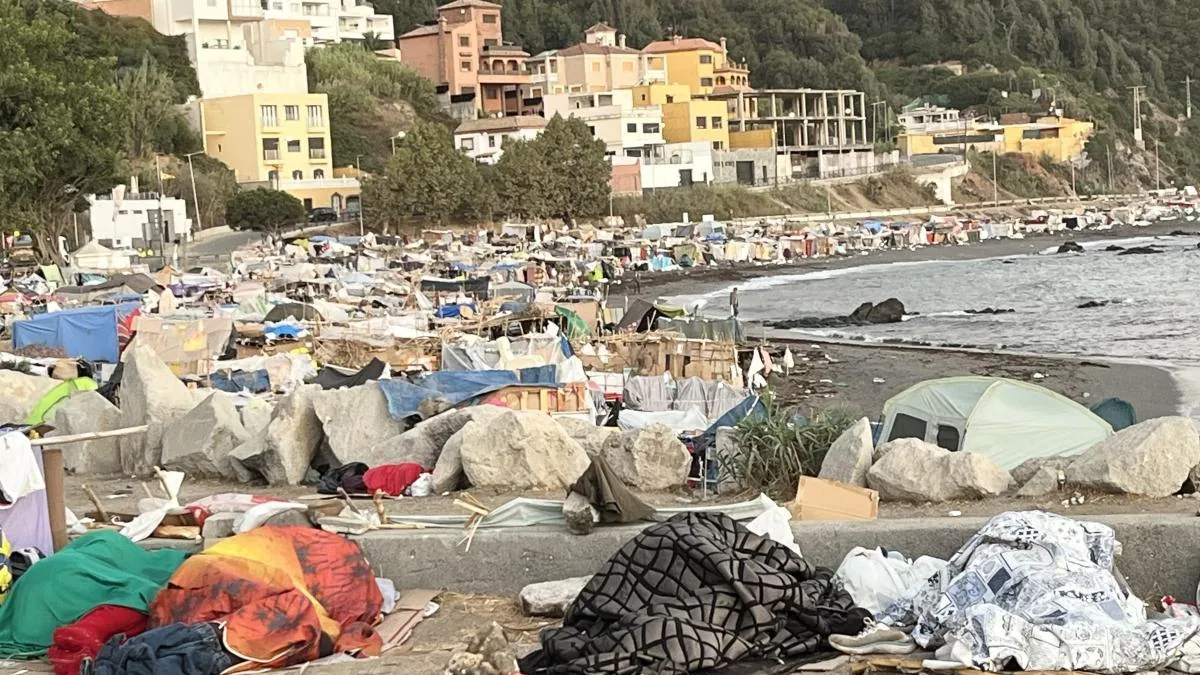









The Ceuta migration crisis at the end of July, which shows no sign of ending, has significantly impacted the electoral expectations of the main parties competing in a general election, according to the September barometer from the Center for Sociological Research (CIS) released this Monday, the first since the massive influx of immigrants into the autonomous city.
Read more China issues a warning about the risks of AI amid ongoing debate over the limits of its development
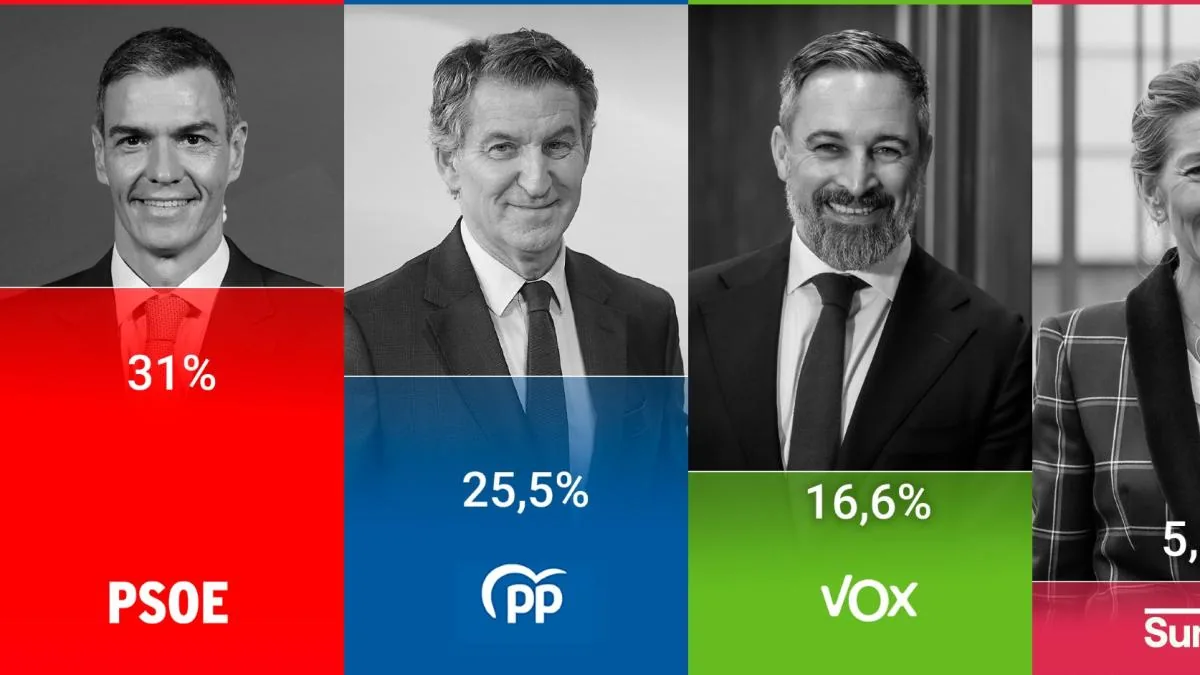
Although the PSOE remains ahead in the voting estimates of the polling organization despite the management carried out in the autonomous city by the Government, even criticized by the Executive’s partners, the gap separating it from the PP narrows from 7.9 points in July to 5.5 points. Thus, Pedro Sánchez would obtain 31% of the votes, while Alberto Núñez Feijóo would barely gain half a point more than then, up to 25.5%.
And it is Vox and Podemos that are the parties benefiting the most from the entrenched situation on the right and left respectively. Thus, Santiago Abascal’s party would go from obtaining 15.3% of the votes in July to 16.6% in September, reporting an increase, according to the survey, of 1.3 points. Also, in the far-right space, Alvise Pérez’s platform seems to be fading, as Se acabó la Fiesta would drop from 2.6% to 1.8%.
Podemos would also capitalize on the situation at the expense of Sumar. Yolanda Díaz’s group would lose four tenths to stand at 5.7% in estimated vote, while the purple party would record an increase of 1.2 points to reach 3.7%, just two points behind Sumar.
Read more Tech stocks suffer in the stock market amid fears over AI advancement
Regarding the strictly Catalan parties, the study depicts a stable scenario with a slight loss of two tenths for Esquerra (2.5%) and the same expectation as in July for Junts (0.7%).
The study asks about the Ceuta crisis and reveals that just over 70% of citizens see it as important to maintain a policy of friendship and good neighborliness between Spain and Morocco. Specifically, 46.6% of respondents give it great importance and 28% give it considerable importance. In contrast, 22% give it little or no importance.
Likewise, 67.7% of respondents believe there are countries, leaders, or global actors trying to create problems or misunderstandings that could affect relations between Spain and Morocco. Of these, practically half point to the United States or some sectors of the country, and one in three directly point to President Donald Trump. 38% point to Morocco and 35% to Israel.
Read more Sam Altman: “We could lose control of the future to AI”