








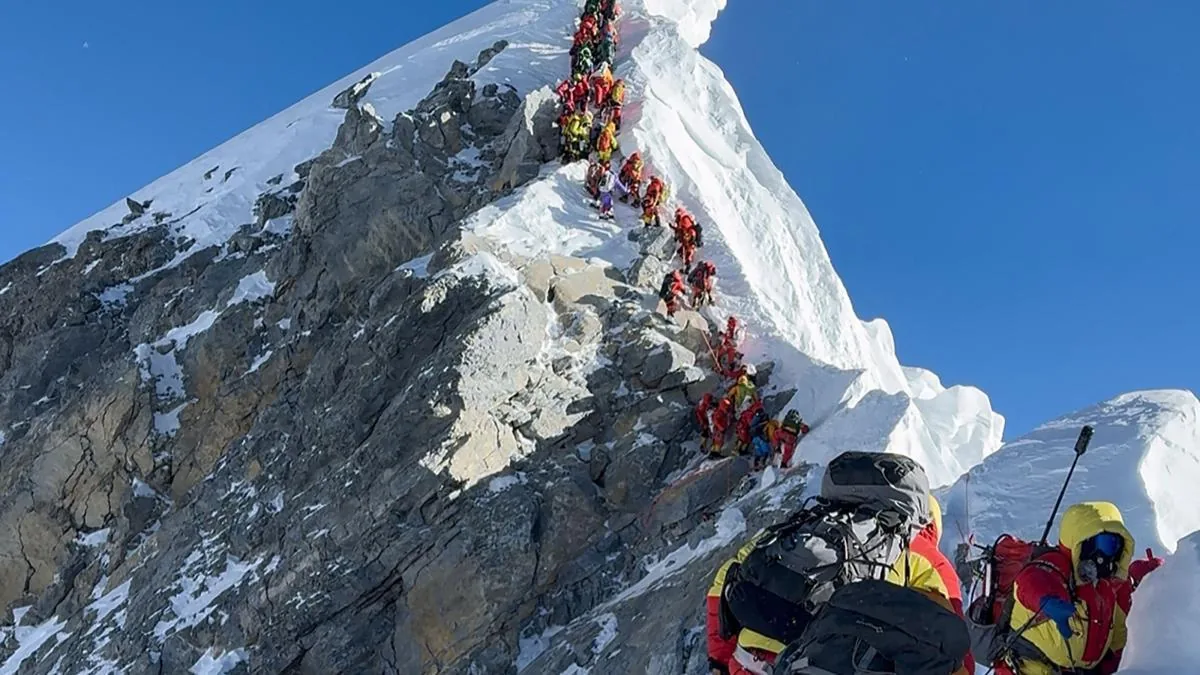
In the 2023 mountaineering season, more than 1,600 tents were set up at the Everest base camp, located on the Khumbu glacier, which is melting rapidly due to global warming. The climbers and their assistants – the sherpas – used 824 liquefied petroleum gas (LPG) cylinders, 18,935 liters of kerosene, and 5,130 liters of gasoline for cooking, heating the tents, and generating electricity. This human activity released thermal energy that melted 2,500 tons of ice. With this scientific evidence in the background – the damage caused by human activity to this summit had never been quantified before – a group of scientists is calling for the camp to be relocated. If the glacier is changing and human presence is creating more pressure, why maintain the infrastructure on the ice?, they ask.
Read more Grison takes off on RTVE with ‘El escondite’, his leap as a presenter
While Nepal tries to recover from the deadly flood caused by the collapse of ice and rock in the Himalayas, a team of seven researchers has provided new scientific evidence on how much rising temperatures – August 2026 was the hottest month on record – and the massive practice of recreational activities are transforming the highest mountains on the planet.
At the base camp, climbers have espresso coffee, wifi, hot water showers, and large TV screens
Even the climbers’ urine, more than six thousand liters daily, is contributing to accelerating the melting on Everest, according to this study. Urination, the authors clarify, is a small part of the human impact, although sufficiently quantifiable to be notable. The fossil fuels used to make the camp habitable represent 94% of the melting potential associated with human activity. Comfort includes, for example, cafes with espresso machines, large-screen televisions, high-speed wifi connection, and hot water showers, among other services.
In their research, the scientists describe that the Everest base becomes a “temporary settlement” for 50 days, a reality very far from the ingrained idea of climbers simply pitching their tents to sleep. The scale and sophistication of the infrastructure require high energy consumption. “The Everest camp generates enough heat to contribute to the loss of thousands of tons of ice,” clarify the group of authors, led by Sudeep Thakuri, professor in the central Department of Environmental Sciences at Tribhuvan University in Nepal.
The research also mentions – without giving figures – waste as another element damaging this ecosystem. The local NGO Sagarmatha Pollution Control Committee (SPCC) removed 90,329 kg of waste from Everest this year: 80,579 kg from the base camp area and 9,750 kg from zones above the camp. Additionally, 1,769 bags of excrement were brought down. On average, mass tourism leaves 200 tons of garbage on the mountain each year.
The warming rate of the camp is another key data point in the research. The authors used satellite images to reconstruct the evolution of the camp’s surface temperature between 1991 and 2023. They found a warming rate of 0.28ºC per year, double that recorded on the surface of the Khumbu glacier next to this infrastructure (0.15ºC per year).
Read more Giulia, daughter of music promoter Pino Sagliocco, marries actor Chidi Ajufo in Santa Maria del Mar
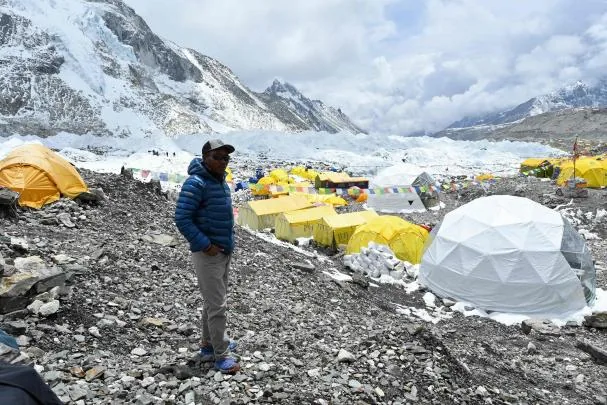
Putting all the pieces together, the scientists propose “stable and safer locations” to relocate the base camp. They cite two possible sites, southwest of where the tents are currently set up. Both are located on stable ground, outside the glacier surface.
This is a proposal that was already analyzed by Nepal’s political authorities. In 2022, the Department of Tourism proposed forming a seven-member study committee to materialize a possible move. They considered moving it to Kala Patthar, a rocky area located below the current site, to reduce climbers’ exposure to an increasingly dynamic glacier surface.
At that time, Dawa Steven, director of one of Nepal’s most important mountaineering companies and a veteran defender of Himalayan conservation, warned that changing the location could shift the risk instead of eliminating it, by bringing the camp closer to areas exposed to avalanches and landslides.
The Nepalese government’s concern did not translate into any concrete measure. Four years later, the new scientific evidence reopens this possibility. Virginia Burkett, a climate researcher, dismissed in 2024 from her position at the United States Geological Survey (USGS) by the Donald Trump administration, co-author of the research, explains that it would be a good measure to slow down a melting that, due to climate inertia, is already unstoppable: “We have to think about the future and adapting to the new climate reality. What better place to start than Everest?”.
Read more The downfall of an AI prodigy