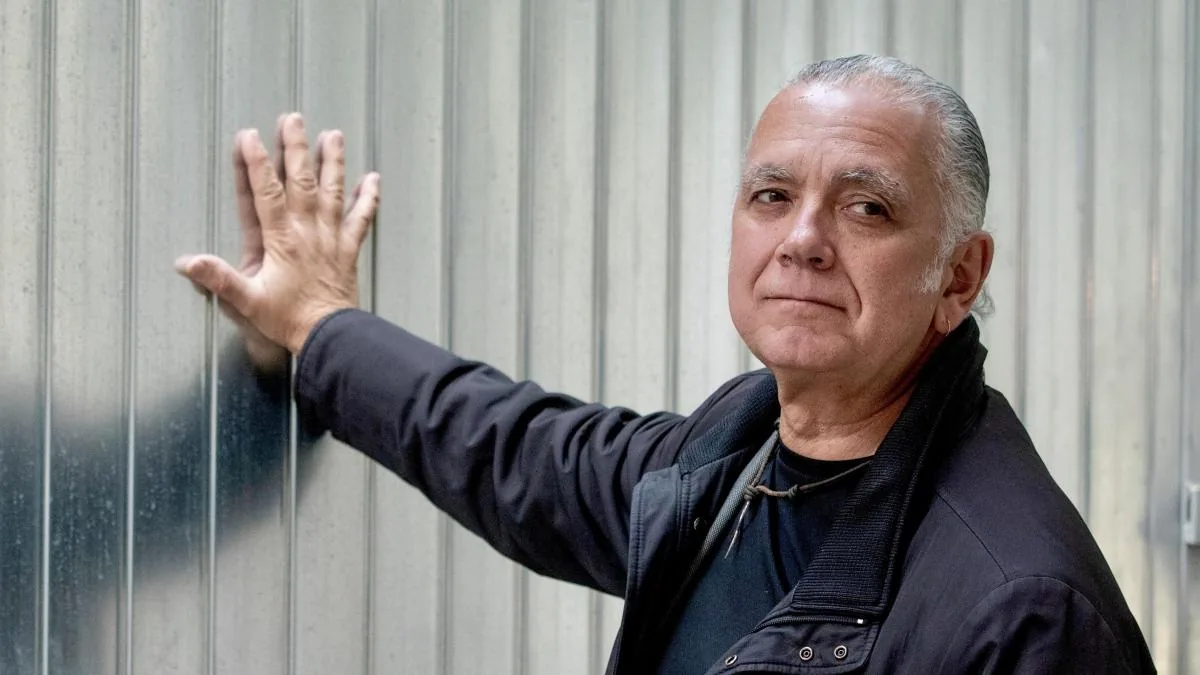
This is the 103rd installment of ‘After 60’, the senior testimonials section where we collect life experiences at this stage of life. You can send us your story at seniors@lavanguardia.es.
He changed club music in Spain, worked for major record labels, and even produced the Azúcar Moreno track that represented Spain in Eurovision. He is Raúl Orellana, and his hunger for music has not diminished in the slightest over half a century of activity. He recalls the spark of curiosity for the DJ profession — “back then it was still called disc jockey” — from a very young age. “I didn’t go to dance at clubs like most people; what I did was stand next to the booth.”
His beginnings were peculiar: he started working at the Sant Jordi Cultural Center of the Armed Forces. “In the afternoons they held parties for kids, and in ’82, the resident DJ of Studio 54 discovered me. He was looking for someone to replace him because he traveled a lot to New York.” That’s where an adventure began that would crown him as the king of club music during the 80s and 90s at the iconic club. “It was a very different time,” Raúl recalls. “People went out to have fun and try new things, digital didn’t exist, you had to work with imported vinyl and the equipment was very expensive.” His is a profession that demands constant renewal, broad musical knowledge, and above all, staying up to date with releases. “The passion for analog and vinyl has returned, maybe we went overboard with so much technology.”
Italo disco, electronic pop, funk, commercial dance, or house music: Raúl became a pioneer, although he also got saturated. “For a while I stopped DJing and worked as A&R at various record labels like BMG.” This role is responsible for discovering new talents and guiding the artistic and commercial development of musicians. “We made the track Bandido by Azúcar Moreno in one day or managed, thanks to a remix, to get Gabinete Galigari awarded best maxi of the year.” Jaime Urrutia’s band sold 40,000 copies of the maxi and managed to catapult an album that was failing. Surely the song sounds familiar: La culpa fue del chachachá.
He also made mixes of national artists like Tam Tam Go! or Los Rebeldes, and ran his own record label. “I have remixed things that at the time no one would have imagined a DJ could remix or do.” But in the 2000s, the clubbing bug bit him again and he returned to DJing.

This DJ says that now many people go to record the sessions instead of dancing. “In fact, in places like Ibiza they are starting to ban mobile phones in many spots,” but he proudly celebrates that this doesn’t happen to him. “The leitmotif of a club room is to dance and with me people dance a lot: people of my generation don’t give so much importance to digital.” Now everything is also faster. “In the nineties we played the same song for six months or a year, until you even came to hate it. Today hits are more ephemeral.”
Years have not taken away his enthusiasm or work. “This summer I have done around 30 gigs. Saturdays are usually triple sessions: normally I have a brunch or vermouth session, an afternoon session from 6 to 10, and a night session until 3 in the morning. You end up completely exhausted!” he laughs. He acknowledges that, both professionally and personally, club culture has given him everything. “Now nostalgia parties from past decades are very popular.”
Read more Marta García, the fabulous long-distance runner who is a doctor and studies herself
Almost half a century later, there are still hundreds of people who carry me deeply in their hearts, and that is very beautiful
Raúl Orellana
64 years old
A very special birthday
And this Saturday is not just any Saturday: Raúl Orellana turns 64, and he does so by returning home. “It so happens that this year is the 47th anniversary of the opening of Studio 54 and it coincides with my birthday. As in the last fifteen years, we will throw a party there.” The venue is now the Paral·lel 62 concert hall, which travels in a time machine to the golden years of dance and clubbing with Raúl at the controls. And they have already sold out. “At those parties, no covers or remixes are played, only the originals that were spun at the time, and which were very fashionable then. I described them as: ‘Nothing like anything else!’.”
“It’s easy to say, but almost half a century later there are still hundreds of people who carry me deeply in their hearts, and that is very beautiful,” the veteran disc jockey gets emotional. “I feel very proud of what I have achieved.” Also, this year he wanted to pay tribute to Depeche Mode, because the first concert the band did in Spain happened precisely on the stage of this club, 27 years ago. “It will be a bit like closing the circle.”
Senior stories
‘After 60’
At La Vanguardia we want to collect your senior story. Have you changed your life in your sixties? Have you achieved a personal milestone that shook you? Have you changed partner, city, profession, or way of living? Have you undertaken a transformative trip or a personal challenge? You can send us your experience at seniors@lavanguardia.es.
Also read
And what does Raúl Orellana listen to at home? “In many interviews I gave a surprising fact: on Sunday mornings I go to listen to classical music. And I also have my small collection. In fact, on more than one occasion I have closed a party night in the booth with Tchaikovsky’s 1812 Overture.”
“I have no plans to retire”
When asked if he plans to retire, he intends to keep DJing as long as his body holds up. “When I go to a gig, I still get nervous, I feel a responsibility in my stomach. That means there is still desire. When it disappears, it will be the end, but for now, it doesn’t look like it,” he confesses. “I hope my health lets me keep going.” His advice is to think that each day could be the last day. “Our idols are dying: the last was Dolly Parton. The best thing we can do is try to have fun and enjoy what we have.” For now, Raúl will blow out the candles making a thousand people move their skeletons to the rhythm of disco music.
Read more Israel releases five sea turtles after completing their rehabilitation