Donald J. Trump accumulates headlines: war in Iran, tariffs for all, intervention in Venezuela, threats to Cuba, competition with China, the claim over the Panama Canal and Greenland… And on top of all that, he adds critical positions on Ukraine, Gaza, and more. Does his mandate represent a before and after? Is the change new or does it come from before the tycoon? In turn: is it possible to redirect tensions despite reconsiderations both in the U.S. and other countries that seem to be guided (again) by geopolitics, the law of the strongest, and spheres of influence?
Read more The ECB raises interest rates to 2.50% to combat inflation caused by the Iran war
Several of the most influential experts in their respective regions of East and West, North and South address this in Vanguardia Dossier. There is, in any case, a shared response: change has come to stay.
Dimitri Trenin, president of the Russian International Affairs Council, military expert since the Soviet era, regular analyst in Russian media
Russia

Trump is determined to restore and strengthen U.S. global hegemony, and this directly opposes Russia’s vision of a multipolar world. His approach to international relations, based on the logic of ‘either it’s done my way or not at all’ and the idea that ‘force gives reason,’ clashes with Russia’s rejection of any form of hegemony over itself and its firm defense of its own sovereignty.
Relations between Russia and the U.S. never normalized after the end of the Cold War and have rapidly deteriorated over the last 15 years. In short: the U.S. cannot accept Russia’s independent behavior, and Russia cannot accept U.S. primacy. This is the fundamental conflict between the two.
At the start of his second term, Trump believed he could force Moscow to follow his directives on Ukraine. When he realized he could not achieve this, he resorted to pressure. That didn’t work either. Now we are on a dangerous path toward further escalation.

The globalized world of the early 21st century was centered on the U.S. and the West. The rise of non-Western powers and Trump’s counteroffensive against that process have led to a fragmentation of the old single-world model. I see a bitter struggle for a new world order developing, which constitutes the functional equivalent of a world war. Some regions of Eurasia—Europe and the Middle East—have already become battlefields. And a third conflict focus is emerging in East Asia. These wars are interconnected. The U.S. seeks to defeat Russia, Iran, and ultimately China. Europe, for its part, is deeply involved in the Ukraine war, which Trump has delegated to it to manage.
Over time, a new balance among the great powers will emerge as a result of the outcome of these or other conflicts that continue to intensify and expand. This process will take many years and could even last a couple of decades.
Yan Xuetong, professor at Tsinghua University and a leading author in China on the Asian Giant’s international policy
China
Current relations between China and the U.S. are not undergoing a transformation process. Since 1989, two years before the Cold War ended, the policy of all U.S. presidents toward China has oscillated between containment and engagement.
George H. W. Bush moved from containment to engagement, as did Bill Clinton and George W. Bush. Barack Obama, conversely, moved from engagement to containment, as did Donald Trump in his first term. Joe Biden was an exception by maintaining a constant and uninterrupted containment policy throughout his term. Trump, in his second term, started with a firm containment stance toward China but later softened it after visiting the country in 2026. As a result, the current dynamic between China and the U.S. is mainly determined by Trump’s own evolution. Here structural factors play a secondary role.
However, since it is likely that the U.S. and some of its allies will continue prioritizing geopolitical considerations in the short term, competition between China and the U.S. will become increasingly intense.
Rajiv Bhatia, Indian ambassador in posts across America, Europe, Asia, Southeast Asia, and Oceania and Distinguished Fellow at Gateway House, Bombay
India
During his first term, Trump showed deep concern about China’s rise and reactivated and strengthened the Quadrilateral Security Dialogue (Quad), positioning India as a key strategic partner. However, in his second term, he showed a preference for a more conciliatory approach toward Beijing, seeing China mainly as an economic competitor rather than a direct geopolitical threat. Consequently, India’s strategic centrality seems to have diminished.
But the change is not only due to Trump’s personal preferences; it is also conditioned by the lasting influence of the Make America Great Again (MAGA) movement in the political, economic, and social spheres of the U.S. This worldview is, by nature, isolationist, ultranationalist, conservative, transactional, and short-term oriented. But when this approach stops producing the expected results for the U.S. economy and its international position, its revision becomes inevitable.

Is a significant restoration of the bilateral relationship still possible? Yes, it is! In international relations, nothing is permanent. Friends, partners, and adversaries can change. The only thing that endures is national interests, and even the definition and conceptualization of those interests evolve over time. Just recall the worst deterioration in U.S.-India relations in the contemporary era, caused by New Delhi’s nuclear tests in 1998. At that time, few would have anticipated that two decades later both countries would undergo a prolonged reconciliation process, building, in turn, a comprehensive strategic partnership.
For all these reasons, despite recent tensions and turbulence in India-U.S. relations, it remains realistic to think that a basic level of normality and cordiality can be maintained. The fundamental pillars of their relationship—the defense cooperation, ongoing diplomatic efforts, strong societal ties, and also the good personal rapport between their leaders—remain, broadly speaking, intact. I maintain an optimistic view of its evolution in the medium and long term.
Juan Gabriel Tokatlian, Argentine academic and prominent Latin American expert on the region’s fit in international politics
Latin America
The U.S. did not return temporarily to Latin America and the Caribbean as it has been doing since the 1980s; Washington returned to stay. Nor did it come with a new project seeking to restore lost hegemony, but with an ambitious and aggressive domination plan.
The evidence is clear. In the 2025 National Security Strategy, the “Western Hemisphere” is mentioned 13 times while Russia is named 10 times. And in the 2026 National Defense Strategy, the hemisphere is cited 11 times, just below Iran, which is mentioned 13 times. Three reasons explain this: a) forcibly transforming Latin America into a battleground against China; b) restoring its former sphere of influence as a testing laboratory; and c) showing insiders and outsiders that it can discipline the region at low cost.
The truly new thing is the U.S. effort to unite the entire hemisphere geographically, politically, and militarily
In some cases, like Venezuela, the experiment is imposed; in others, like Argentina today and Colombia soon, Washington is invited to be a testing ground. If in October Flávio Bolsonaro were to defeat—something not easy—Lula, Trump would have South America at his feet with a quasi-slightly progressive island in Uruguay.
Read more The gap between rich and poor students narrows in PISA
And to understand what has been said, it is essential to specify the meaning and scope of the notion of the Western Hemisphere for the U.S. today.
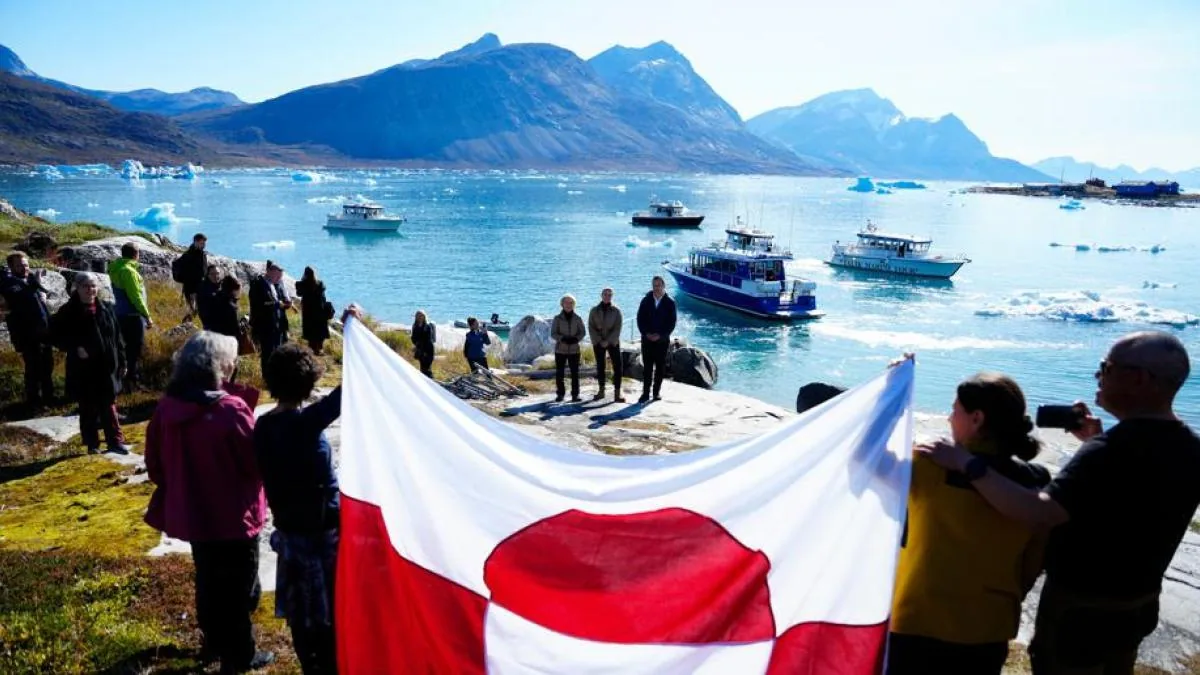
The notion historically had three formats: the geographic, which extends from Canada to Chile; the political, in terms of the Executive departments where the hemisphere covers Latin America and the Caribbean, while Canada is handled independently; and finally, the military, where the Southern Command covers Latin America and the Caribbean but does not include Mexico and the Bahamas, while Canada, Mexico, and the Bahamas are part of the Northern Command. But today the truly new thing is the effort to unify the entire hemisphere geographically, politically, and militarily: in December 2025, the US Army Western Hemisphere Command was created, combining the army units of both Commands; in turn, on March 5, 2026, before 16 defense ministers of the region, the U.S. Secretary of War announced the new “Greater North America” policy and said that the respective countries plus the U.S. shared the fact of being part of “Greater North America,” which would extend from “Greenland to Ecuador and from Alaska to Guyana.” Here the undisguised objective is clear: to conquer Greenland by increasing military presence and its potential acquisition; to threaten the annexation of all Canada; to retake the Panama Canal; to appropriate energy and mineral resources after the military attack on Venezuela; to continue extrajudicial executions (more than 200) of alleged “narco-terrorists” in the Caribbean and the Eastern Pacific; and to promote the collapse of Cuba.

In this context, the main fact from Latin America and the Caribbean is that it is experiencing the highest level of fragmentation in the last half-century: absence of any kind of unifying leadership; lack of minimal coordination of positions against Washington’s arbitrariness and abuses; absence of shared stances, at least regarding the defense of international law; and a tendency toward individual positions.
Bob Wekesa, director of the African Center for U.S. Studies based in Johannesburg (South Africa)
Africa
Is the current transformation of relations between Africa and the U.S. the result of Trump’s presidency or a longer-term structural change? Both.
The implementation of America First has meant a more transactional relationship and less value-based. The closure of USAID and other foreign aid channels has changed the donor-recipient relationship, and African countries have been forced to seek other means to finance their budgets in areas such as health and governance. U.S. tariffs, for their part, have forced African nations to seek trade relations elsewhere, particularly Europe, the Middle East, and China. But this should not be seen in absolute terms: the longevity and scope of relations between Africa and the U.S. are such that they will continue even under new circumstances. Overall, it is a reduction in relations rather than a complete cessation. Moreover, this change was already underway before the start of President Trump’s second administration, and a key event is China’s firm and sustained entry into the African economy since around 2000, that is, for 26 years. Likewise, other global powers such as India, Turkey, and Gulf states have also intensified their presence on the continent for at least a decade if not more. In practice, these countries had already eroded U.S. economic and political power on the continent before Trump’s new policies.
China, India, Turkey, or Gulf states had already eroded U.S. power before Trump’s policies
In any case, African countries have no choice but to negotiate bilaterally and understand that relations are governed by interests.
Hans Kribbe, geostrategist and co-founder of the Brussels Institute for Geopolitics supported by Emmanuel Macron, Olaf Scholz, and Mark Rutte, as well as former advisor to the European Commission
Europe
The relationship is fundamentally changing because, for the first time since the Cold War, the U.S. has a geostrategic competitor on equal footing in China. Its consolidation as a superpower and contender for the throne has been brewing for some time, and at least since Obama’s presidency, it was clear that it would force Washington to change its strategic stance, including its stance toward Europe, which is becoming less critical for U.S. national security. The U.S. strategic obsession with Europe after 1945 has come to an end. The continent is no longer the great battlefield of history nor at the center of a global clash between ideological systems. This makes America’s retreat as a “European power” inevitable, and Europeans will have to deal with it regardless of who occupies the White House.

That said, Trump’s agenda for Europe, outlined in his National Security Strategy, goes far beyond a policy of strategic withdrawal. His goal is not only to distance the U.S. from the continent but to unleash a political revolution, disrupt the European liberal order, dismantle the EU, and replace it with a Europe built on the values of the MAGA movement. Trump’s vision for Europe has caused a rupture in the relationship much deeper than what was strategically necessary for the U.S. Things may improve in the future, depending, of course, on who wins the next presidential elections.
However, a return to the “good old days” of multilateralism is completely ruled out, and we should not romanticize our past relationship with the U.S. as if it had been easy or consensual, much less equal. When things got tough, was there ever any doubt about who called the shots?
From the U.S. perspective, Europe is not so different from Latin America or, say, Japan or the Philippines
Faced with China’s new influence in the world, it will be extremely difficult for the U.S. itself to resist using the logic of spheres of influence power, just as it did during the Cold War when it shamelessly overthrew democratic governments in South America. Restored to its former glory by Trump, the Monroe Doctrine will accompany us for the next 75 years, or for as long as the geostrategic rivalry between America and China lasts. What are the chances that a future U.S. president will again give up control over Venezuela’s 65 billion barrels of oil reserves that Trump obtained after kidnapping and expelling Maduro? Allowing Beijing to increase its influence in the Western Hemisphere without opposition is not an option for the U.S. Moreover, from the U.S. perspective, Europe is not so different from Latin America—or, say, Japan or the Philippines. They are states and regions that must remain within America’s gravitational pull, or at least outside China’s orbit. Of course, it is unlikely we will see a U.S. Marine command assaulting La Moncloa to kidnap the Spanish Prime Minister. But will future U.S. administrations allow Spain and Europe to keep their doors open to Chinese technology and artificial intelligence? Will a future U.S. president let Europeans freely decide their own foreign policy?
Mike Hughes, director of Defense Strategy at the Australian Strategic Policy Institute with decades of experience in intelligence in public and private Indo-Pacific organizations
Australia
The current transformation of U.S. relations with its allies, including Australia, is better understood as a longer-term structural change that Trump’s presidency accelerated rather than a fundamentally new approach. Discontent with allies was already evident during the time I worked within the U.S. system, between 2009 and 2011. But Trump expressed this dissatisfaction more sharply and transactionally, arguably undervaluing alliances that have been a key source of U.S. power since 1945.
The post-1945 alliance system was based on an implicit pact: the U.S. provided disproportionate military capacity and strategic leadership while allies contributed according to their capabilities and benefited from the economic and security order this supported. That model was viable when the U.S.’s relative power was overwhelming and strategic threats were comparatively limited. That context has changed. China has emerged as a top-tier competitor, Russia has shown its willingness to use force to challenge the European order, and authoritarian states increasingly question the foundations of the Western-led system. At the same time, the U.S.’s relative economic and military weight has declined and the costs of global leadership have increased. That is why Washington increasingly expects allies to take greater responsibility for their own security and regional stability. This is especially relevant for Australia. Its economic interests in China coexist with a strong dependence on the alliance with the U.S. and a regional order where coercion does not determine outcomes. Therefore, Australia faces the same burden-sharing pressures as other U.S. allies, although its strategic geography in the region prioritized by Washington outside U.S. territory gives it particular value.
This is realistic geopolitics in action
Thus, Trump has changed the character of the relationship more than its fundamental direction. A future administration may restore greater diplomacy and a calmer climate, but it is unlikely to recover the strategic conditions of the 1990s. Australia must assume that the U.S. will continue to demand allies with greater capacity willing to bear a larger share of the global security burden. And it is worth noting that Australia had already begun adapting to the deteriorating strategic environment through the 2023 Defense Strategic Review and the 2024 National Defense Strategy.
And although the U.S. and other countries are increasingly guided by geopolitics and spheres of influence, is a significant bilateral relationship adjustment still possible? Yes, but do not confuse an adjustment with a return to the past… The strategic conditions of the 1990s are gone and will not return. Instead, alliances remain essential. And in many respects, the adjustment has already begun. Australia’s 2026 National Defense Strategy recognizes that greater self-sufficiency requires stronger national capabilities combined with the alliance with the U.S., rather than replacing it. Because those calling for a fundamentally independent Australian foreign and defense policy misunderstand the strategic environment: China remains the reference challenge, and less U.S. presence would lead to a less favorable regional balance that no other country or coalition could easily replicate. Moreover, after 75 years of alliance, it provides Australia access to unique intelligence, technology, industry, and capabilities critical for the Australian Defense Forces to generate and sustain credible military power. These contributions strengthen Australian autonomy while making Australia a partner with greater capabilities for other middle powers and democracies.
Therefore, Australia must simultaneously assume two realities: the alliance with the U.S. and partnerships like AUKUS remain fundamental for regional deterrence, while Australia must strengthen its own capabilities and deepen relations with Japan, South Korea, India, and Europe. This is realistic geopolitics in action. It is not a rejection of the alliance. It is its evolution and, in many ways, precisely the adjustment Washington demands: an Australia with greater capabilities and more self-sufficient that remains a committed and valuable ally.
Read more Robles acknowledges that what happened in Ceuta was «of an unforeseeable magnitude»