The European Central Bank followed the script this Thursday and raised interest rates by a quarter of a point, to 2.50% for the general rate. It is the second increase of the year, reaching highs not seen since March 2025, and the main question in the markets is whether there will be another hike before the end of the year. Affected by the Iran conflict, “inflation will remain well above the target (2%) for a prolonged period,” the entity warned in the decision statement. Higher prices, for longer.
Read more The gap between rich and poor students narrows in PISA
The entity has today revised its inflation forecasts upwards. The 2026 forecast remains at an average of 3%, but it raises the 2027 forecast by two tenths to 2.5% and the 2028 forecast by one tenth to 2.1%. With the expected rate adjustment, it seeks to combat inflation poisoned by energy amid the Iran conflict. By raising the cost of money, it tries to cool activity somewhat and avoid the feared second-round effects, the transfer and entrenchment of inflation into wage increases and throughout the chain.
Flexibility amid high uncertainty
Uncertainty is “high,” it is noted, with several scenarios depending on how the Iran conflict unfolds. Risks are upward for inflation and downward for growth. The entity points out that it has the flexibility to adapt to whatever happens, and it will proceed meeting by meeting, based on the data.
For now, the economy shows more resilience than expected—in fact, growth for this year has been revised upwards to 0.9%—but the context of soaring oil and gas prices due to the Iran war remains, something the Old Continent suffers from due to its import dependence. Inflation in the eurozone stood at 3.3% in August, four tenths higher than the previous month and at its highest level in three years. It has been above the 2% target set by the entity for six months. The worrying detail is the advance in energy prices, 14.3%, also at three-year highs.
Read more Robles acknowledges that what happened in Ceuta was «of an unforeseeable magnitude»
“The rate hike is justified by the fact that energy prices have reached the levels estimated in the ECB’s adverse scenario. The central bank’s view is that excessively high energy prices over a prolonged period make some degree of indirect inflation spillover inevitable,” assesses Patrick Barbe, manager at Neuberger. Beyond oil riding at $100 a barrel after the latest attacks in the Middle East, gas prices behave even more volatile. Today it moves around 80 euros per megawatt hour, 50% higher than at the beginning of August.
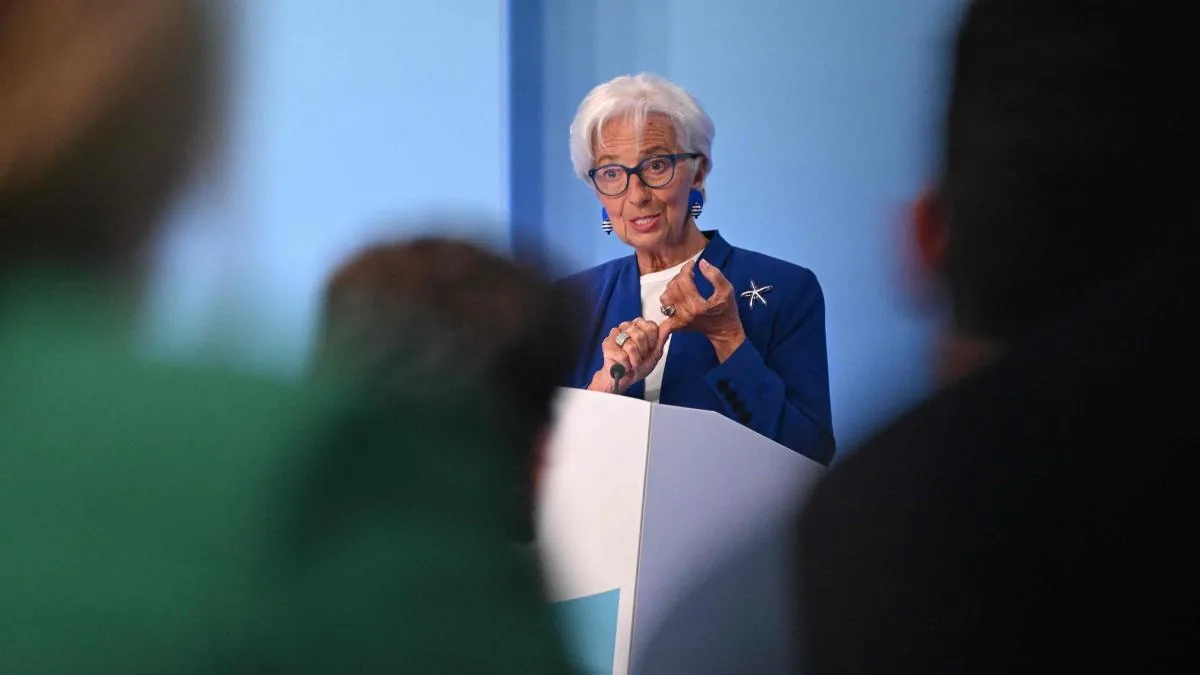
“The most important question for the markets is whether the decision is presented as the next step in a prolonged tightening cycle or as a way to maintain full flexibility,” comments Felix Feather, economist at Aberdeen. The answer will be given by Christine Lagarde from Berlin, the seat of the ECB Governing Council meeting.
The ECB is the first to make a move in a calendar marked by central bank appointments. Next week is a gala event with decisions from the Federal Reserve, the Bank of England, and the Bank of Japan.
Read more Timeline of declassified reports on the mass entry into Ceuta