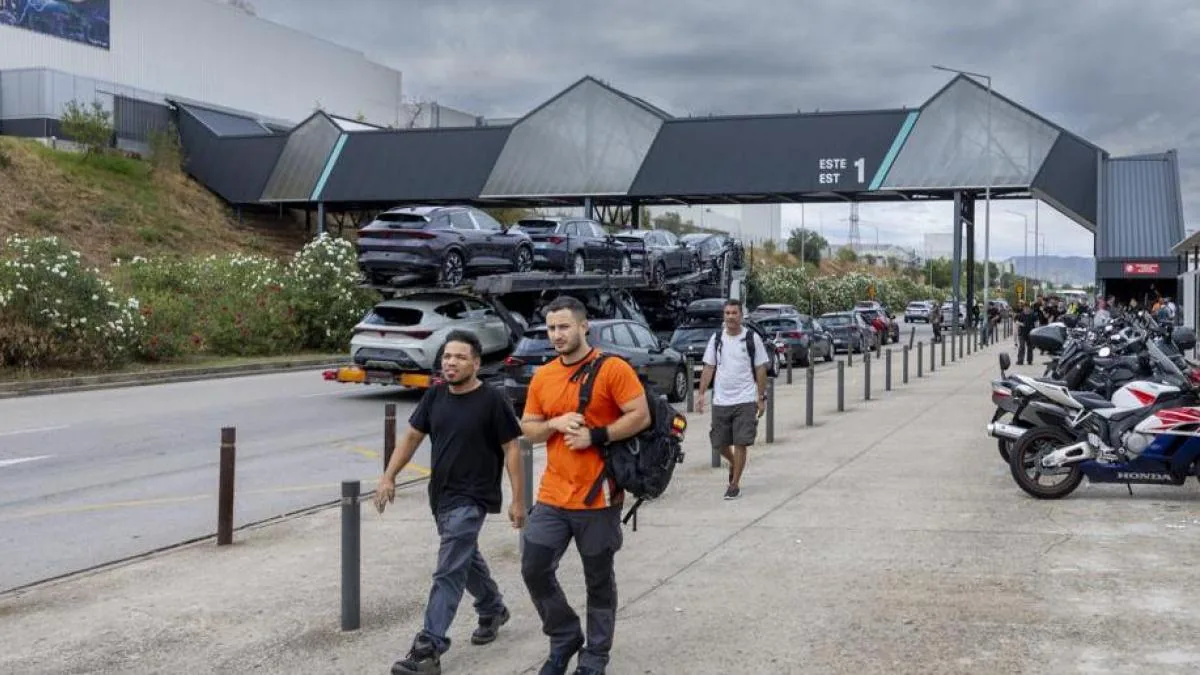
It had been an open secret for several years that there were no plans to electrify Seat models. All public and private resources allocated to the technology shift (from combustion to electric) were going to the Cupra brand, which has higher margins. What was unclear was how long Seat models would continue to be sold. And although combustion cars can be assembled in Europe until 2035, from 2030 onwards it will be complex to manage – due to costs – the production of 100% diesel or gasoline cars in Martorell. In that scenario, the end of the historic Spanish automotive brand would be inevitable. The shock caused last week when Volkswagen set a date for the possible end of the brand triggered all alarms, despite being a problem known for years. There is still a lot of employment at stake if there are no alternatives.
Read more Trump promises a $5,000 dividend to every American if the Republicans win the midterms
Today, the company Seat already sells more cars under the Cupra brand than under the Seat brand. In the first half of the year alone, 170,000 Cupra models were purchased compared to nearly 130,000 Seat models. But – as the UGT and CC.OO. unions warned this week – it is not credible that Cupra could take on the production that would cease under the historic Spanish brand in Martorell by 2030, at a time when the Volkswagen group is undergoing a deep restructuring process.
Last year, just over 470,000 vehicles were assembled at the Catalan plant. Of these, 225,000 were under the Seat brand. The rest were Cupra and the Audi A1. This year, the new electric platform where the Cupra Raval and other Volkswagen group electric models are produced has started. But in the future, there is no new model planned to be assembled in Martorell, neither Seat nor Cupra. That is the greatest fear of both the unions and the automotive experts consulted. What will replace the Seats?
The key, therefore, is for the Martorell factory to receive the allocation of a new electric platform with one or more new models from Seat or another company in the group. Currently, there are three assembly lines in Martorell. And only one is electrified, where the aforementioned zero-emission models are produced. These are the Cupra Raval and the rest of the consortium’s electric vehicles. They are small urban vehicles with lower margins than larger cars.
The unions find it difficult that Cupra could absorb all the workload left by Seat
The unions have been demanding for years that a second line be renewed to be able to assemble electric cars. This is what is called the second platform. The investment in the first electric line was 3.3 billion euros. The Volkswagen group has invested 10 billion in Spain in the transition to electric vehicles. Seat’s request comes at the worst time for the German consortium, as it is precisely when a tough adjustment program is being launched to cut costs and improve profitability across Europe.
The decision on who will manufacture what in the coming years must be made by the consortium between July and November next year. And although sources consulted believe the process is on the right track for Martorell, certainty will not be achieved until well into 2027.
However, having a second platform is only part of the work. It is also important to know what will be assembled on that second platform. It is not the same to manufacture small cars like the Raval or larger ones like the Formentor, Terramar, or the Tavascan. The bigger the better because they are more profitable.
The unions have always regretted that a few years ago the production of the Audi Q3 (a mid-size SUV) in Martorell was replaced by the Audi A1 (a small urban car). The labor hours needed for a large car are greater than for a small one, which also impacts the workforce.
The company is the only one in the sector in Spain that manages the entire chain from design to production
Other unknowns are whether a car designed in Martorell, like a Cupra, or another from the VW group would be produced on that second platform. It is always better for Seat to have the entire value chain integrated in Catalonia: from design to production and after-sales. If the manufacturing of Cupra models continues scattered around the world (Germany, Hungary, and China), there is always the risk that Martorell ends up becoming a simple assembly plant, like the rest of the sector’s plants in Spain, such as Ford, Stellantis, Renault, or Ebro. In Volkswagen group’s restructuring plan, there is a will to streamline structures, optimize costs, and gain competitiveness.
The plan, however, does bring something positive for Seat. After the possible closure of four Volkswagen factories in Germany, the Seat plant in Martorell may have more options to secure the allocation of a model. Notably, the plant where the Cupra Born is manufactured is one of those that could be closed.
Read more Firefighting efforts continue in the Santa María de la Alameda fire