The Trampolín beach in Ceuta shrinks the soul. It moves and frightens. There, for 37 days, hundreds of men have been crammed into huts. A tasteless spot for the image of Morocco filmed in Ceuta. Fights are frequent. Saturday night’s ended worse than the one we witnessed yesterday, Sunday.
Read more At least five dead after an Amazon plane crashes near Miami airport
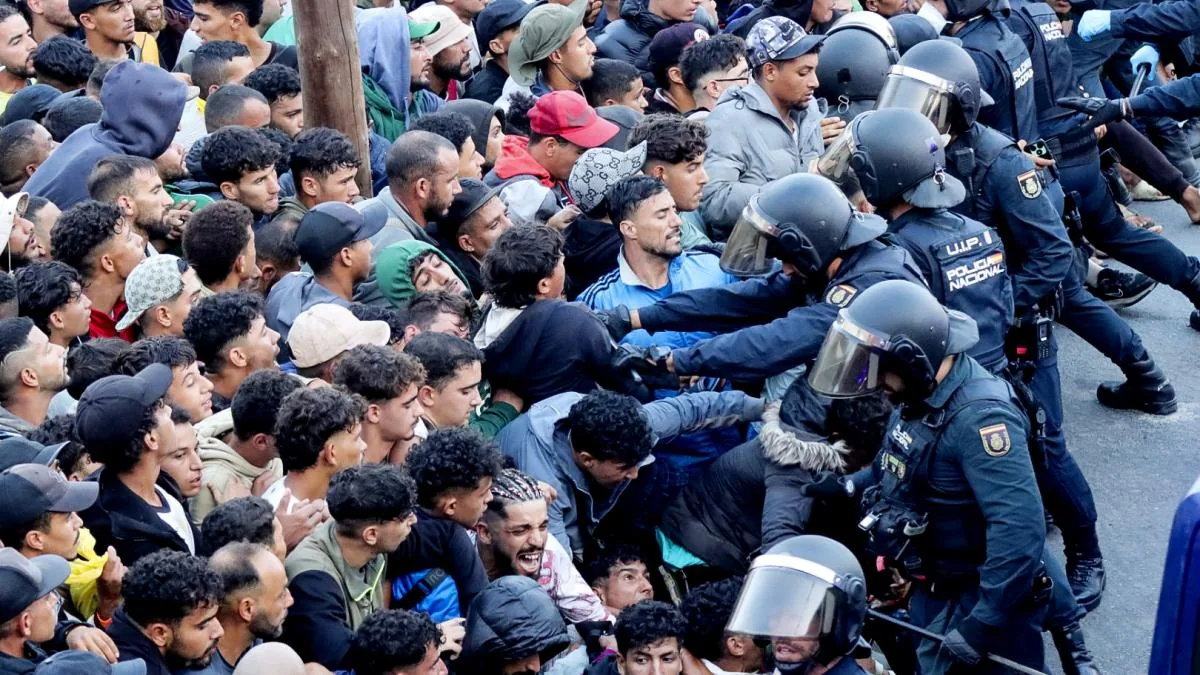
According to police sources reported to Efe, military vehicles and Civil Guard agents were pelted with stones when they approached Trampolín beach, alerted by the magnitude of a brawl. Twenty-one identified immigrants then “voluntarily” returned to the Kingdom of Morocco through the El Tarajal border, the news adds. There were no injuries. The Spanish Troop and Navy Association (ATME) assures that the challenges repeat “because they are not vested with sufficient authority to carry out their work effectively and decisively.”
And on Sunday, before our eyes, another brutal fight on the beach, “there are few” but how few…
Ceuta is an all-against-all planetary. Whoever created the bomb knew what they were doing. And on Trampolín beach are the fighters, week after week, crammed into reed huts and some cheap camping tents while, five minutes by car away, technicians from the Spanish Cooperation Agency work on the Poniente dock against the clock and against Ceuta’s will – expressed by the infrastructure’s board and by Vivas – to set up 50 tents with capacity to house 14 people.
Meanwhile, everything is degradation on Trampolín beach although the hundreds of immigrants who remain resist, wait, and trust in their peninsular dream. Between the sand and the road, a small market where the most enterprising resell yogurts, soft drinks, clothes, shoes, tobacco, and a space marked off with stones and the arrow pointing to Mecca.
-I am a hairdresser and my friend Taha is a mechanic, pastry chef, and has worked in logistics.
Abdul shows a neat box with scissors, combs, and shaving brushes with which he now earns some money on Trampolín beach, as if the journalist had the divine grace to get them documents and a contract, confident in their polite manners and work enthusiasm to leave behind tiny wages in Castillejos. “Morocco improves, true, but salaries do not,” they write with the help of Google translator.
Suddenly, meters from the chair where Abdul seats the camp’s clients, five or six people start a fight, as unpleasant as all. A Goyaesque scene,
Read more A disturbing future
Abdul and Taha, 22 and 21 years old, quickly understand that this spectacle harms them. “We are not like that! They are drunk! They are a few!” But how few…
The leader of the group wields a cylindrical bar with which he strikes and one of his men, behind, furiously throws a stone not as a silver bridge but to hurt those fleeing. They fight among the huts, which collapse, amid screams while everyone steps aside and watches like someone who sees rain because the day is long, the weeks tedious, and the humid heat paralyzes.
The defeated disappear and the victorious side eagerly destroys the remains of the huts, four reeds and some blankets, of their enemies.
Along the road, at the beachside, security forces’ vehicles slow down, observe, and move away. An intervention could confirm that the cure is worse than the disease or repeat Saturday night’s events. They disappear. And the immigrants who stay talking to the journalist admit that fights like this are already part of their daily life. Perhaps because of things like this, 700 emigrants have voluntarily returned to Morocco in the week that ended yesterday, according to Efe.
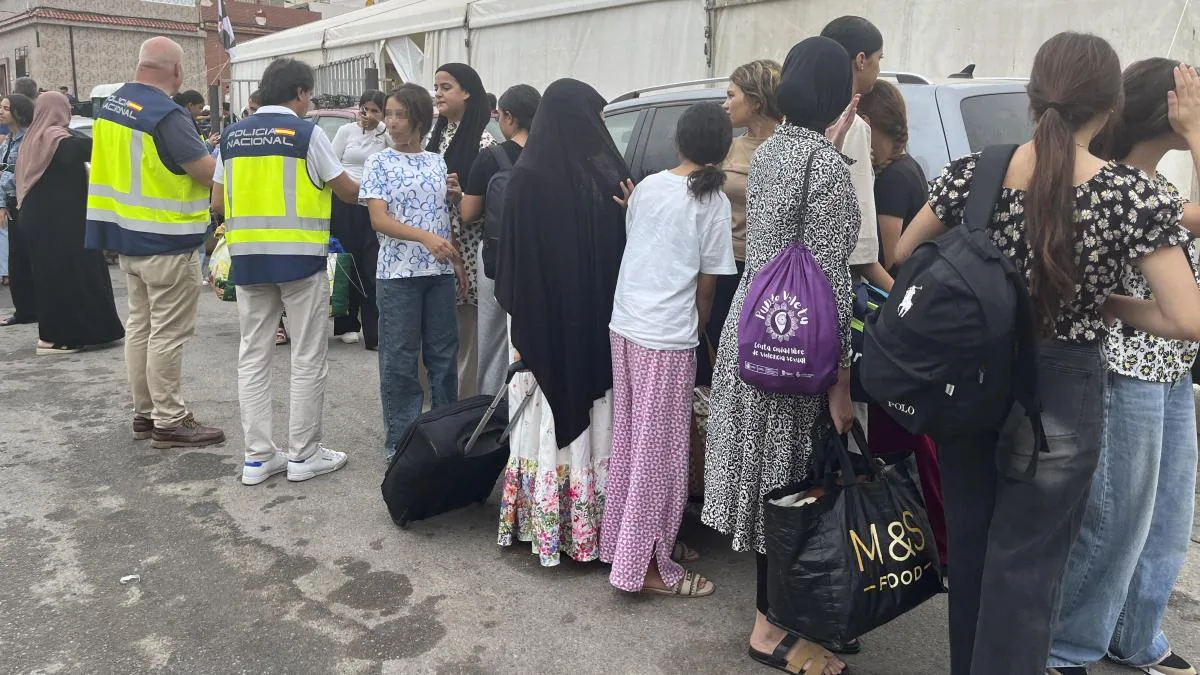
It was also unpleasant to see the orderly eviction, around ten-thirty, of the Tarajal industrial estates to enable the warehouses for registration and identification tasks. Everything is rushed now and the police carried out the task without incidents. Some mothers with two or three crying children, carrying bundles, suitcases, what they had on. “It hurts because those of us with children think of them but when my family talks to me about some neighborhoods in Tarragona…,” comments an officer who was stationed in Catalonia. The eviction made perfect sense from a health point of view: flies and stench, which impregnates the guts.
Meanwhile, dozens of Ceutans demonstrated with their children in the center of Ceuta to remember that today, Monday, their first day of school will not be like that of the eight million Spaniards. “We only ask to live like any Spaniard on the peninsula. Nothing more,” says the father of the García García family, five in total. “And thanks to the journalists for being here because we are afraid that in four days Ceuta will disappear from the news.”
Read more The ‘General’ Fermín amazes at Mestalla
Ceuta, so close to Morocco and so far from Madrid.