There are defeats that are written on the scoreboard and there are defeats that are written in the soul. Valencia CF has been stuck in the latter for far too long. The truly serious issue is no longer that the team plays poorly, signs few players, strings together mediocre seasons, or that relegation reappears on the horizon like a ghost that is becoming less and less ghostly. The most serious thing is that Valencia has stopped resembling Valencia.
Read more Valencia supporters invite to empty Mestalla until the 19th minute in the match against Barça
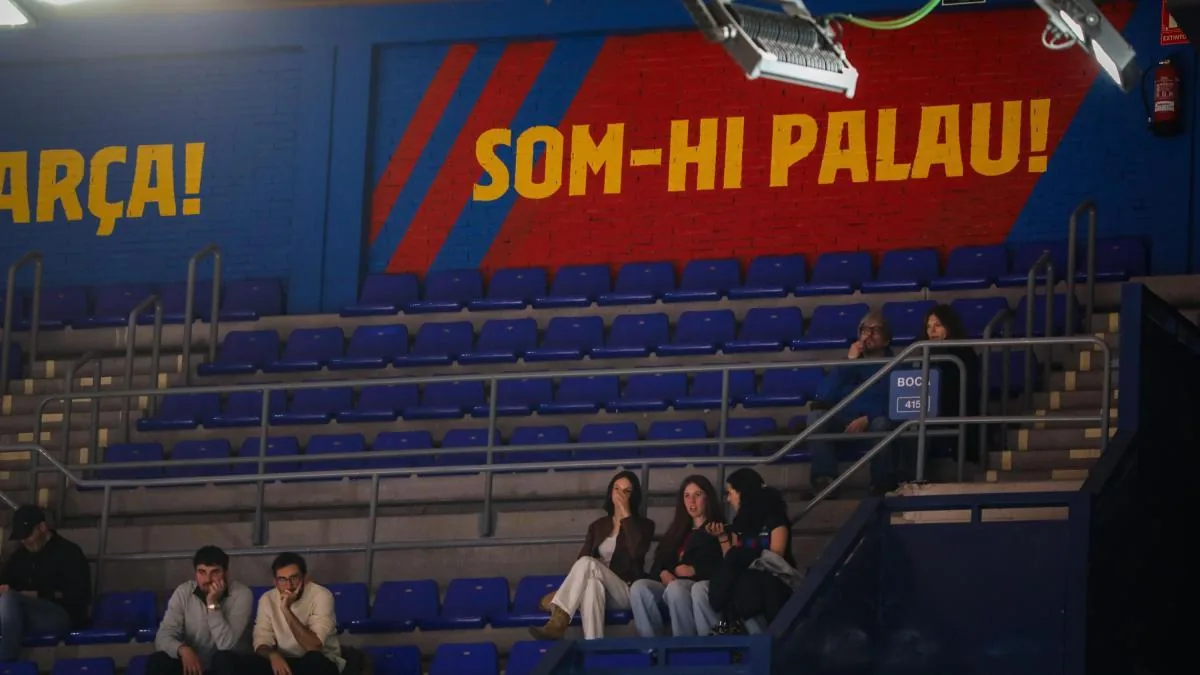
Today Barcelona arrives at Mestalla. There was a time when this match paralyzed the city and the metropolis. Valencia faced Barça with the arrogance of those who knew they could beat anyone, with players capable of turning an afternoon into a glorious page, as Rafa Lahuerta recounts in his formidable La balada del bar Torino . Now the fans await the match with a much sadder expectation: they do not expect a feat, they hope there won’t be a thrashing. That change in mood explains the club’s collapse better than any league table.
Valencia has a sporting problem today, but its illness is institutional. It has settled into emptiness. Into irrelevance. Into a kind of resignation managed from distant offices while the stands burn out, frustrated. The team competes without the ambition demanded by its history, the transfer market seems like a series of patches, and the permanent promise of the future serves to justify an increasingly unbearable present. One point out of nine before hosting the leader is not a coincidence: it is the symptom of a much deeper decline.
Peter Lim bought Valencia 12 years ago promising, directly or indirectly, to restore it to greatness. The previous owner, Juan Soler, had driven it to bankruptcy in the failed heat of the real estate boom. But the result has been even worse. The Singaporean owner has achieved what seemed impossible: turning one of Spain’s historic clubs into an institution without a recognizable project, without social leadership, and above all, without a soul. And in football, the soul is not a minor metaphor. It is the main heritage of a club.

Mario Kempes has explained it with painful clarity. The man who was a universal symbol of Valencianism has even said that Lim is not a football fan or that he is not interested in Valencia and that he may have bought it for other interests. It’s not just anyone saying this: it’s the Matador , the player who embodies one of the brightest eras in Valencia’s history.
There was a time when Barça’s visit paralyzed the city and the metropolis
Journalist Paco Lloret has been warning about this for years. In 2021 he already spoke of the Lim era as “the great disappointment” and recalled that in the 1986 crisis, when Valencia was relegated, Valencian society reacted to rescue the club. Politicians, businessmen, journalists, fans, and players understood that Valencia was more than just a company. Today, that collective reaction seems to belong to another era.
Read more A breakwater for a port that does not exist prevents the regeneration of a beach in Alicante
Here appears an issue that transcends football. Valencia has shown on too many occasions a disturbing inability to protect its great institutions. First, much of its financial system disappeared: Bancaja, Banco de Valencia, and CAM were intervened, absorbed, or disappeared as major local references, leaving the Comunitat practically orphaned of native banking. Then Canal 9 fell, an essential infrastructure for Valencian social and cultural cohesion, victim of disastrous management that drove its debt to astronomical figures and ended with its closure. Now we are witnessing another collapse. That of Valencia.
And the same uncomfortable question returns: where are the elites? Where are the businessmen, politicians, institutions, those who for decades spoke of the need to build a strong, cohesive Valencian society capable of defending its interests? They watch. They look. They remain silent. Valencia is bleeding out and the reaction of those who should feel concerned is, too often, a cautious distance.
The problem is that a club cannot survive on concrete alone. The Nou Mestalla is progressing and has become the great financial hope of Lim’s project. But a magnificent stadium without a great Valencia inside can become the saddest of monuments. What is at stake is not just whether to drop to the Second Division or not. That would be a huge trauma that Valencia has not suffered for decades. What is at stake is much harder to rebuild: the identification between a club and a city.
Peter Lim may end up delivering a new stadium. He may end up cleaning up the accounts. He may sell players, buy players, change coaches, or replace executives. But there is something that does not appear in any financial statement: the feeling. And that feeling is dying.
Peter Lim has managed in 12 years to turn one of Spain’s historic clubs into a club without a soul
Perhaps that is why this afternoon, when Barça steps onto the pitch, many Valencianistas will not look at the field expecting the Valencia of Kempes, Puchades, Claramunt, Arias, Mendieta, Cañizares, or so many others. They will look simply seeking a sign of life. That is the true collapse of Valencia: that it is no longer feared so much to lose a match as to lose definitively the club that was once feared in Spain and Europe and that now walks toward the abyss.
Read more The shared apartment app by three UPV students: “The landlord has never raised our rent”