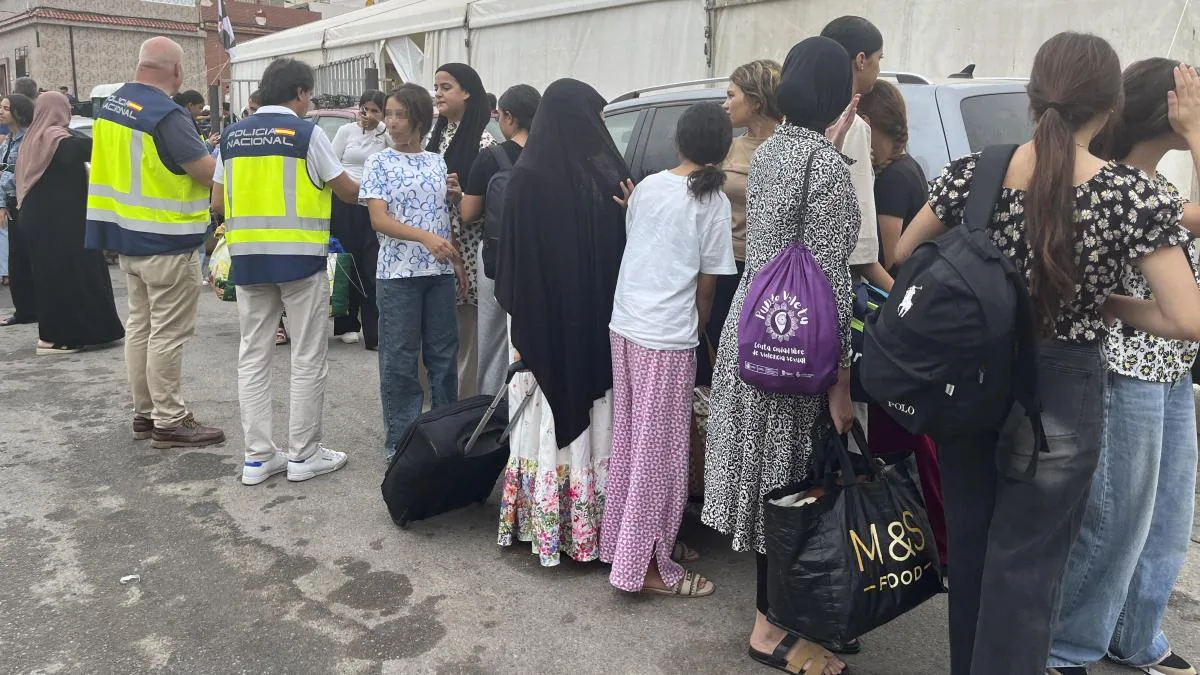
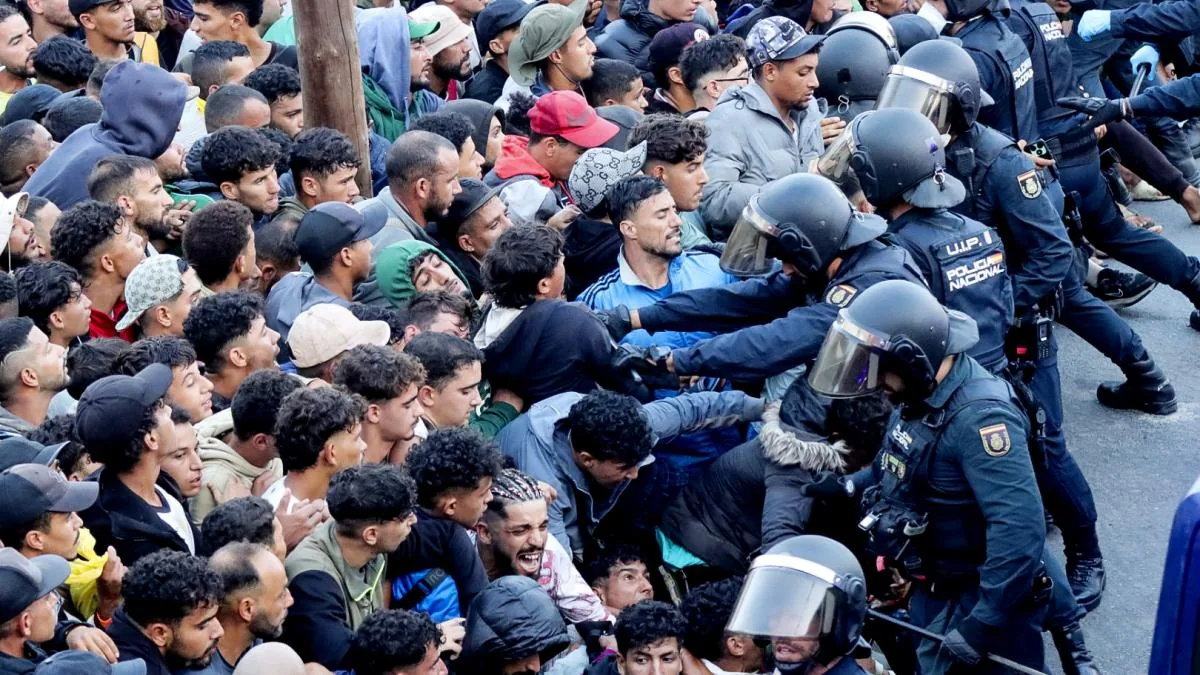
The Public Prosecutor’s Office has paved the way for the judge of the National Court María Tardón to agree to initiate an investigation into the massive entry into Ceuta from Morocco on July 30 and 31, which resulted in nearly 80,000 people crossing the border both by swimming and on foot, 82 of whom died in the attempt. After receiving the required reports from both the National Police and the Civil Guard, the public prosecutor maintains that there is sufficient evidence to start an investigation. Next week the instructor will make a decision, although it is expected to proceed.
Read more Shadow here shadow there
The chief prosecutor of the National Court, Jesús Alonso, decided this week to personally take on the matter and remove the initially responsible prosecutor given the relevance and significance of an issue whose criminal extent is still unknown. To begin with, the prosecutor argues that the facts fall under the jurisdiction of the National Court because they would have been conceived, planned, and orchestrated from Morocco, but their material execution and the intended outcome of this plan took place on Spanish territory.
The public prosecutor focuses on the criminal organization although the Police have ruled it out
For the National Immigration and Borders Center (CENIF), the crossing was not “something accidental” but a plan, encouraged through a massive simultaneous disinformation campaign via social networks, which did not aim at the irregular entry of migrants to stay in Spain. As a fact, it warns that most returned within a few hours. The data it handles is that Moroccan agents practically disappeared from the border those days and that the government of the Alawite country had already coordinated this type of actions on other occasions.
The public prosecutor has limited itself to arguing that there may be a crime of facilitating irregular immigration committed by a criminal organization, endangering the lives of multiple people. It also points to this alleged organization as the author of crimes of homicide and injuries due to gross negligence. However, the Police already ruled out in its report that this operation was typical of a criminal organization.
Read more Towards a happy world
Although the chief prosecutor has not requested the practice of any proceedings in his writing, he has opened the door to the possibility that once the investigation begins, evidence of a crime against the peace or independence of the State may be found. At this point, the Government, through the State Attorney’s Office, could then appear as an injured party – something the Government of Ceuta has already done – provided that Tardón does not consider that any of its members bear responsibility if they knew the risks of this massive entry and did not put adequate means in place to prevent it.
Vivas travels to Brussels
In the plenary on the Ceuta crisis, the President of the Government proposed requesting the European Union to recognize the autonomous cities of Ceuta and Melilla as outermost regions – a status that, in Spain’s case, is only recognized for the Canary Islands archipelago –; the inclusion of both cities in the European customs union and, finally, that Spain can include both territories in its representation within the Committee of the Regions. None of these measures had been considered until the current crisis. The consideration as an outermost region integrates the regions so considered into special programs and funds of the European Union. Regarding the customs union, their incorporation would mean the free movement of products from these territories. In part, products from Ceuta and Melilla already enjoy certain commercial advantages. Finally, the incorporation into the Committee of the Regions, whose current president is Juan Manuel Moreno, the president of the Andalusian Government, depends on the organization of the Spanish delegation itself. The President of Ceuta, Juan Jesús Vivas, will travel to Brussels next Tuesday with the aim of raising awareness among community authorities about the situation in Ceuta. Vivas will meet early with the leader of the European People’s Party (EPP), Manfred Weber, and later with the President of the European Parliament, Roberta Metsola. Then, he also plans to meet with Dubravka Suica, Vice-President of the European Commission for Democracy and Demography Affairs, and an hour later with Markus Brunner, European Commissioner for Home Affairs and Migration. Spain is currently discussing greater involvement of Frontex in the control of Ceuta and Melilla.
Read more The ten-hour hole that swallows Sánchez