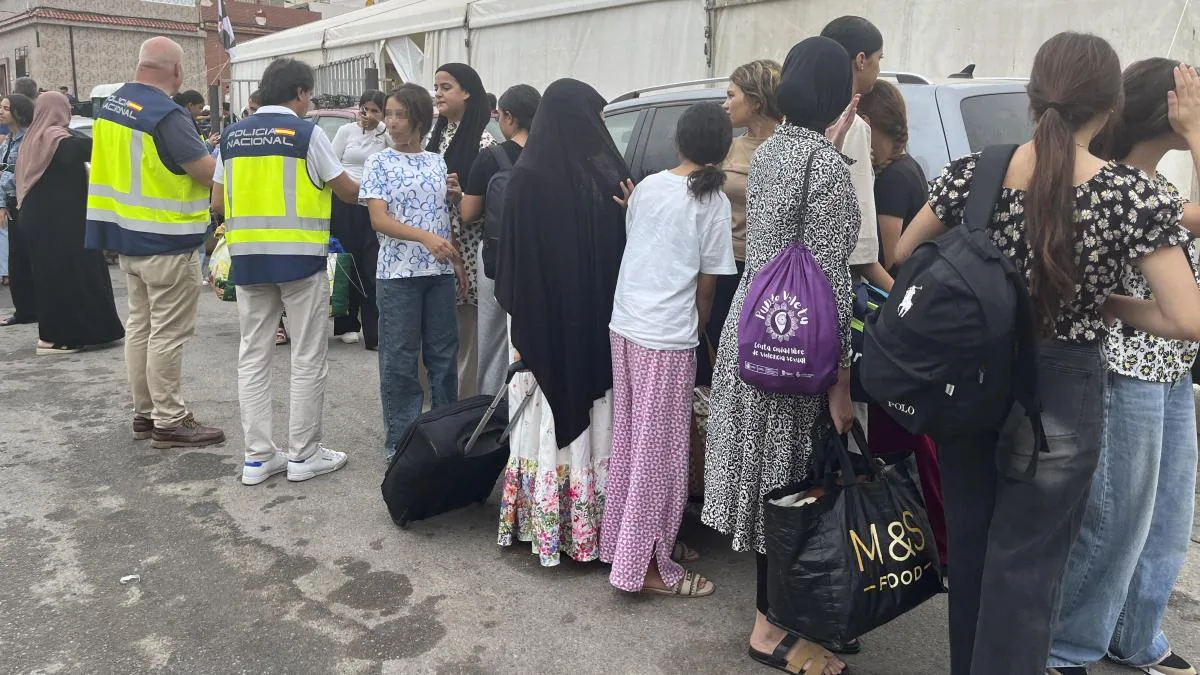
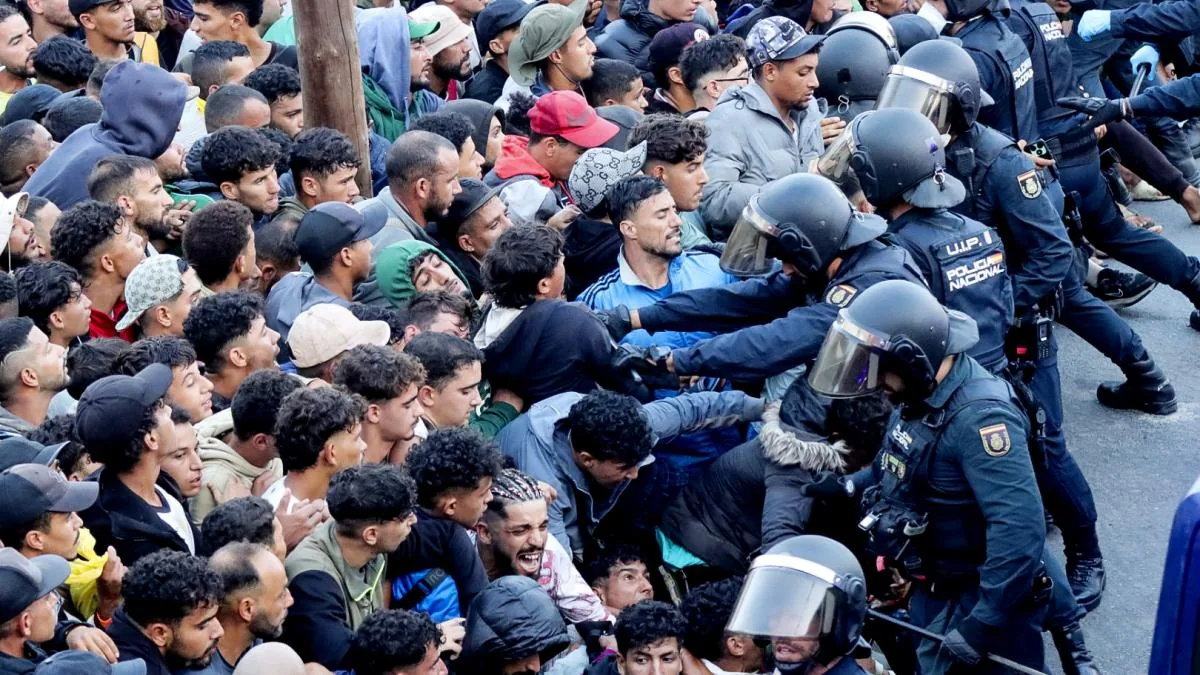
The PP was quick to react to Pedro Sánchez’s words, who once again exempted Morocco from the Ceuta crisis. Deputy Secretary Juan Bravo accused the Prime Minister of “surrender” to the neighboring country after Sánchez not only absolved Morocco of responsibility but also praised Rabat’s actions despite more than 70,000 immigrants entering through the border.
Read more A school principal saved 900 children after evacuating the center minutes before the flood in Nepal
For the popular leader, Sánchez’s stance, expressed in an interview on La Ser, reflects “maximum weakness.” “There is practically a surrender to Morocco’s policy,” Bravo said in an interview on Telecinco and Onda Cero from Ceuta. For Bravo, it is not “balanced” that Sánchez “thanks Morocco” and asks “his European partners for explanations” about what happened in Ceuta.
The PP leader criticized Sánchez for describing relations with Morocco as “fantastic” despite Rabat “claiming” Ceuta and Melilla, not ensuring “security,” and “somehow trying or facilitating” an invasion. “It is a neighboring country, but we also have to tell them where we stand,” Bravo said, who has been in the autonomous city for almost the entire month. Alberto Núñez Feijóo will also visit this week.
The Popular Party remains very critical of Sánchez’s government but has also hardened its discourse against Morocco amid the Ceuta crisis, and Bravo himself has reminded that Rabat benefits from “mutual respect” relations with Spain because, among other things, it supplies a good part of the energy — “practically all of the liquefied gas,” he emphasized.
In any case, the PP wants to focus on its criticisms of the government, beyond assessing Morocco’s actions. “What matters to us is not whether Morocco is uncomfortable with this invasion or did nothing to prevent it, but how our government acts to defend two cities as Spanish and European as Ceuta and Melilla. That is the main thing,” he stated.
Read more The day the networks died
Sumar demands more criticism of Morocco and the transfer of migrants to the Peninsula
Sánchez’s words have also not satisfied one of his government partners. Sumar’s spokesperson in Congress, Verónica Barbero, reproached the president that his interview lacked “criticism of Morocco for what happened,” “empathy with the Ceuta population and migrants,” and above all, “ways to resolve” the crisis.
Barbero defended that the government organize the transfer to the Peninsula of minors, migrants, and refugees who remain in Ceuta, so that they can continue legal procedures there. “We have the obligation to guarantee human rights, the rights of migrants and those who apply for asylum, and at the same time, care for the population of Ceuta,” she said in statements sent to the media.
In the same vein, Compromís deputy Alberto Ibáñez, integrated into the Sumar parliamentary group, also defended transfers to the Peninsula and questioned Sánchez’s defense of his relations with Rabat. “It is not credible that he accuses the reactionary international of Trump, Israel, or Russia while thanking Morocco’s collaboration as if its king were not a partner of that international,” he said.
Podemos leader Ione Belarra went further and accused Sánchez of maintaining a submissive position to Morocco. “Sánchez has tried to position himself as the opposition to Trump and will end his term as what he is, a president surrendered to Morocco and its allies the US and Israel,” she wrote on her social networks. Belarra also argued that the president is “afraid that what happened in July will happen again” and is “incapable of doing what needs to be done, breaking with Morocco.”
Read more Shots fired into the air and tension at the doors of the Loma Colmenar reception center in Ceuta