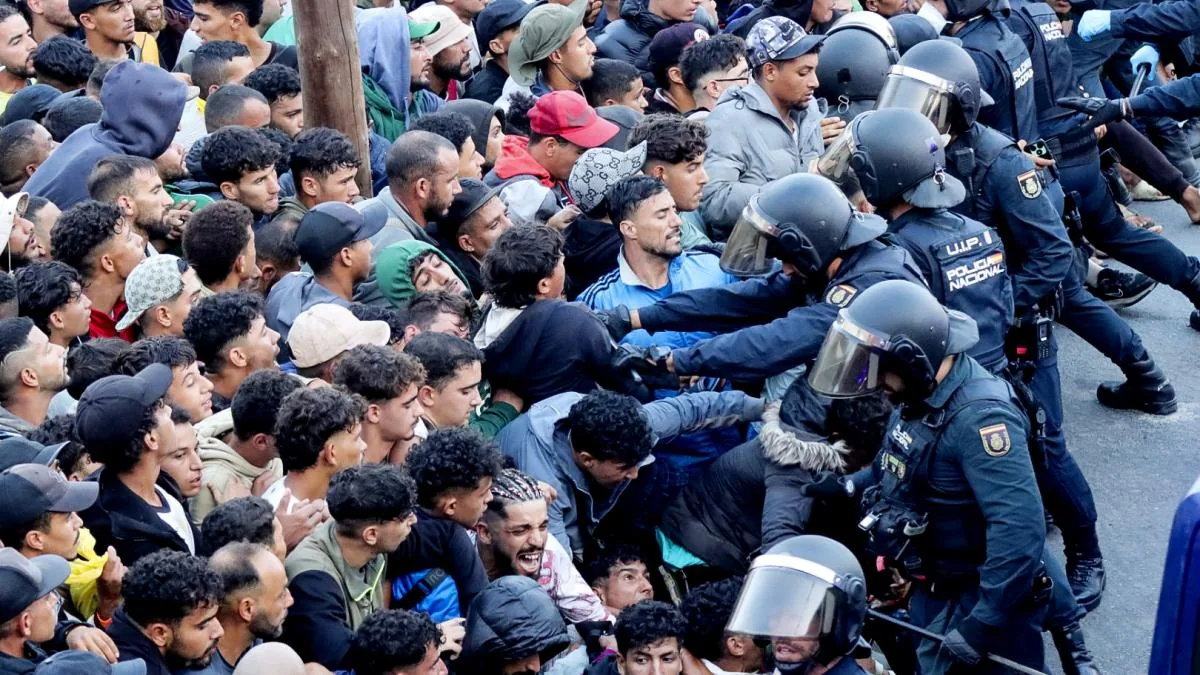
Imad Maarmi, a 35-year-old Algerian, is in a limbo called the Temporary Stay Center for Immigrants (CETI) in Ceuta. After being intercepted up to 12 times by the Civil Guard or the Moroccan Navy when trying to swim across the Tarajal border breakwater, he managed to set foot on the shore of the autonomous city last July 10. Three weeks before the mass crossing. At that time, the CETI was not overcrowded. Nor was Ceuta in chaos.
Read more A migration crisis that is already one of coexistence
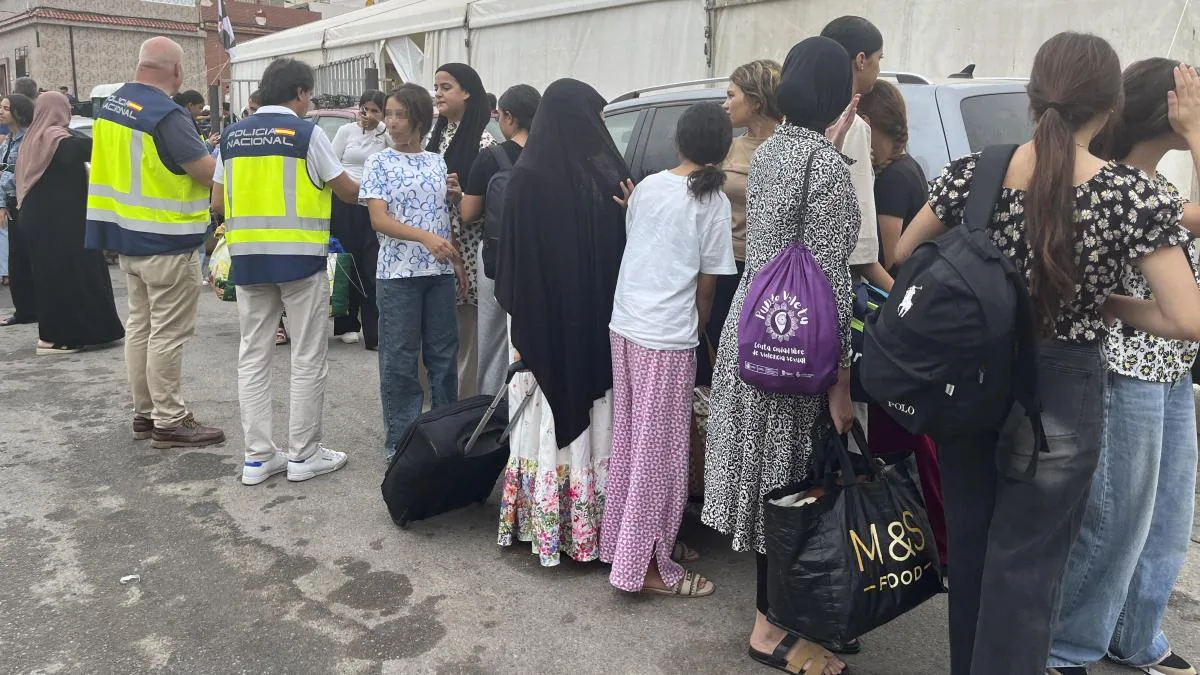
The center is a transit care space until people – now about 700 sleep there – are transferred to one of the seven Foreigners’ Internment Centers (CIE) located in other regions of Spain. But with the European Union watching to prevent facilitating the jump to the Peninsula, the Ministry of the Interior is not making transfers, according to police sources. Maarmi, who was irregular for three years in Brussels before being expelled, confirms this. In his room, the same ten people who were there before the influx still live together.

The new reception places are handled discreetly so as not to create more tension among the neighbors
With the uncertainty of not knowing when he will probably be transferred to the CIE in Algeciras, Maarmi spends the morning on Trampolín beach, which has become the image of this crisis. Like Lampedusa was. Or the dock of shame in Arguineguín. So many hours in the sun have allowed him to make a snapshot of the place, which is transforming. The beach has been reorganized at a rapid pace after a device led by the Ministry of Migrations emptied it ten days ago.
The reed huts, tied with strips of garbage bags, mostly built by sub-Saharan people, are giving way to cabins reinforced even with pallets, being built by Maghrebis. Yesterday, up to four rows crossed the entire beach at the water’s edge. A settlement that is taking root again, with food or clothing stalls. Even improvised water channels. The barbershop is not missing either. From the Ceuta desalination plant, without needing the eyesight of a lynx, it is clear that the estimates of the people still remaining in Ceuta fall short.
In the cabins, there are families with minors who spent the first nights exposed in the Tarajal warehouses
At the end of Trampolín, there are families with minors who spent the first nights exposed in the Tarajal warehouses. The Algerian who knows the beach inside out brings them some loaves of bread every day. “Paid with my savings,” he clarifies from the very beginning of the conversation.
Two Moroccan kids, Imran, seven years old, and Taha, 14 years old, throw themselves into the arms of their “friend” Algerian. Maarmi and Mohamed, the brothers’ father, say that in the situation they are going through, geopolitics is not understood, that both have “a white heart,” that of pure, kind people.
Read more The Wave

The family, also with the mother Huda and the older sister Janet, crossed swimming 31 dawns ago in the open. The minors inside floaters. “A month sleeping on the street,” Mohamed says, who some time ago worked thirteen years off the books in Ceuta. The parents ask, over and over, how it is possible that they are still on the street with the children in their care. They argue that in Morocco, with only one salary, survival was impossible: they do not want to return to their country.
For ten days, the Government has not enabled new places to accommodate immigrants. The Minister of Migrations, Elma Sáiz, initially promised that 1,500 beds would be urgently deployed, which finally reached 1,800, in two spaces. The Government spokesperson also did not rule out that the number could reach 4,000 places, but the openings have not progressed.
The problem, the core where the crisis management is stuck, is the choice of spaces for reception. In fact, at Moncloa, they trust that once all immigrants have a roof to sleep under – without daring to set a date after previous missteps – the situation in Ceuta will take another course. However, the new places may again raise the same tensions as the list of sports centers that the Government included in the Official State Bulletin. Ministerial sources assure that the next sites are already agreed upon with the Ceuta government. In fact, the single command for the crisis, Minister Ángel Víctor Torres, has been visiting them this past weekend.
Meanwhile, the queue of Maghrebis at the doors of the Loma Colmenar Embolsement keeps growing, despite not having certainty that this space will house more bunk beds in military beds. There are also dozens of people still sleeping among the nooks of the neighborhood near the Tarajal border. No neighbor believes that there are only 5,000 immigrants remaining in Ceuta. They even question the number given by the president of the autonomous city, Juan Jesús Vivas, who places them at 10,000.
Read more Sánchez: “There are enough reasons for the King to go to Ceuta; that visit will take place”
Not even that is clear in this crisis, which is entering its second month.