The Minister of Territorial Policy and Democratic Memory, Ángel Víctor Torres, who has been appointed as the highest authority in the single command decreed in response to the Ceuta migration crisis, fully supports the version of his Interior counterpart, Minister Fernando Grande-Marlaska, regarding the lack of prior warnings before the border assault, a version that contradicts that offered by another government colleague, Defense Minister Margarita Robles, who on Tuesday stated that there had been prior communications from the CNI, although not precise or urgent enough.
Read more The Government prepares a major screening to tackle the ‘boom’ of data centers
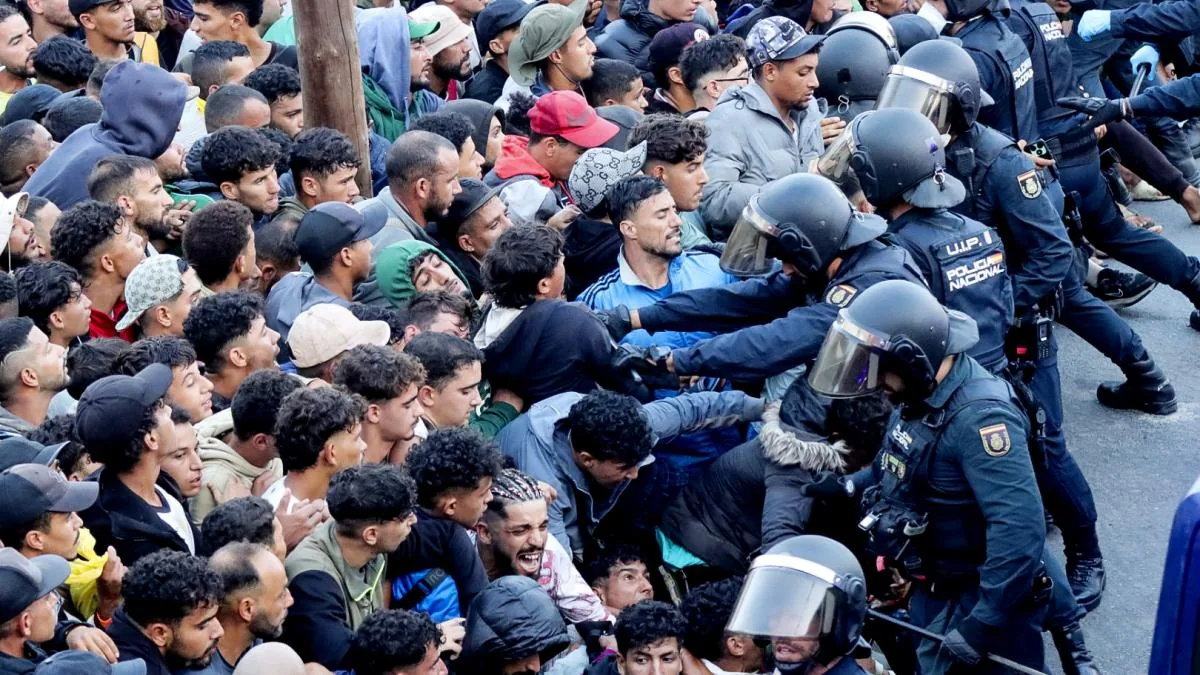
Just minutes before the appearance of President Pedro Sánchez in Congress was registered at his own request, for which the Chamber’s Board has yet to set a date, Torres supported, in statements to Cadena Ser, Marlaska’s version, recalling that, as the Interior Minister explained on Tuesday, “the situation” of Ceuta “is reported daily” and, although there had been an increase of about a thousand immigrants per day in the days prior to the assault, “there was no communication that we were going to have the arrival of thousands of people.”
Torres recalled that the version offered by Marlaska “was an almost on-the-spot response to the intervention of Minister” Robles, and that “if we had been aware” of the arrival of an avalanche like the one that occurred on July 31, “the action would have had to be different.”
“If we had been aware, the action would have had to be different”
The main authority appointed by the Government to manage the Ceuta crisis has also made some self-criticism about the central government’s management. While emphasizing the success that in just 48 hours the vast majority of immigrants who crossed the border were returned, “90% or 95%,” as he estimated, “things can always be improved, but it is not easy to face a crisis like this.”
Also read
Still, Torres does not share the opposition’s criticisms and maintains that “the Government has not abandoned Ceuta.” And faced with the urgency of the autonomous city to recover normality, the Minister of Territorial Policy showed understanding: “I understand Ceuta, its complaints, but we have come to solve this.”
Read more A new fire in Collserola, in stabilization phase, forces the evacuation of Torre Baró residents
“I understand Ceuta, its complaints, but we have come to solve this”
At this point, he insisted on the difficulty of resolving each case: “These are files that are not simple,” and immediately recalled that in 2021, after an agreement with Morocco, minors who had crossed the border were returned, but the process ended up in the courts and resulted in two convictions of Ceuta leaders “because procedures had not been respected.”
Now it is time to undertake the repatriation and asylum process for the people who remain in Ceuta. But “returning a person who does not want to go back” is not easy, Torres insisted. “It must be done respecting rights and laws, it is a guarantee process that is limited” and “the sooner they are confined in a space and can be registered, the sooner they will return,” he explained.
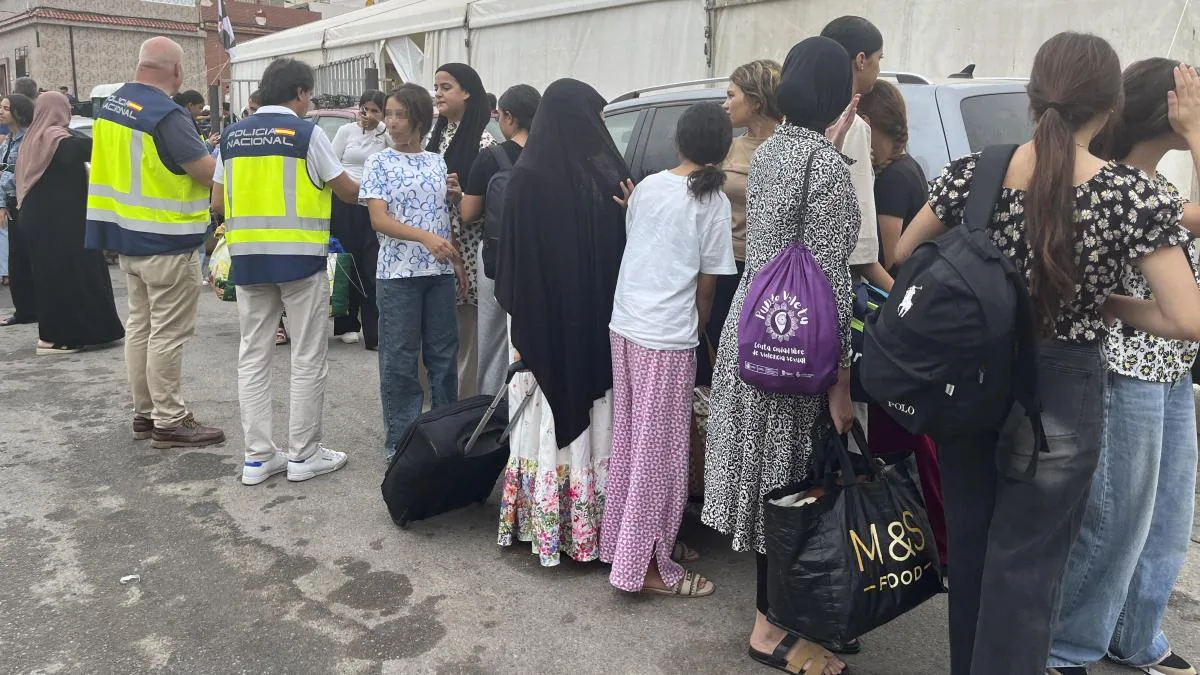
According to the figures managed by the Government, about 1,800 adult immigrants and another 1,410 minors have been registered—taking or recording personal and identity data—“but many others remain unregistered,” according to Torres, who wander the streets of Ceuta.
Read more Sánchez and the harmony with Europe