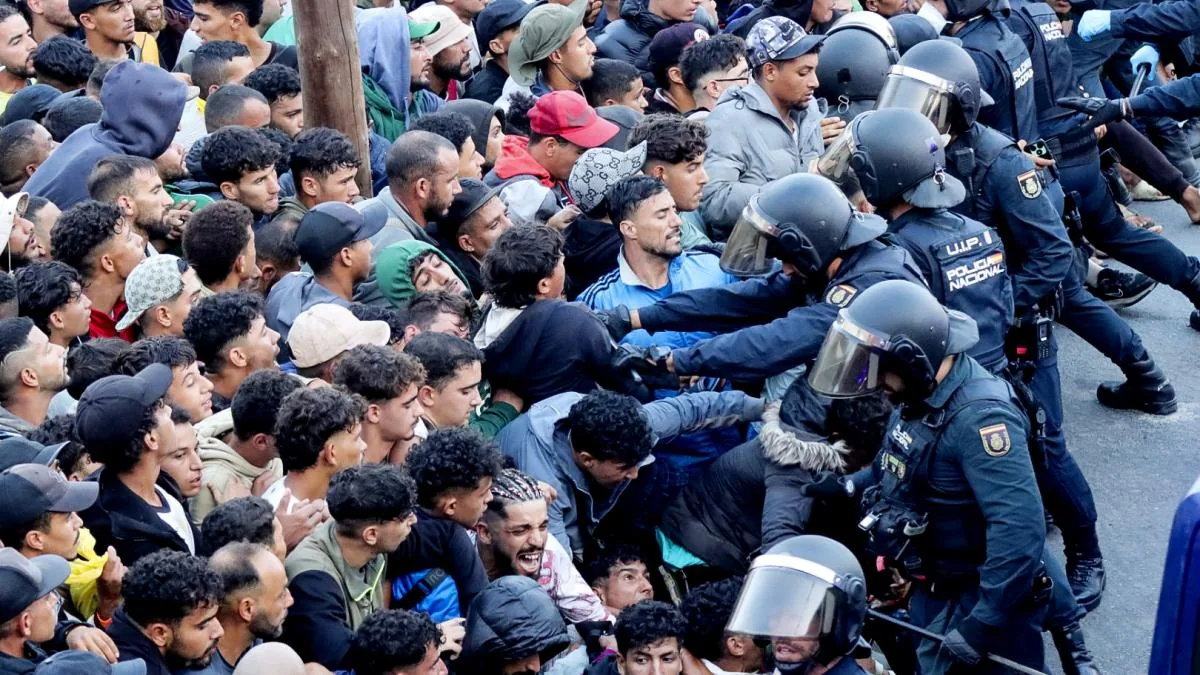
The appearance of Trampolín beach, where hundreds of immigrants had settled in inhumane conditions after refusing to leave Ceuta, was that of a camp where people were beginning to put down roots. Sub-Saharan Africans setting up stalls with some food, tobacco, or sneakers that once belonged to the 141 people who lost their lives in the tragic mass crossing. There were Moroccans building a kind of mosque with milk cartons or improvising barbershops. Huts, from both groups, that were taking shape beyond the initial reeds that supported them. As if all of them, being only estimated figures for the administrations, assumed that their life was going to be long on the sand. Until yesterday, 21 days after the avalanche, when with a late stroke they ceased to be invisible. No matter how many photos on newspaper front pages they had dominated.
Read more The other impact of AI: its expansion now makes financing countries more expensive
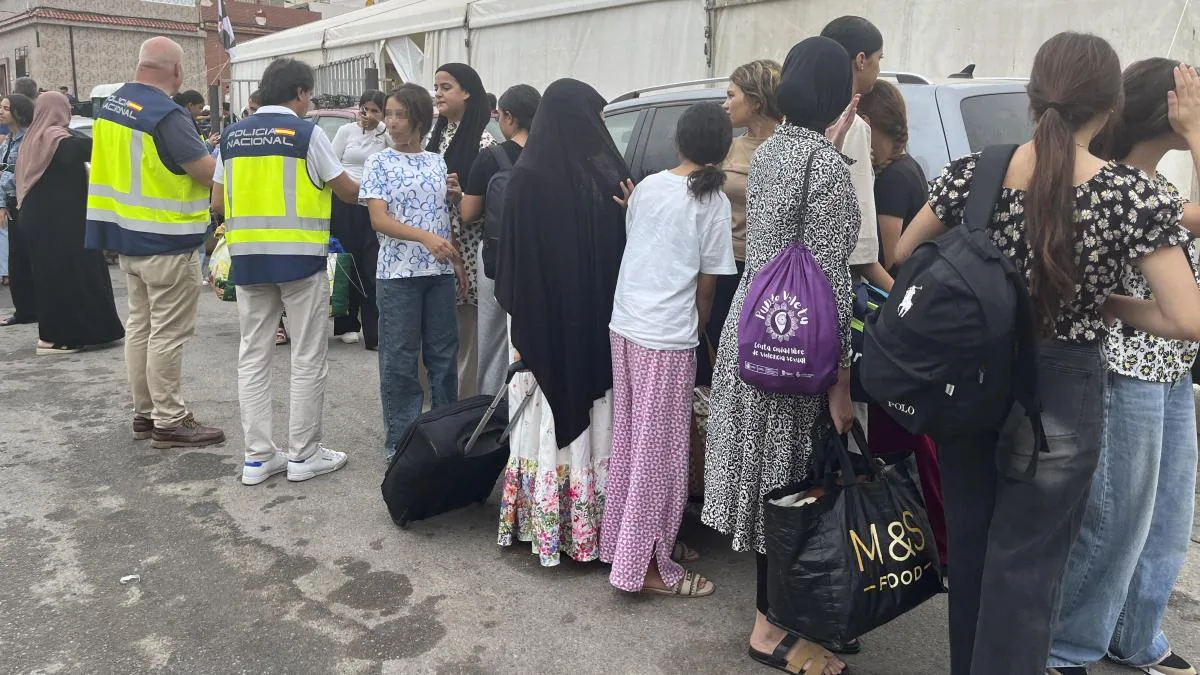
Early in the morning, the operation to evacuate Trampolín beach began. The night before, the Ministry of Inclusion, Social Security and Migrations had finished preparing two of the new spaces announced on Monday by its head, Elma Saiz, to accommodate 1,800 people. According to ministerial sources, “the priority objective” now is to respond to the situation of the people still on the street, offering them an alternative accommodation and reception that allows them not to continue sleeping in public spaces. That is, to resolve the emergency before entering the bureaucratic maze of expulsion or asylum. But to reach the long-awaited new beds, a police operation had to be deployed to facilitate voluntary transfers and cause the least discomfort to the people of Ceuta, among whom the idea prevailed that this solution was arriving late. Too late.
In Loma Margarita, the Sub-Saharan Africans have been housed, and in another different area, the Moroccans
At first glance, it seemed simple. There was no bait other than offering them dignity. Professionals from NGOs like Engloba or Accem, helped by translators, informed the immigrants that they were not there, although the police presence could be misleading, to return them to their country. The only order was that the beach had to be cleared so that the city cleaning services could then dismantle the camp. They were invited to take their (few) belongings to go to a center where they will have several meals a day, water and electricity, and health care. All adults, they were divided into two large groups: Sub-Saharan Africans, the largest with about 1,200 people, and Maghrebis, about 200, although more were later added. In practice, due to language and coexistence issues. Statistics say that for the latter, their chances of regularizing their situation in Spain are more complicated than for the former, who come from countries with a high positive resolution of international protection.

Without any incident, they were herded to the prepared spaces. Orderly, following the guide, they walked quickly, imagining what awaited them. No more than two kilometers away, in Loma Margarita, what was once a driving school track for vehicles now has three semi-open warehouses where portable toilets, showers, and bunk beds have been installed. They were given a prior registration that will serve to have concrete data on the people still in Ceuta after weeks of fluctuating figures. The Ceuta government insists that the number may be around 10,000. The central government insists it may be half that figure. Among the Sub-Saharan Africans, some Moroccans slipped in, who after being detected by the agents were expelled from the space. “We already know this one,” explained one officer to another colleague. Also, other Moroccan nationals, adults, unsuccessfully tried to enter that center.
Read more Using AI to do homework and assignments reduces learning by 20%
Their place, also enabled by the Government, although ceded by local authorities, was in the large Embolsamiento parking lot, which was designed to organize, retain, and regulate the traffic intending to cross to Morocco. It dawned with the military tents on the ground after a night of intense west wind, but the workers raised them throughout the morning. As the immigrants arrived, who after being guarded between fences, passed in groups of about a dozen to the tents. They had difficulty entering. They asked the press if it was a trap to return them to Morocco. And from the esplanade, the Tarajal breakwater can be seen, the one they swam or walked around thinking that as soon as they set foot in Spain they would be given permits to cross to the Peninsula. What everyone wants. The police also combed Loma Colmenar, one of the neighborhoods where they found hiding spots.
The government spokesperson reported that the operation will continue in the coming days as resources are opened. She did not want to give figures but a few days ago hinted that the system could be expanded to have 4,000 beds available. Then the operation will be repeated. In the afternoon, several hundred immigrants arrived at Trampolín. Some to get belongings, others came out of their hiding places among the hills near the temporary immigrant stay center (CETI). The beach was no longer empty, but perhaps it is being populated by the next group to fill the next reception center.