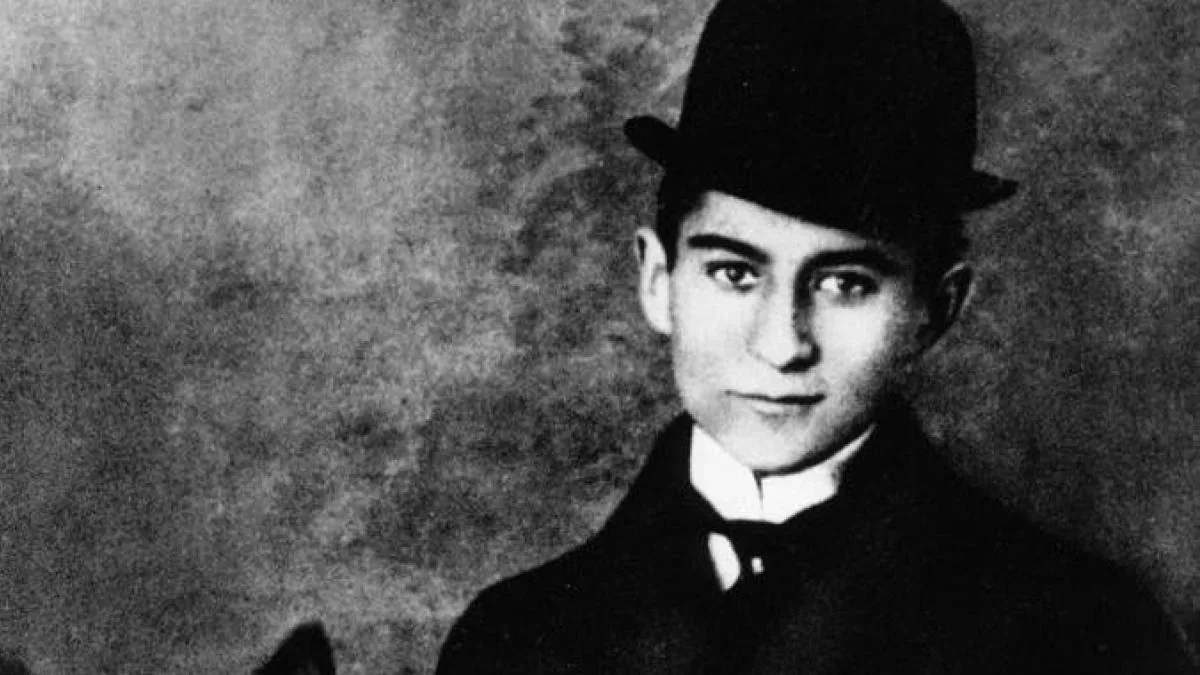
The magician Juan Tamariz has passed away at the age of 83, as confirmed by his daughter Ana in a message on social media. Tamariz, born on October 18, 1942, found success in the 1970s, when he was recognized in France, which led to greater success in Spain. His card tricks and illusions, his eccentric stage presence, his top hat, and his way of celebrating the audience’s surprise with the solemn notes of an imaginary violin (“naraniaronaniaro…”) resonated in a society that raised him as an icon.
Beyond success, for his daughter Ana Juan Tamariz was, above all, her father. And so she announced his passing in an Instagram message: “With immense sadness, today I say goodbye to my father Juan Tamariz, an incredible person, very loved and admired by all. Immensely grateful for all the love he gave me and for all the love for magic that he shared with us. His memory and his immeasurable work will always be with us.”
Although his first television appearance dates back to 1961, Juan Tamariz’s extensive television career was not consolidated until a decade later. He participated in Buenas Tardes (1972), hosted by Raúl Matas; Tiempo de Magia (1976), which he presented alongside Julio Carabias; Un, dos, tres… responda otra vez, where he first played Don Estrecho, one of the Tacañones, and later appeared as a magician; the children’s show El Recreo; Por arte de magia (1982); Magia Potagia, with Pepe Carroll; Chantatachan (1992), accompanied by Alaska; Carta Blanca (2006), on La 2 of TVE; and Nada x aquí, on Cuatro, dedicated to the world of magic.
Tamariz was far from the tuxedo-wearing magician stereotype. He won over the audience with humor and charm, perhaps because charm is inseparable from magic
Besides magic, Tamariz was always accompanied by a refined dishevelment in his presentation. From his anarchic hair to his top hats and hats, through the randomness of his teeth and vests, Tamariz was far from the tuxedo magician canon. His sleight of hand tricks, particularly card magic, required the closeness of the audience, whom he treated with humor and charm, perhaps because charm is inseparable from magic.
All in all, Juan Tamariz’s career as a magician was indisputable. In 1973 he won the First World Prize in Card Magic, earning the recognition of professionals. In 2011, he was awarded the Gold Medal for Merit in Fine Arts, recognizing his influence and the love of an audience always devoted to his character. And to his person.
Read more The Government definitively bypasses the Senate to shield its narrative of Ceuta in the Congress
If Tamariz always offered an unexpected show, it was because not even he knew how his own show was going to be. Although he did not have a violin, he carried a violin case, in which he kept objects to make a “four or five hour” show, he said. Later the show lasted ninety minutes, with the magician choosing which trick to perform at each moment and leaving another show in the top hat. Juan Tamariz thus applied a legal principle — Non bis in idem — to his career as a magician, in which he sought to make each show different.
Tamariz was not only a magician but also a theorist of magic. His legacy includes several books of tricks and summaries of lectures in which he approached the human dimension of surprise and enchantment. Had he not been a magician, he could have been a chemist, his university vocation, although he abandoned the course in the fourth year. His other love was cinema, and he left two short films in his legacy. The second, El Espíritu, marked the debut in front of the camera of actress Carmen Maura.

His way of mixing card magic with humor inspired others. In a La Vanguardia interview, Luis Piedrahita explained that he took up sleight of hand and card tricks when “as a child I saw the great Juan Tamariz on TV.” “Humor is a weapon of mass construction,” Piedrahita added, in a phrase with a tamarizian tone. As proof, this gem from the archives. In 2019, interviewed on these pages, Tamariz stated: “I’m only 76 years old, so I have half of my life left.”
His daughter Ana expressed the magician’s final gratitude to those who cared for him in his last days. “My thanks also to the Ballesol residence, the Clínico and Cruz Roja hospitals, and the ambulance guys all with huge hearts.” Ana, director of La Gran Escuela de Magia Ana Tamariz, extended her thanks “to all the magicians, friends, and family who have accompanied him throughout his life until the very last day!”
Read more The PP calls to «rearm the State» in Ceuta to avoid depending on Rabat