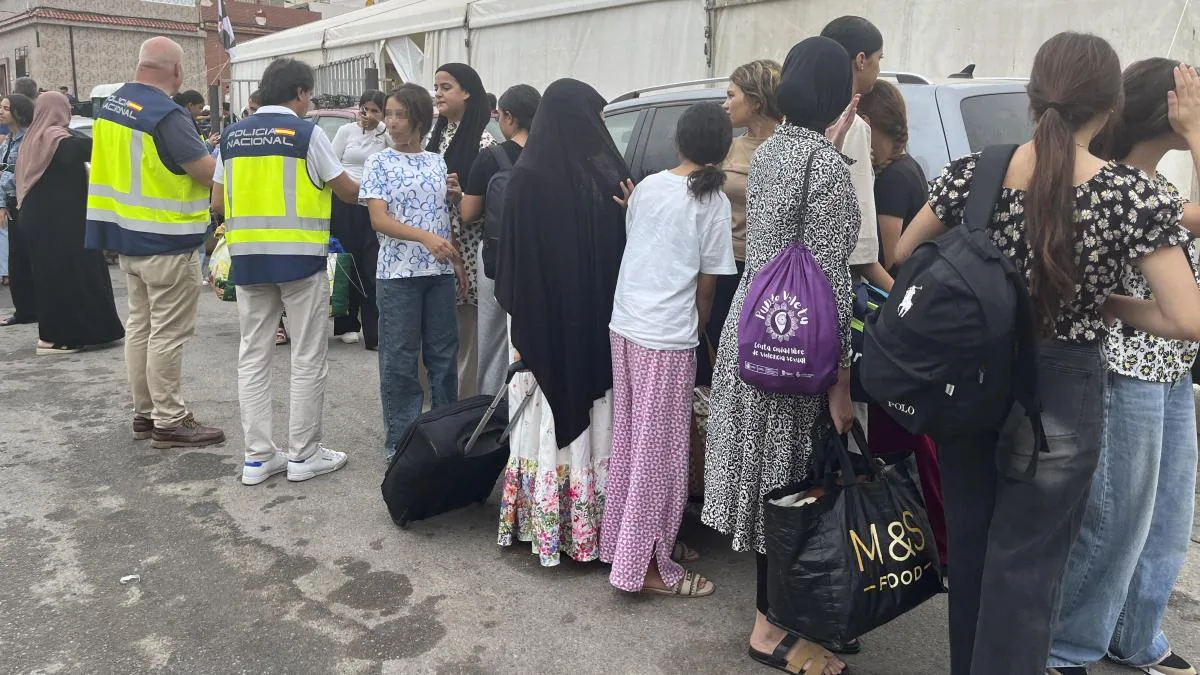
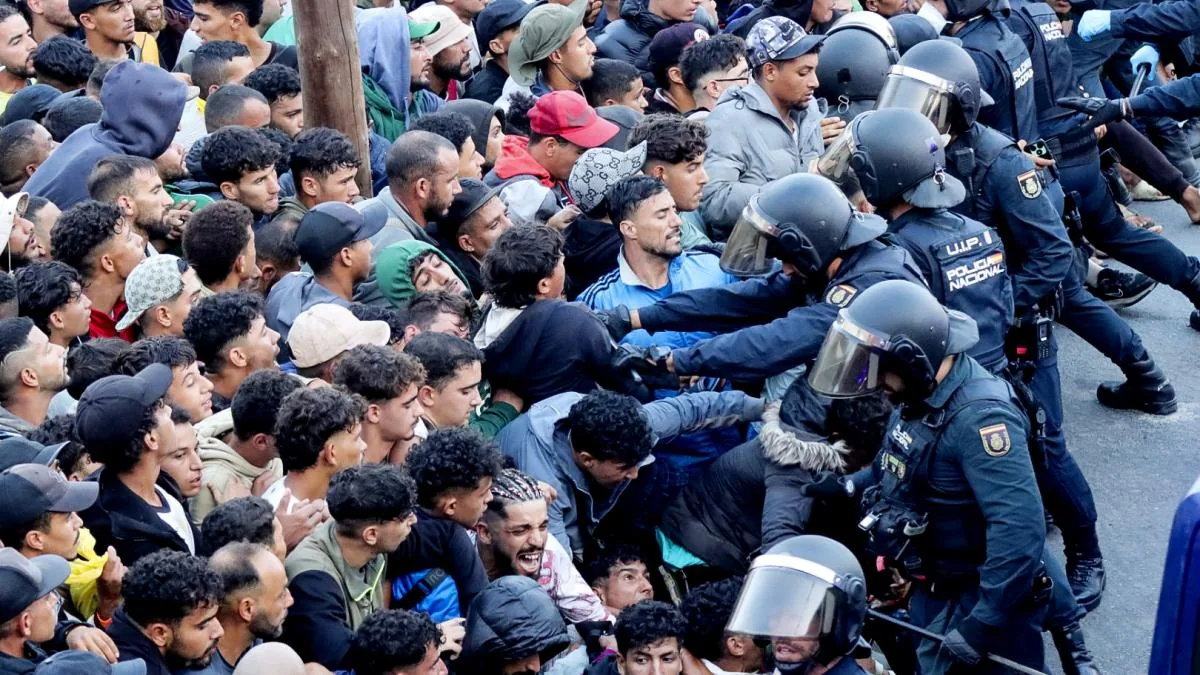
With the absence of Margarita Robles, the third minister to miss an appearance in just one week, the Government has opted for the path of fait accompli in its standoff with the Senate, dominated by the PP. The Executive denies that this is a “snub” following the migration crisis of July 30 in Ceuta — where 72,000 people crossed the border and more than 140 died — and claims that the ministers will attend “later.” The maneuver, however, allows it to freeze explanations in the hostile territory of the PP’s absolute majority until September, when more than a month will have passed since the tragedy.
Read more The PP calls to «rearm the State» in Ceuta to avoid depending on Rabat
The strategy seeks to buy time during the extraordinary August session and pivot towards the Congress, a much friendlier playing field for the Executive. This is demonstrated by the sequence of events. On August 5, the PP took the lead by requesting the appearance of ministers Fernando Grande-Marlaska, Margarita Robles, José Manuel Albares, and Félix Bolaños in the Senate. And 48 hours later, Moncloa reacted by registering its own requests in the Lower House at its own behest, setting the debate for August 25, 27, and 28, thus shifting the institutional focus.

Also read
The difference is significant. In the Senate, ministers are summoned by the PP’s absolute majority. In the Congress, it is the Government itself that has requested to appear. And although both Chambers perform oversight functions, the balance of power makes the second scenario much more predictable for Moncloa where its partners support the Executive and the PP cannot impose its agenda as easily.
On the legal front, the Government clings to an important constitutional difference. Article 110 establishes that both Chambers and their committees can demand the presence of Government members; the Senate, therefore, has the power to require these appearances. But Article 108 establishes that the Government is jointly responsible for its political management before the Congress, the Chamber that invests the president and can withdraw its confidence. This difference allows Moncloa to claim the political priority of the Congress, but does not make its appearance before the deputies a substitute for that which the Senate may demand.
Is there any legal repercussion? Absolutely not, because unlike an investigative committee, an absence at an ordinary oversight appearance does not trigger the criminal regime provided for those who ignore a parliamentary investigation request. The Government thus faces a parliamentary obligation whose non-compliance may provoke an institutional and political clash, but without the criminal coercion that accompanies investigative committees.
But the clash has already taken on an institutional dimension. Because, after Marlaska’s absence last week, the Senate already announced its determination to take the case to the Constitutional Court. The path is not easy since it is an ordinary committee, but it reveals how far the standoff between the two Chambers has escalated.
Read more Official: Rodri signs for Barça until 2030
On that basis, Moncloa has crafted a narrative that has barely changed despite the PP’s complaints. It argues that “it makes no sense to duplicate” explanations about the same crisis, appeals to the “institutional priority” of the Congress, requests time to prepare appearances about a still open situation, and questions the PP’s pressure to hold appearances in August when it is an inactive period for the Cortes.
But the underlying reason goes beyond the legal. It is purely political. Appearing first before the Senate means accepting the rules of the PP’s absolute majority. Whereas prioritizing the Congress allows Moncloa to take the initiative, set its version of events first, and arrive at the Senate with the narrative already constructed.
This is not an unprecedented dynamic. The PP has used its absolute majority in the Senate during this legislature to push control mechanisms and investigative committees that sometimes run parallel to initiatives on the same issues in the Congress, as is the case with the management of the Valencia storm. Now the Government uses the majority in the Lower House in the opposite direction. To bring there first an explanation that the Senate demands on a different schedule.
That is why Moncloa’s formula is politically effective. It does not say that ministers will not appear before the Senate; it says they will do so “later.” In practice, this means that the first parliamentary explanations of a crisis that began on July 30 will come at the end of August, almost a month after the events, and before the Chamber where the Government better controls the timing and alliances.
The Executive can maintain that it does not avoid oversight by the Upper Chamber, but in practice it is sidelining the Senate when Spain has a bicameral system.
Read more Rodri, new Barça player