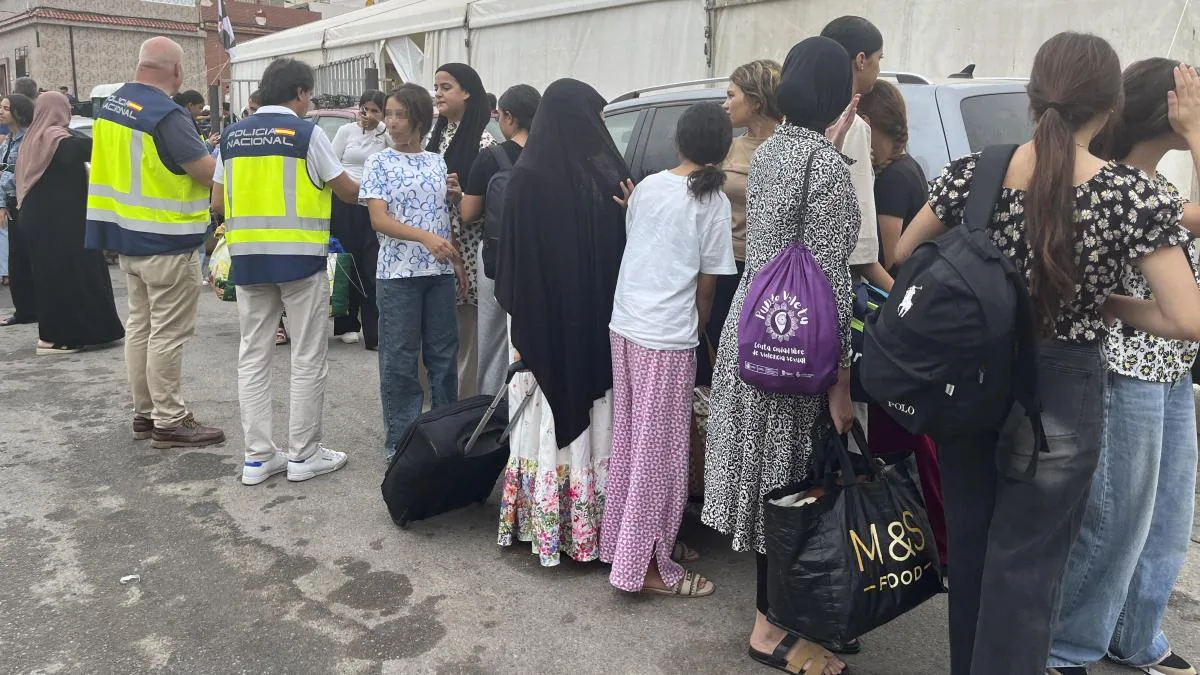
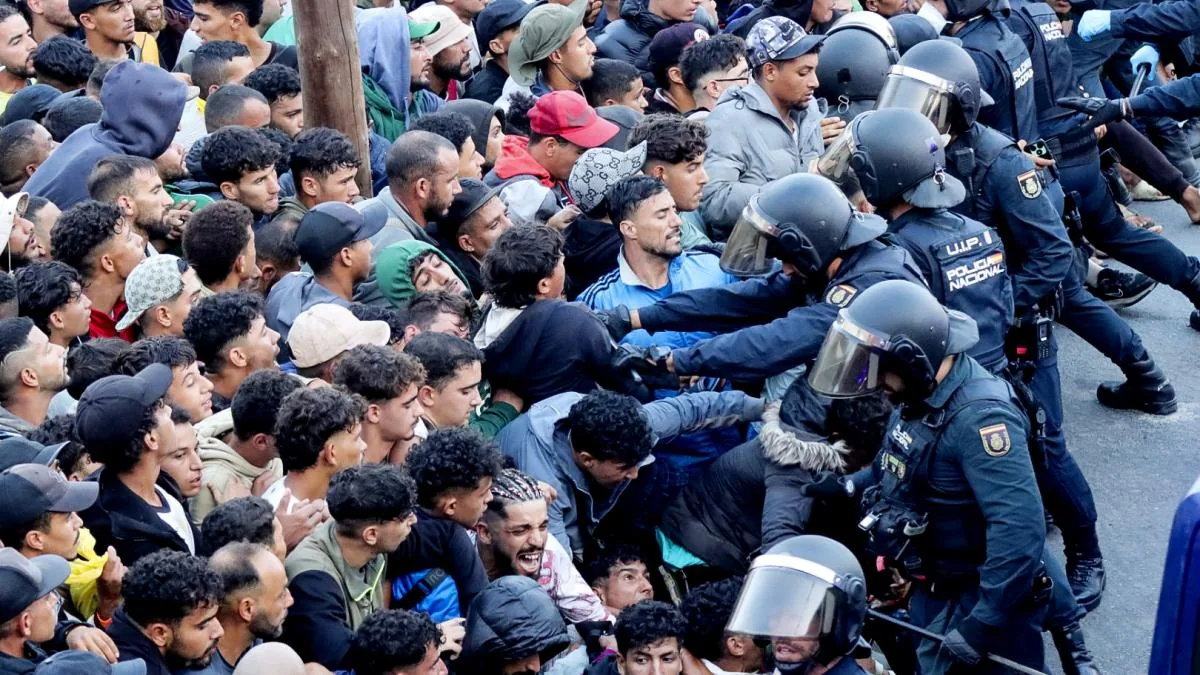
The Ministry of the Interior has raised the number of unaccompanied migrant minors registered in Ceuta since July 30 to 2,168 this Tuesday. This means that the National Police have located, identified, and placed at the disposal of the government of the city of Ceuta 2,168 boys since the beginning of the migration crisis until 9 a.m. this Tuesday.
Read more A new 4.7 magnitude earthquake shakes Granada again
This represents 270 more minors than those counted until last Thursday, when the Minister of the Interior, Fernando Grande-Marlaska, counted 1,898 minors.
The minors remain in Ceuta awaiting solutions, either through repatriation or by being transferred to other autonomous communities due to the saturation of the capacity of the autonomous city.
There is also a percentage of children and young people from countries such as Chad or Sudan who flee wars and humanitarian crises and have the right to international protection, as Save the Children has recalled, focusing on women, girls, or adolescents, who in addition to these problems face forced marriages, sexual violence, or trafficking.
The central government has summoned the autonomous communities next week to a sectoral conference to discuss the relocation of children and adolescents who have arrived in tensioned areas such as Ceuta for better care and the transfer, by the Executive, of 25 million euros to the autonomous city to care for the minors.
However, the PP autonomous governments oppose this debate because they are against the system, while the three coalition governments in which Childhood policies are in the hands of Vox (Aragon, Extremadura, and Castilla and León) do not even want to participate.
The other path, the return to the countries of origin, is not easy, since it can only be done if it is demonstrated, through an individualized study, that this is really the best for the minor, so in practice these returns are almost never carried out.
Read more Big oil companies double their profits thanks to the Iran crisis
The Supreme Court ruled that the mass return of minors to Morocco carried out after the migration crisis in 2021 was illegal, due to the “absolute disregard” of the guarantees established by the immigration law, such as conducting a case-by-case study of the individual circumstances of each young person.
Guarantees that must be respected even though there is an agreement like the one reached with Morocco in 2007 for the concerted return of minors, something the Government had used as a shield.
Although this mechanism is provided for in the law through family reunification, its execution is complex because it requires always ensuring the best interests of the minor, for which a thorough case-by-case study is necessary.
Among other issues, it is essential that the minor wants to return and, among other procedures, the Government Delegation must obtain a report from the authorities of the country of origin on the socioeconomic situation of the family to verify that the young person will be well cared for in case of return.
Additionally, within the procedure, the young person has the right to be heard, to have a lawyer, and to appeal before a judge if they disagree with the decision.
The law also contemplates as another option placing the minor at the disposal of the protection services of the country of origin, but this again would require justifying that the young person would be better cared for in the reception network of the country of origin than in Spain.
Read more The luxury illegal tourist apartment scheme in Barcelona loses two of its biggest gems