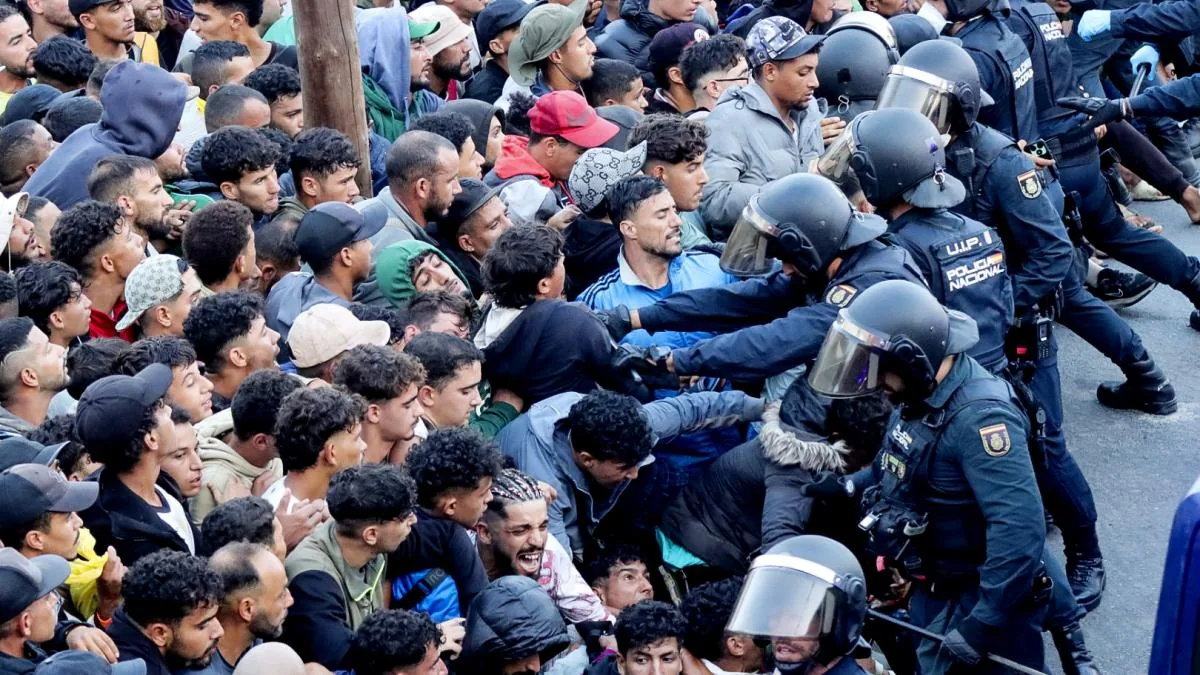
Is the conflict between the countryside and the city a breeding ground for far-right votes? Some data would support rural unease: an aging and masculinized world, with a large demographic void in which one in five children under 13 is of foreign origin.
Read more Ayuso loses her armor
However, the diagnosis is not conclusive. And, moreover, it reveals a certain divorce between Catalonia and the rest of Spain regarding the potential growth of ultra voting. For example, in 2023 the vote in Spanish towns with fewer than 10,000 inhabitants favored the PP or PSOE, while placing Vox below or at its national average. In contrast, in Catalonia, Aliança Catalana achieved its best result in 2024 (as did its main feeder, Junts) in towns with fewer than 2,000 inhabitants. And although that support diminished as the size of the habitat increased, it was offset by the rise of ultra-Spanish nationalist, but also anti-immigration, Vox vote.
Insufficient services and a strong local identity can boost far-right voting in rural Spain
Even so, positions on immigration do not reveal excessive contrasts between rural and urban worlds: support for limiting the entry of foreigners into Spain (around 38%) is similar in all populations with fewer than one million inhabitants, and only falls (to 28%) in two large capitals such as Madrid or Barcelona. Moreover, in the Catalan case, the perception of an excess of foreigners does not reach 50% among those living in towns under 2,000 inhabitants, although it approaches 73% in populations with up to 10,000 residents and shoots up to 80% in the range between 150,000 and less than one million.
The impact on the rural world of new demographic realities is more clearly seen in the type of society chosen: only 56% of those living in populations of fewer than 2,000 inhabitants prefer a society “with citizens of different origin, culture, and religion” (10 points less than among residents of centers with more than 10,000 souls). However, the breaking lines appear even more clearly when addressing issues that affect the direct interest of those living in habitats of different sizes. For example, almost 60% of those residing in centers of fewer than 10,000 inhabitants believe that “Spain should limit the import of foreign products to protect the national economy” (the burdensome tariffs exhibited by the far right). In contrast, that percentage falls below 44% among citizens of large capitals. And in the Catalan case, that identity with local production is glimpsed in support for secession (64% in centers of up to 2,000 residents and less than 40% in those with more than 50,000).
Read more Housing: the Catalunya laboratory
The other major source of rural discontent affects public services, especially transportation, but also health and education. In Madrid or Barcelona, up to 54% are very or quite satisfied with the functioning of public services. In contrast, that rate falls below 43% among those living in centers of fewer than 2,000 inhabitants (although the satisfaction percentage barely exceeds 45% among those residing in towns of up to one million inhabitants). That is, if rural discontent arises from scarcity or difficulty accessing public services, urban discontent would be attributable to overcrowding.
Perhaps that explains why the far right is not yet overrepresented electorally in the rural world. Of course, if a more recent experience is studied (the regional elections in Aragón and the case of Teruel), the data do reflect a vote for Vox higher than average in about a third of the many small rural centers of that emptied Spain. But that also happens in towns with more than 10,000 inhabitants (such as Teruel capital, where the ultras were the second force) or Alcañiz.
The Catalan exception – with two far-right groups of opposite identity signs – lies in the growth potential indicated by the 2024 results. And that expectation resonates with what happens in other European territories, such as the deep France of lepenism or rural England of Brexit.
Read more Moderate Democrats claim a third way against the rise of socialism in the U.S.