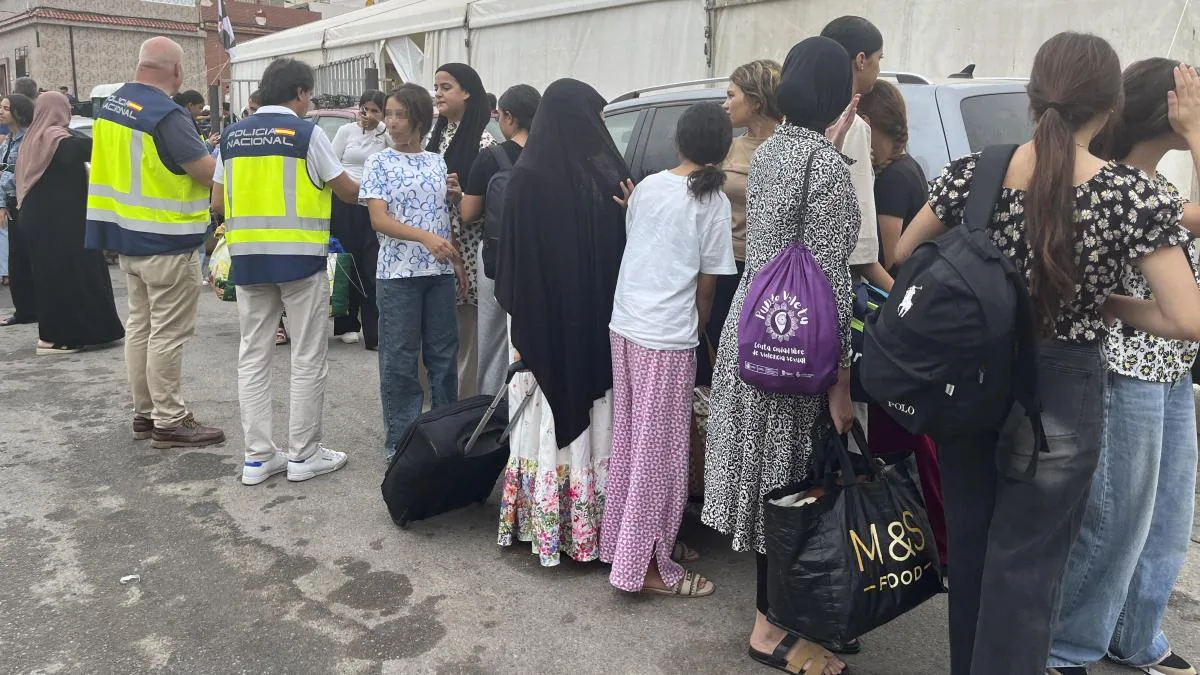
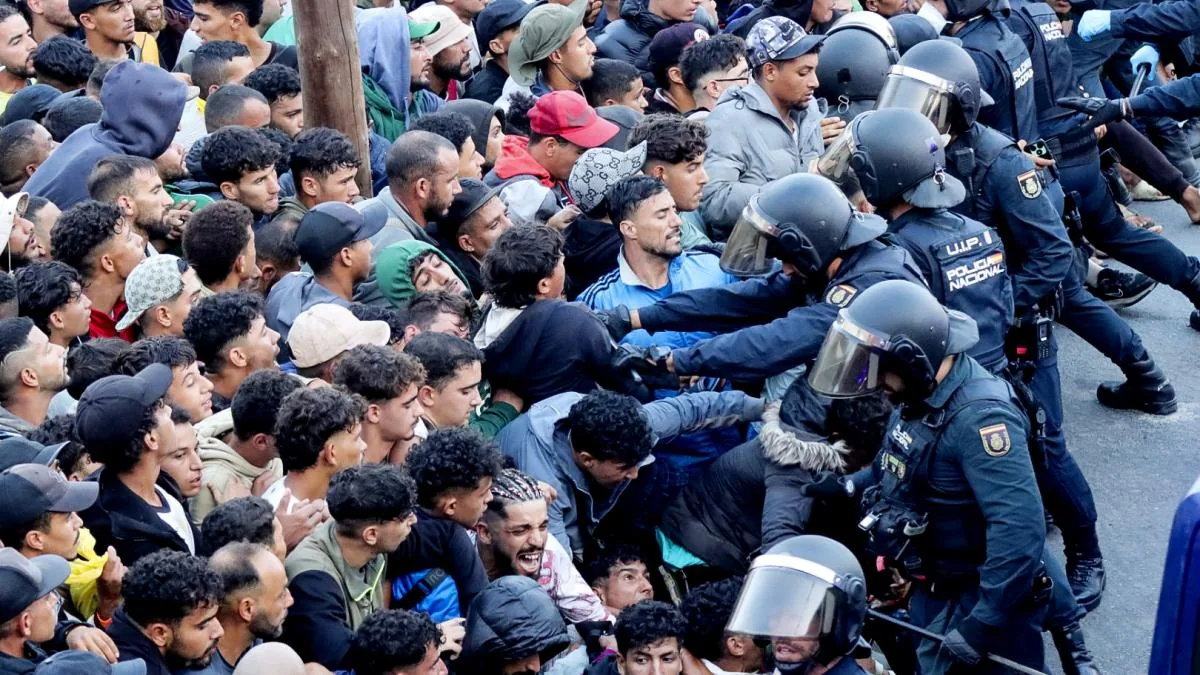
Morocco is demonstrating its control at the border with Spain by blocking the passage of hundreds of sub-Saharan migrants trying to approach the El Tarajal breakwater, through which more than 70,000 people entered two weeks ago with the permissiveness, at that time, of Rabat. Police sources tell La Vanguardia that this time the Alaouite kingdom is cooperating to prevent the new attempt at a mass crossing, encouraged these days on social networks, from succeeding. Ceuta, which has not yet returned to normal, holds its breath fearing that the avalanche will repeat, seeing how the autonomous city woke up this holiday August 15 with an unprecedented police deployment.
Read more “What is it like to travel in a catering container, Donald?”
The Moroccan security forces have reported that they have stopped the passage of hundreds of migrants in a mountainous area on the outskirts of Fnideq, the former Castillejos, southwest of Ceuta, from where the human wave set off on July 30 to bypass, on foot or by swimming, the El Tarajal border breakwater. According to the Moroccan government, their gendarmes have dispersed the migrants, although they remain in the area. Police charges have occurred. Controls are maintained on the main roads leading to Fnideq, especially those coming from Tetouan and Tangier.

The EFE Agency has reported that the urban center of Fnideq is experiencing a calm morning with the presence of a significant police deployment, after a night in which surveillance tasks intensified near the border with the intervention of Moroccan Royal Navy speedboats and drones. These are the same waters where at least 141 people died according to humanitarian organizations. Officially, only 82 bodies from the tragedy have been recovered: all of them in the Spanish zone.
Read more Zelenski puts pressure on Putin and shows his cards to Trump
The same calm in Fnideq has prevailed throughout the morning in Ceuta. About twenty scouts from Lorca (Murcia) crossing the border around 10:30 in the morning gave details of the strong military deployment in the Moroccan area before stepping into Spain, although they say it did not cause them any inconvenience on their way back after two weeks of camping in various Moroccan locations. According to Interior sources, calm also dominates in Melilla, where police presence has also been reinforced.
Read more Five years later, life remains on hold for Afghan women