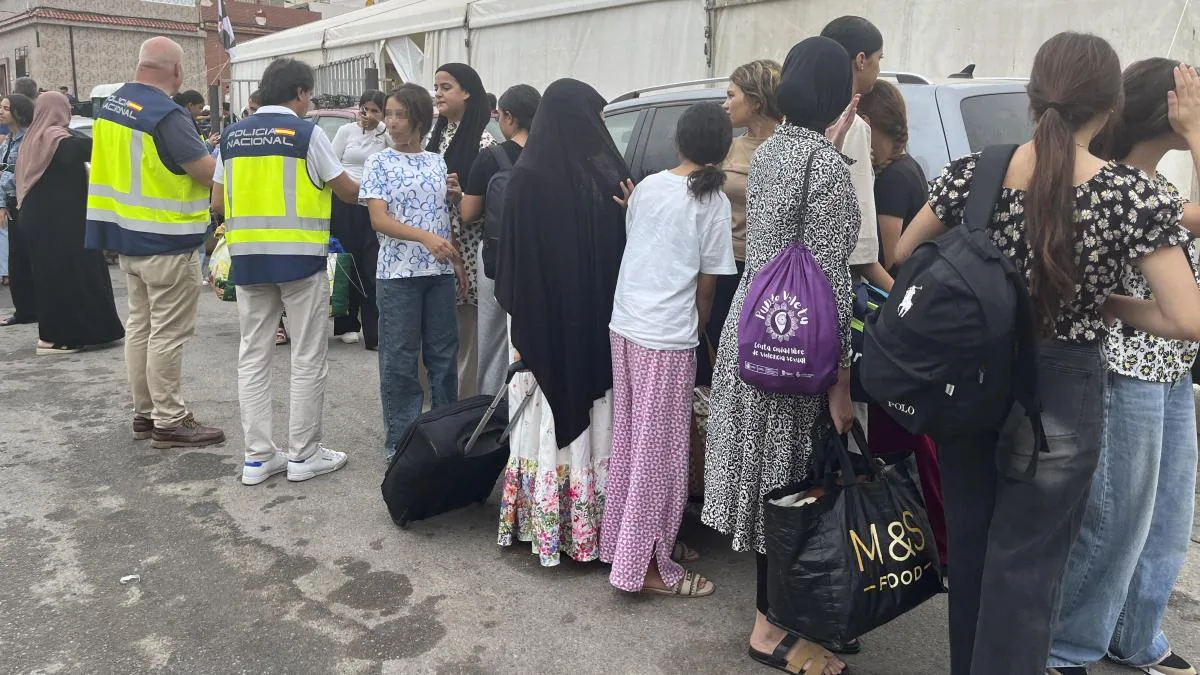
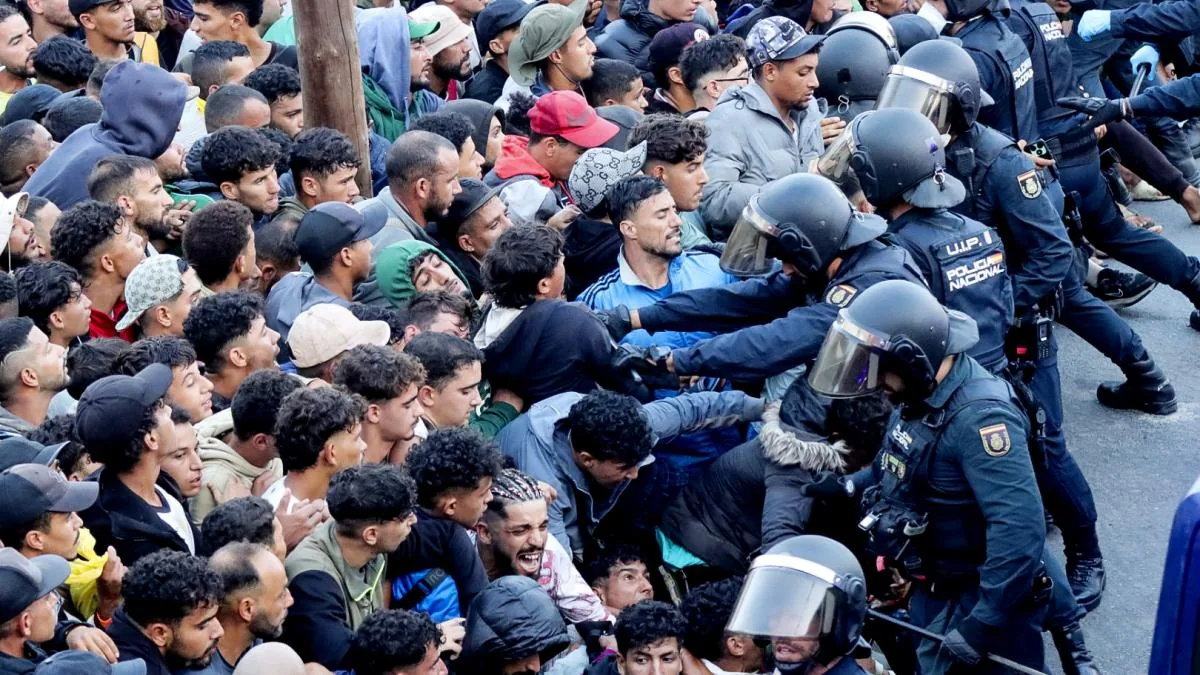
Government and the PP have agreed on the fundamental solution for the 1,527 migrant minors who remain in Ceuta, but they continue to clash over how to manage the meantime. The agreement that the priority solution involves family reunification and return to Morocco, put forward by the Ministers of Foreign Affairs and Justice, has not prevented a new clash between the Executive and the communities governed by the Popular Party, which this Thursday refused to include a specific point for information and debate on the situation of the minors and the autonomous city in the agenda of the next Sectoral Conference on Childhood and Adolescence.
Read more Last night we were able to touch God
The disagreement occurred in the Sectoral Commission on Childhood and Adolescence, the technical body responsible for preparing the plenary meeting, which will be held on August 27. It will then be when the Government will put to a vote the extraordinary credit of 25 million euros intended to care for the unaccompanied migrant minors who remain in Ceuta after the massive entry at the end of July.
Also read
Thursday’s meeting, however, had a deliberately technical profile with which the Executive avoided turning this preparatory procedure into a new confrontation scenario with the PP given the partial harmony achieved in recent days. And for this reason, it has postponed the real showdown to the Sectoral Conference at the end of the month. There, in addition to the vote on the 25 million, Sira Rego will again propose the inclusion of a specific point on the care of minors and the situation in Ceuta. The proposal will have to be voted on by the autonomous communities.
The Commission also did not have the participation of the three communities where the competencies on Childhood are in the hands of Vox. Aragón, Castilla y León, and Extremadura declined to attend, as had already been announced by Santiago Abascal’s party. The rest of the communities were represented through their general directorates of Childhood.
Thursday’s episode thus reflects a political paradox that runs through the entire management of the crisis. Government and PP disagree on the distribution of responsibilities, resources, and management of reception, but share an essential point: neither considers the permanent stay of minors in Ceuta as a definitive solution. The priority, outlined by both parties, is family reunification and return to Morocco, always with the guarantees required by the protection of minors.
Read more Eclipse in Mar Bella
The problem is the time that passes until that return can be materialized. The 1,527 minors who have been registered after the massive entry need accommodation, food, healthcare, schooling, and protection in the meantime. And it is precisely in that “meantime” where the agreement on the final horizon gives way to political dispute. Who should bear the burden, with what resources, and under what formula of shared responsibility among administrations.
The scale of the problem has forced the Government to propose an extraordinary economic response. The 25 million euro credit that will be submitted for consideration at the Sectoral Conference is linked to the care of the minors currently remaining in the autonomous city, after the irregular entry on July 30 and 31 increased pressure on a reception system designed for a much smaller population.
Minister Sira Rego has acknowledged that Ceuta has gone through an “overflow situation,” although she has defended that the situation is being “controlled.” The magnitude of the emergency continues to condition, however, the debate between the Government and the PP, which has shifted from the immediate management of the crisis to the distribution of costs and responsibilities.
Minors outside the protection system
About 4,000 minors remain outside the protection system in Ceuta, pending identification, location, and referral to social services, according to estimates from social entities working on the ground. Save the Children has warned that the figure is only approximate due to the difficulty in locating minors who remain in different parts of the city, some of them without a safe place to sleep or adequate access to basic services. The organization estimates that around 1,500 are already within the protection system, while thousands remain on the street.
The situation is especially concerning due to the presence of unaccompanied minors, some under 16 years old, exposed to risks of violence, exploitation, trafficking, or recruitment by criminal networks. “Each day they remain in this situation increases their exposure to different forms of violence,” warned Jennifer Zuppiroli, migration specialist at Save the Children. Due to the lack of resources, neighborhood associations and social entities are enabling reception spaces and providing food, hygiene products, and other basic goods. The NGO has also alerted to the “very precarious” conditions in some of the emergency spaces set up in Ceuta.
Read more One minute of tears in Tarraco