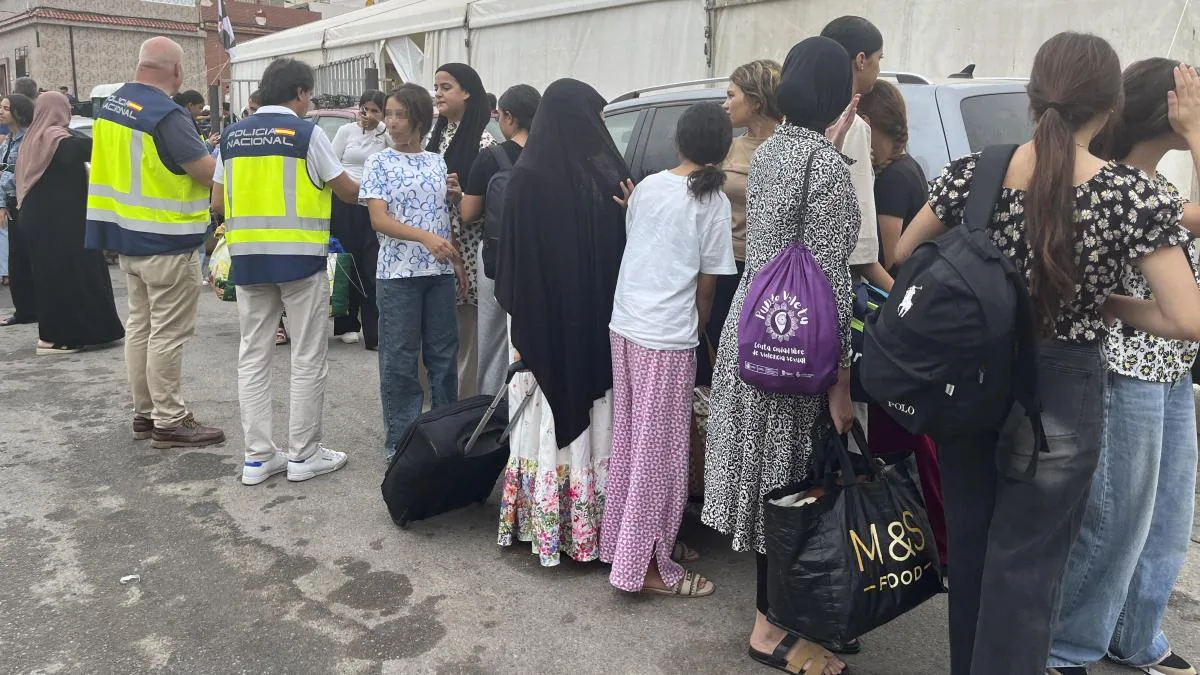
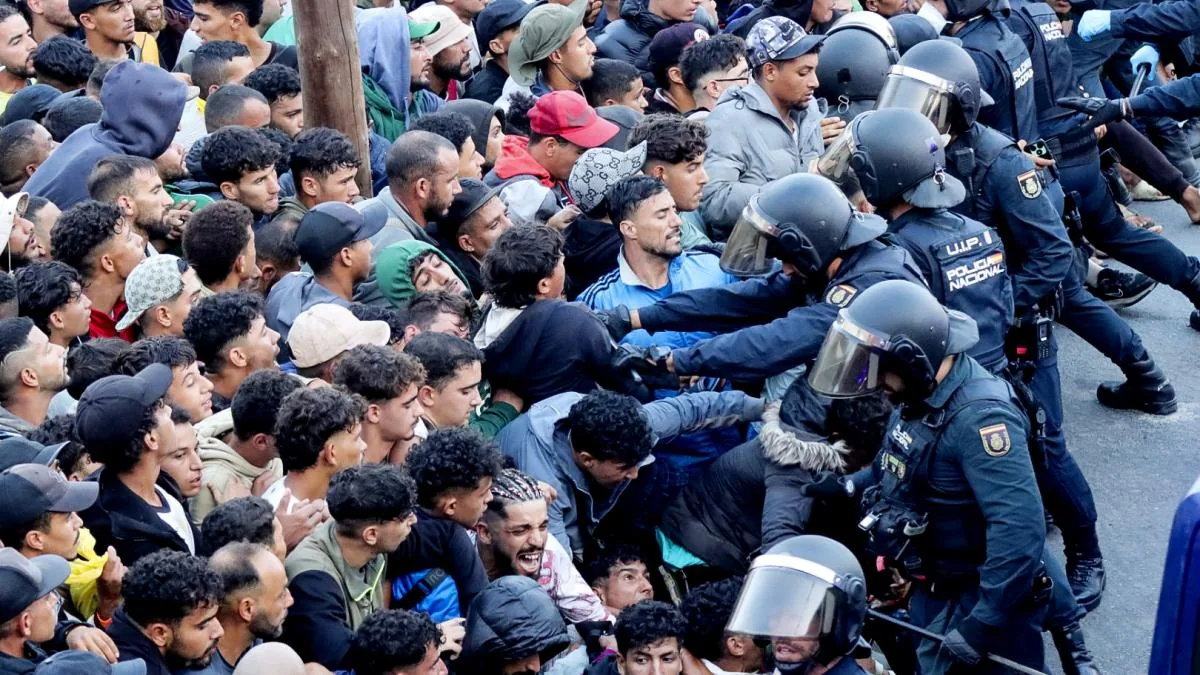
The central government intends to “prioritize,” as Territorial Policy Minister Ángel Víctor Torres assured yesterday, the family reunification of unaccompanied minor migrants who remain in Ceuta after crossing massively into the autonomous city on July 30 and 31. But this route, now prioritized over relocation to other autonomous communities, presents serious difficulties. Among them, the full cooperation of the countries of origin, but also the minor’s willingness to return to the place they fled from. Hence, one open door, which the government hinted at yesterday, is the possibility that these adolescents, mostly Moroccan, be reunited with relatives already living in other parts of Spain or even in other European countries.
Read more Borgen looks at Spain
Rabat seems to agree with this scenario proposed by the Executive. Moroccan Justice Minister Abdellatif Ouahbi demanded yesterday the return of his compatriot children and adolescents who crossed the Ceuta border alone. In statements to the media outlet Hespress, the Justice Minister emphasized that the Alaouite kingdom does not consider the possibility of “abandoning” its minors, whom it will claim through “legal and political” means.
Morocco says it is willing to cooperate
The Justice Minister demands an immediate solution to this problem
The minister added that the strength of relations between Morocco and Spain, as well as the high level of cooperation and coordination achieved between the two countries, requires finding an immediate solution to this problem. Ouahbi revealed a call with his Spanish counterpart, Félix Bolaños, focused on mechanisms to verify the identity of the registered minors before possible reunification. The Ministry of Justice does not confirm this call.
But in Ceuta, they see this route as a genuine utopia, which they distrust. In the rearview mirror, they still see the experience in 2021, when about fifty minors were returned to Morocco out of the 1,200 who were registered as such during the massive entry of 10,000 migrants three months earlier. The Cádiz Court sentenced the former Government delegate in Ceuta and the former first vice president of the autonomous city to nine years of special disqualification from public office for a crime of administrative prevarication. The ruling found that they expedited the repatriation of minors, after receiving directives from the Interior Ministry, without adhering to the -cumbersome- legal procedure.
Read more Albares warns firmly from Ceuta: “Even the last person who entered will be returned”

Before those disqualifications, the Supreme Court had confirmed that the express return of 55 minors was illegal in a ruling full of reproaches to the government for its “absolute disregard” of the Immigration Law. The regulation requires that, before carrying out a return, an individual administrative procedure must be opened for each minor, information about them must be collected, a hearing must be held with the child if they have sufficient maturity, and the intervention of the Public Prosecutor’s Office must be requested. None of this was done in 2021, in the operation led by the Ministry of the Interior. Now, the government says it has learned its lessons, although they acknowledge the difficulty of the procedure.
For the family reunification that the government prioritized yesterday to take place, several conditions must be met: that it is the minor’s will, that there is indeed a family nucleus to return to, and that there is agreement from the destination territory (whether in the country of origin, in Spain, or even in other European Union countries because their relatives are living in those places, as is the case in many instances).
However, “reunification is not possible in most cases,” as government sources acknowledged yesterday afternoon, because in many cases they do not have a family nucleus to return to, and because, as the law establishes, the best interest of the minor prevails and returning to the country of origin is usually not that desire, since there they do not have the possibility of developing a life project in the contexts they are fleeing from.
Read more Colombia intensifies rescues after the 7.4 magnitude earthquake that has already left 164 dead