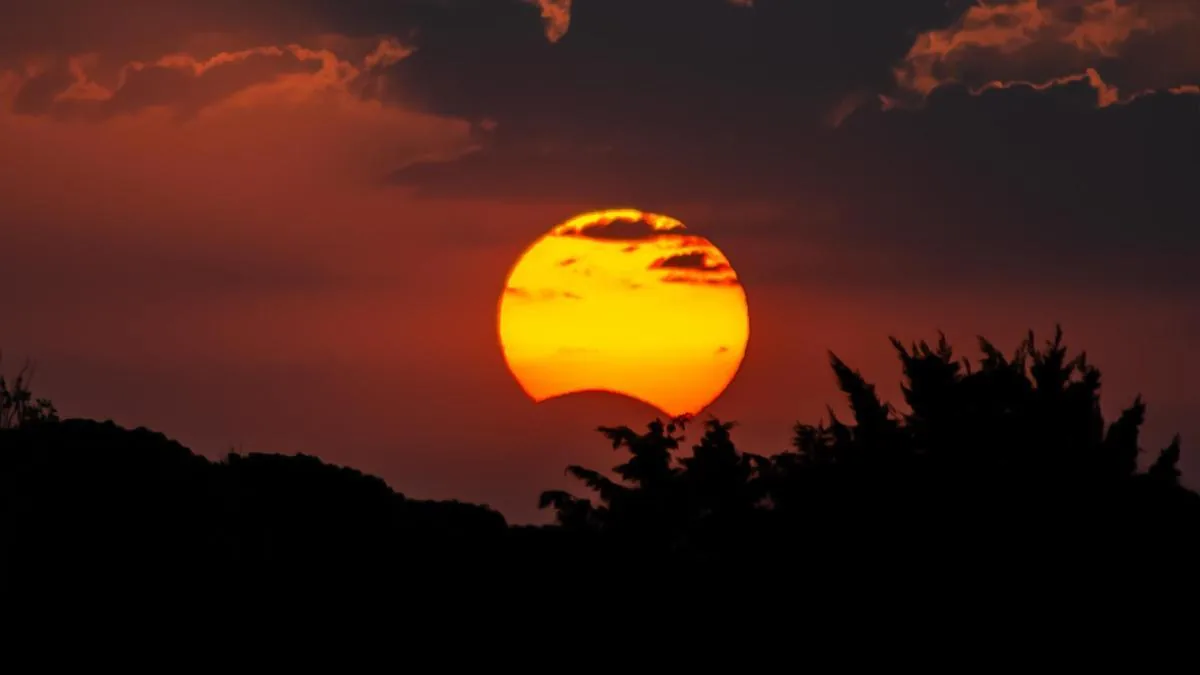
Since the beginning of time, the passion for gazing at the stars has been a constant in the history of humanity. The night sky, with its vast darkness sprinkled with bright lights, not only sparked the curiosity of our ancestors but became the first great canvas of human imagination, a mirror to reflect myths, fears, and hopes. Today, the rise of astrotourism shows that this ancestral passion remains intact.
In a hyperconnected world dominated by the artificial light of screens and large cities, looking at the sky has become a new fascination. Travelers from all over the world plan their getaways according to the astronomical calendar, seeking phenomena such as meteor showers, northern lights, and solar eclipses. Trips focused on witnessing unique astronomical events are gaining momentum.
“It’s a different way to get to know the destination. You decide to visit it for a specific reason, but you take advantage of the rest of the days to explore its culture and gastronomy. It’s the perfect hook to attract visitors to more remote places, as is the case with the total eclipse that has filled accommodations in towns of depopulated Spain,” explains Stefano Arossa, country manager in Spain and Italy for WeRoad, a company specializing in group travel for millennials. Inside and outside our country, astronomical phenomena have their audience. These are some of the most sought-after.
A fleeting twilight
The total eclipse
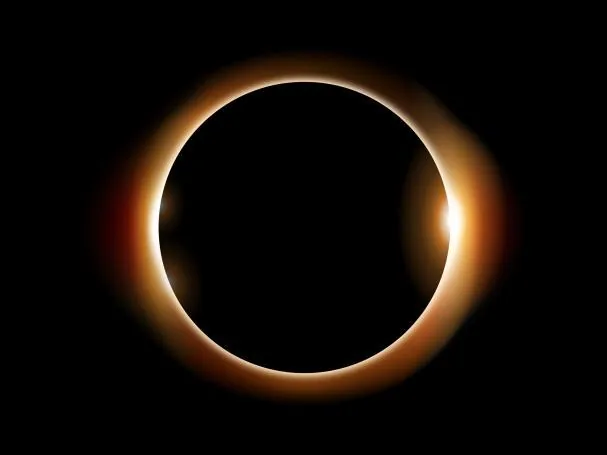
The phenomenon will occur late in the afternoon on August 12. It will then be when the summer sunset turns, for a few minutes, into a fleeting twilight. The first total eclipse visible from the Iberian Peninsula since 1912 is an event no one wants to miss, and traveling to the best viewing spots is the plan for many. The path of totality will cross Spain from west to east and pass through several Spanish provinces from Galicia to the Balearic Islands.
Specifically, A Coruña and the Costa da Morte will be the first points in our country to see the lunar shadow. The cliffs of Fisterra and the surroundings of the Tower of Hercules offer a completely clear line of sight over the Atlantic Ocean to the west, ideal for witnessing the start of totality. The band will cross much of Asturias and pass very close to cities like Avilés and Oviedo, so the elevated areas of the Cantabrian mountain range and the natural observatories on the Asturian coast will provide an unusual perspective of the darkness advancing over the Cantabrian Sea.
Castile and León is another star region to watch the eclipse. Borobia (Soria) and many areas of Burgos have excellent viewing conditions thanks to their clear skies. High mountain spots like the Pyrenean valleys in Huesca are also great options. Similarly, the Gúdar-Javalambre region (Teruel), certified as a Starlight Reserve, is another must-visit destination.
The total eclipse can also be observed from Castellón and the coast of Peñíscola, which lie directly under the central axis of the path of totality. In the Balearic archipelago, various points in western Mallorca, especially the Serra de Tramuntana and the cliffs of Menorca, will see the sun set while completely eclipsed.
Curtains of colors
The northern lights
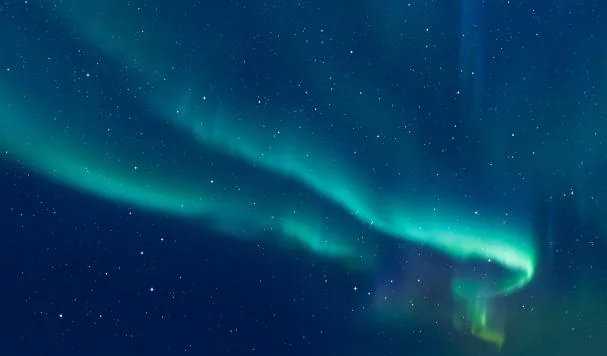
Traveling to destinations within the Arctic Circle, between late August and early April, is the best way to enjoy the nighttime spectacle of the northern lights. The best months to observe this phenomenon, which appears as moving curtains of colored light (green, red, or blue) over the night sky of polar regions, are the periods near the September and March equinoxes, when geomagnetic conditions are usually more favorable for aurora appearances.
Read more Bausen, the small Aranese village that captivates visitors with its ancient love drama
Tromsø (Norway) is known as the “capital of the northern lights” and one of the most accessible bases with direct flights and a great infrastructure for excursions. In Lapland, other destinations like Rovaniemi, Kiruna, or Abisko National Park offer excellent conditions to see them.
The nighttime color show in the Arctic Circle
If you travel to Iceland, besides watching the northern lights, you can admire volcanic landscapes and glaciers. A final must-see place is the Lofoten Islands (Norway), an archipelago above the Arctic Circle with an impressive landscape: seeing the northern lights reflected in the fjord waters, behind pointed mountains and over the iconic red fishing cabins, creates one of the most spectacular photographic scenes in the world.
Meteor shower
The Perseids
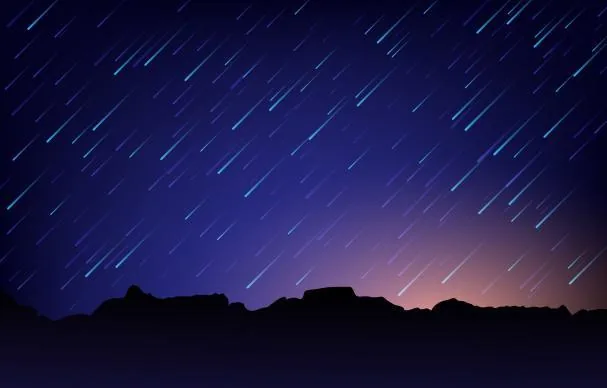
This meteor shower lights up the skies of Spain every summer. Although its activity period extends from mid-July to late August, the Perseids or Tears of Saint Lawrence reach their peak around August 12. Although they can be seen to a greater or lesser extent from almost anywhere in the country, some places allow for a fuller visual enjoyment.
This is the case of Teide National Park (Tenerife), considered one of the best astronomy spots in the world due to its high altitude. The Llano de Ucanca viewpoint offers a spectacular and clear panorama of the night sky. The Montsec mountain range (Lleida) also has exceptional atmospheric and darkness conditions and hosts the famous Montsec Astronomical Park in Àger. Another option is to travel to the Cíes Islands (Pontevedra), the protected Atlantic archipelago within the Atlantic Islands National Park. Isolated from urban lights and with prior reservation at its campsite, its elevated points like Alto del Príncipe offer an observation experience surrounded by the sea. Another privileged place is Sierra Nevada (Granada), thanks to its high altitude and low light pollution.
The Balearic Islands also treasure an idyllic environment to observe the Perseids. Especially Menorca, declared a Starlight Destination thanks to its strict lighting regulations. Its northern beaches allow seeing meteor trails over the Mediterranean. The island of La Palma, in the Canary Islands, is also an exceptional spot to watch them. It was the first Starlight Reserve in Spain and the world. Thanks to the well-known Sky Law, which regulates its light pollution, and the altitude of Roque de los Muchachos, the highest point on the island, you will observe the Tears of Saint Lawrence in one of the purest and clearest skies on the planet.
The light that never ends
The midnight sun
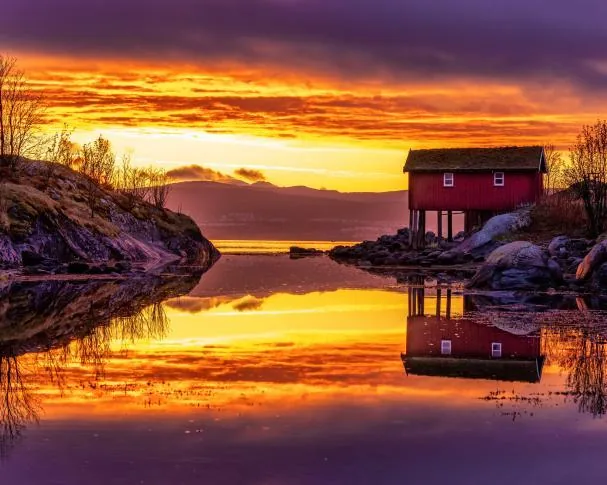
Being illuminated by a sun that lasts 24 hours, never setting below the horizon, is an experience many want to live at least once in their life. The midnight sun occurs only during the polar summer, north and south of the Arctic Circle. That is why you have to travel there to admire this phenomenon caused by the planet’s tilt relative to the plane of its orbit around the sun.
North Cape (Norway) is one of the northernmost points in Europe accessible by road, where the sun does not set from mid-May to late July. Also in Norway, the Svalbard archipelago in the Arctic Ocean has the longest duration of the midnight sun: from mid-April to late August. Places like Grímsey Island in Iceland experience this phenomenon around the solstice. In Kiruna, Lapland, the sun stays above the horizon for several days from June to July. In North America, the phenomenon occurs in Dawson City (Yukon, Canada). During the summer solstice, locals and travelers climb to the top of Midnight Dome to enjoy a 360º panorama of the Yukon River valley, under a magical twilight light that lasts all night.
Read more If there are no books in your house, I won’t stay overnight