This year marks the 150th anniversary of the death of Ildefons Cerdà. The engineer and urban planner laid the foundations of modern Barcelona after the demolition of the walls, a process that lasted for years, from 1854 to 1873. In the General Theory of Urbanization of 1867, Cerdà promoted a humanistic and egalitarian urbanism that was meant to provide the “public happiness” of its inhabitants, regardless of their origin or social class. In addition to avoiding differences between neighborhoods, conditions of hygiene, healthiness, and green areas held a prominent place.
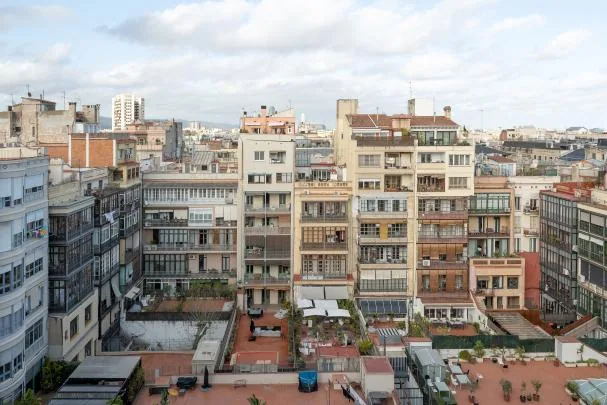
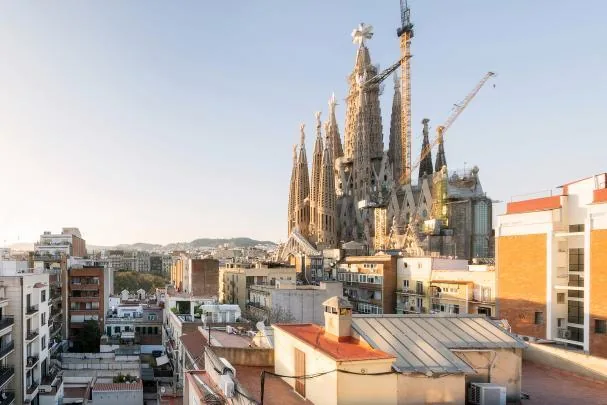
As a result, the engineer designed an urban grid layout with its characteristic interior blocks. Although initially the original plan contemplated the construction of the blocks on two of their sides and dedicating their interiors to garden areas, another reality prevailed and the project was distorted by a construction fever, leaving a very dense Eixample with scarce green areas. It was not until the return of democratic city councils, in the 1980s, that the municipal plan to recover these interiors as garden spaces and open them to the public was realized with its first opening, the Torre de les Aigües, between the streets Roger de Llúria, Roger de Flor, Consell de Cent, and Diputació.
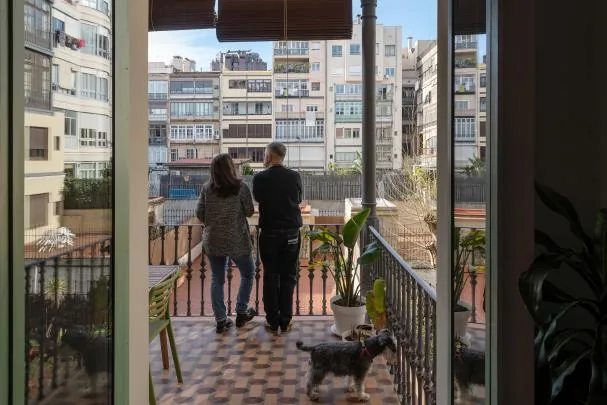
Since then, the City Council has opened nearly fifty as public parks, although most – it is estimated that there are 423 interior blocks in the Eixample district – have varied uses: from parking lots, schools, factories, or neighbors’ courtyards with garden areas with palm trees and clotheslines. The architectural uniqueness of the Eixample’s interior blocks and their neighborhood microcosm have been highlighted with the photographic and documentary project Ànima interior within the framework of the world capital of architecture.
Photographer Bea Schulze, specialized in architecture and interior design, has set out to capture the essence of this hidden urban heritage with her camera in collaboration with the Rambla de Catalunya merchants’ association. “The Eixample is made up of these blocks with many stories and details inside, and if you don’t live in the neighborhood or you’re not invited to a dinner, you don’t see them and you’re not really aware. Many people also tell me that the interior block is ugly. I don’t talk about what’s beautiful or ugly, I just want to really see what’s there. Everything has value. You have to learn to see them with kind eyes and share it,” Schulze emphasizes.
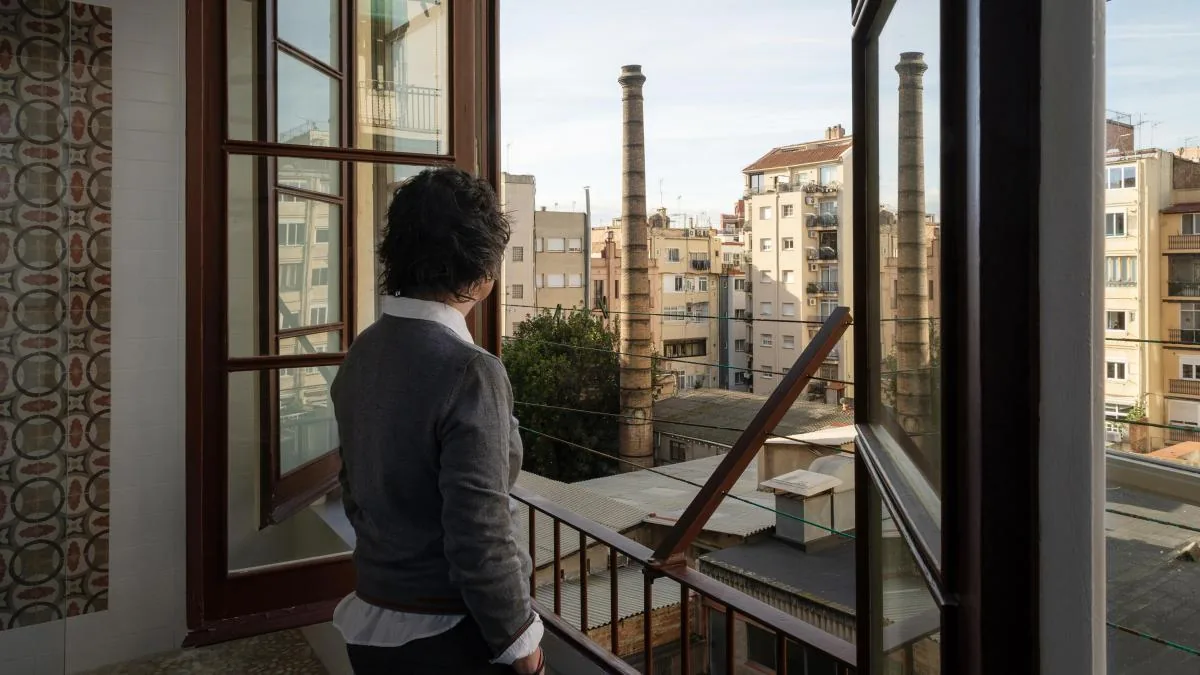
The photographer has also documented the daily life of the inhabitants of the interior blocks. In the images, each participant is portrayed in their home with views of the interior block and their testimony is collected. “I was clear that I wanted to do a participatory project and that the neighbor would also be a spokesperson for their story of the place where they live. I have found wonderful stories,” explains the photographer, originally from Venezuela and who moved to Barcelona 18 years ago.
Among these stories are those of different generations who have lived in the same apartment or the current inhabitants of the former military housing on Vilamarí street. Or the story of when bombs fell during the Civil War and objects from the houses – from chairs to clocks – flew into the courtyards. One testimony recalls that her grandfather decided to put names on some objects in case he had to pick them up from the street. For this reason, she keeps a clock from her grandfather with his name at home.
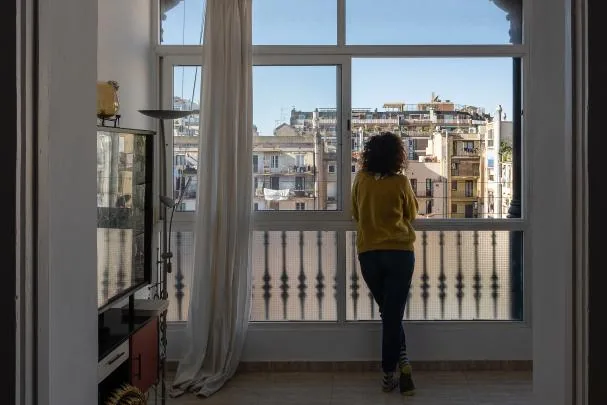
Although the project was launched in January with a communication campaign on social media and by posting flyers to find volunteers, this initiative has been maturing and developing for much longer. The idea was born 14 years ago, when Schulze was studying photography at the Institut d’Estudis Fotogràfics de Catalunya for a landscape and environment course. The first time she saw an interior courtyard she was fascinated: “You look outside but you’re really looking inside. It was a reflection that always stayed with me, not only from an architectural point of view. You also see many details that tell you how people live.”
The photographs will be displayed from May 15 in an exhibition on Rambla de Catalunya with Consell de Cent
The merchants’ association found the project interesting and did not hesitate to collaborate with Schulze. “It’s like a tribute to the Eixample, to its neighbors and to this heritage that, due to the neighborhood’s own physiognomy, remains somewhat hidden, and when you discover it there is always a kind of surprise,” says Javier López, manager of the Rambla de Catalunya merchants’ association.
The result can be seen in an exhibition starting the afternoon of May 15 on the street for a month, on Rambla de Catalunya at the intersection with Consell de Cent, with large-format panels featuring a selection of images and testimonies from the neighbors. So far, Schulze has photographed about a hundred courtyards although the Ànima Interior project does not end with this exhibition. The long-term goal is to capture all the interior blocks of the Eixample.