The White House and the Pentagon consider that Iran’s attacks on commercial and military ships in the Strait of Hormuz, as well as the bombings on the territory of the United Arab Emirates, do not constitute a violation of the fragile ceasefire, in effect since April 8.
Read more The Escribano family sells their 14% in Indra and withdraws from the company’s board
The President of the United States, Donald Trump, has not wanted to reveal what level of violence he is willing to allow from Tehran to interpret that the truce has been violated: “You will find out, I will let you know,” he said in an address from the Oval Office.
The president has maintained a triumphant discourse despite the failure of his operation to reopen Hormuz and has insisted on the idea that Iran has been “left without military capabilities,” its entire naval fleet has been “destroyed,” and the economy has been “crushed” after two months of war, so now all they have left is to raise the “white flag.”
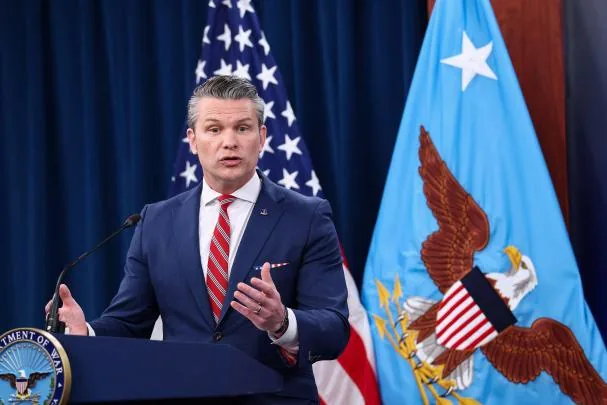
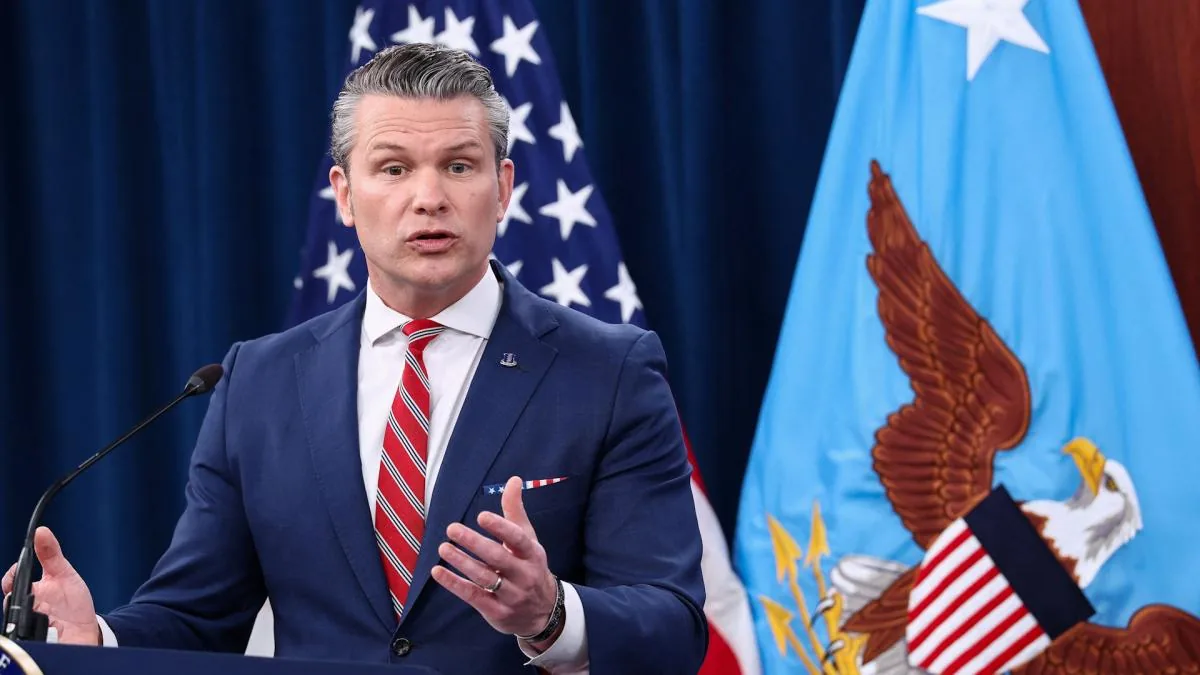
Hours earlier, the United States Secretary of Defense, Pete Hegseth, emphasized that the so-called Freedom Project, the Pentagon’s plan to “guide” stranded ships through the Strait of Hormuz, is different from Operation Epic Fury, the joint military campaign with Israel in Iran. This means that despite yesterday’s cross attacks in the maritime route, Washington does not consider the ceasefire over at the moment.
That, he boasted, allows the White House not to seek Congressional authorization, something it should have done after 60 days of offensive, but as long as the truce lasts “the clock is stopped,” Hegseth said. “I want to be clear: this operation (in Hormuz) is separate and distinct from Operation Epic Fury,” said the Pentagon chief, referring to its aggression on Iranian territory. “The Freedom Project is defensive in nature, limited in scope and temporary in duration, with a single mission: to protect innocent commercial transport from Iranian aggression.”
Also read
Thus, U.S. forces “will not need to enter Iranian waters or airspace. It is not necessary. We are not seeking a confrontation,” Hegseth added. “But Iran cannot be allowed to block innocent countries and their goods in an international maritime route.” The mission is currently focusing on Omani territorial waters, where the Pentagon says it has already removed mines placed by Tehran and established a “safe corridor.”
Hegseth celebrated that this Monday, on the first day of the U.S. mission in Hormuz, two U.S. commercial ships were able to transit the strait “safely,” escorted by two Navy destroyers, “demonstrating that the route is clear.” Thus, he took for granted that the U.S. has already regained control of Hormuz, despite the fact that before the war about 120 ships crossed the strait daily.
This Tuesday, thousands of ships remain trapped and reluctant to cross the strait without Tehran’s authorization. Specifically, “there are more than 22,500 sailors aboard more than 1,550 commercial ships trapped in the Persian Gulf, unable to transit,” said Dan Caine, Joint Chiefs of Staff chief, also present at the press conference.
“For too long, Iran has been harassing ships, firing on civilian tankers of all nations and trying to impose a toll system. Iran’s plan, a form of international extortion, is unacceptable. That ends with the Freedom Project,” Hegseth celebrated, stating that this plan is a “gift” from the U.S. to the world.
Read more Robles: “Spain says no to illegal offensive wars that have no international umbrella”
However, he did not recall that the Strait of Hormuz was open to international maritime trade before February 28, when Trump ordered the start of the war on Iran. The Islamic Revolutionary Guard, for its part, has warned ships that “the only safe passage route through the strait is the corridor previously announced by Iran” and any deviation “is unsafe and will be responded to with forceful actions.”
Pete Hegseth, U.S. Secretary of Defense
“The ceasefire is not over. The president will make a decision if the escalation constitutes a violation of the truce”
By the time the U.S. operation ends, the Pentagon chief has asked the world to “step forward at the right time,” an apparent call to European allies, such as France or the United Kingdom, who have stated they could join the operation to reopen Hormuz once hostilities have ended, as well as China, which the U.S. holds responsible as the second world power.
General Caine announced that since the ceasefire came into effect just under a month ago, Iran has attacked U.S. forces on more than ten occasions, actions he considers “below the threshold to restart large-scale combat operations at this time.”
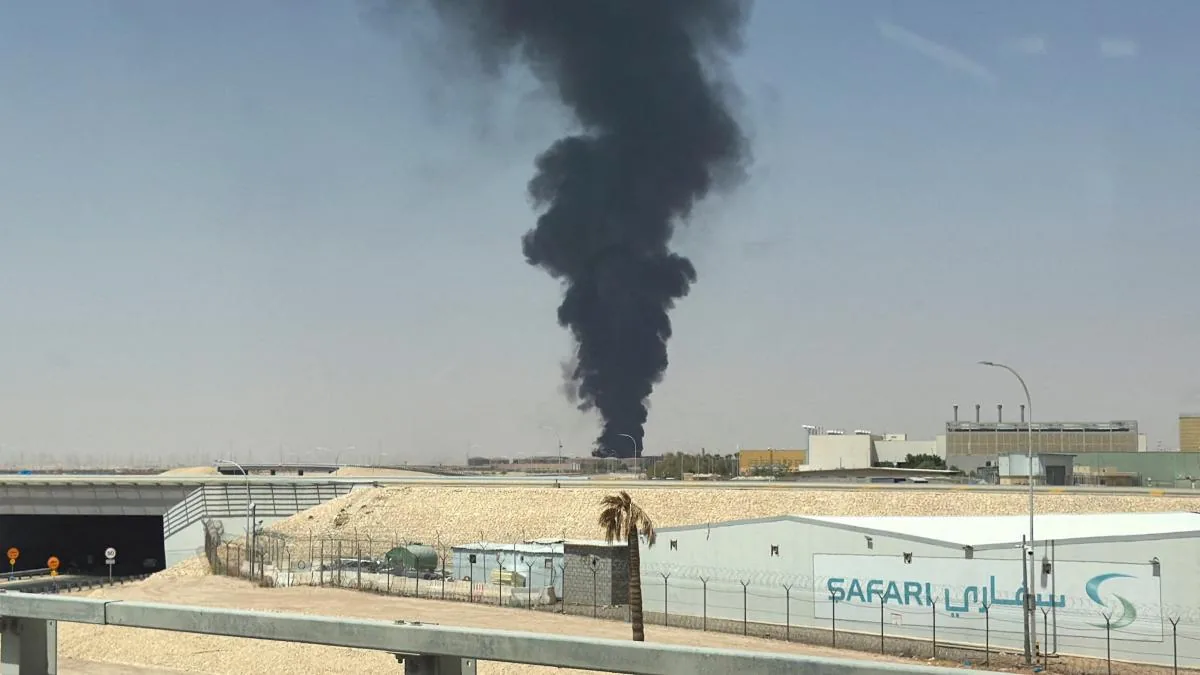
Along the same lines, Hegseth insisted throughout the press conference that “the ceasefire is not over,” despite Iran attacking three ships in the strait yesterday, flying the flags of the U.S., South Korea, and the UAE, as well as an oil complex in the United Arab Emirates in Fujairah, an important Emirati city in the Gulf of Oman, near the strait.
This Tuesday, new attacks have been recorded on Emirati territory. Tehran has denied responsibility and warned that any “accusation and victim role” by the Emirates will only raise tensions in the Persian Gulf region.
The Pentagon assures that Iran has attacked U.S. targets more than ten times since the ceasefire
For its part, Washington claims to have sunk seven Iranian fast-deployment boats that “did not heed our warnings,” announced Secretary of State Marco Rubio. “They are not warships, but they still approach ships quickly, try to surround them, try to attack them. We will not allow it,” he added.
“This is a defensive operation. And that means something very simple: we will not fire unless fired upon first,” he insisted. These words tone down the threat Trump made yesterday during an interview with Fox News, where he said he would “wipe Iran off the face of the earth” if it attacked commercial or U.S. Navy ships participating in the operation in Hormuz.
Read more A Valencian oceanographer travels aboard the cruise ship experiencing a hantavirus outbreak