Ukraine needs Europe to continue resisting Russia’s aggression. It is an obvious and recognized fact. But what if it were also the other way around? If Kyiv has been able for more than four years to stand up to the Russian invasion, ordered by Russian President Vladimir Putin in February 2022 to try to abort its approach to the EU and NATO, it has been thanks to Western economic and military aid. And now that Donald Trump has decided to disengage from the almost exclusively European matter. If that is true, it is also becoming evident that Ukraine can be a key asset in the future collective defense of Europe.
Read more Why has Trump drowned in Hormuz?
It is no longer just about Ukraine being the first European trench against Russia’s neo-tsarist expansionism. With the largest army on the continent after Russia’s at the moment, made up of about 800,000 troops and seasoned on the battlefield with the new modalities of war, and with an arms industry at the technological forefront—especially in drone manufacturing—Ukraine could become a crucial partner for a European Union forced to seek a new security architecture of its own in view of the progressive disintegration of the Atlantic Alliance.
NATO will hold a summit on July 7 and 8 in the Turkish capital, Ankara, which is expected to have existential consequences. After announcing the withdrawal of 5,000 American soldiers from Germany and threatening not to deploy another 5,000 planned in Poland—a decision reversed within 24 hours—the United States is preparing to propose a substantial reduction of its military presence in Europe. This was announced last week in Brussels by Secretary of State Marco Rubio, who also stated that President Trump plans to express his strong dissatisfaction with his European allies (who have refused to follow him in the Iran war).
Ukraine will never join NATO, assuming it still exists in a few years. The idea, promoted at the time by the U.S. despite European reluctance, has now been discarded by Washington, and its exclusion from the Alliance is a non-negotiable condition for Moscow in any potential peace negotiation. But Ukraine has persistently knocked on the EU’s door. Beyond other considerations—geopolitical, economic, even moral—its military contribution now carries specific weight in favoring an acceleration of the accession process.
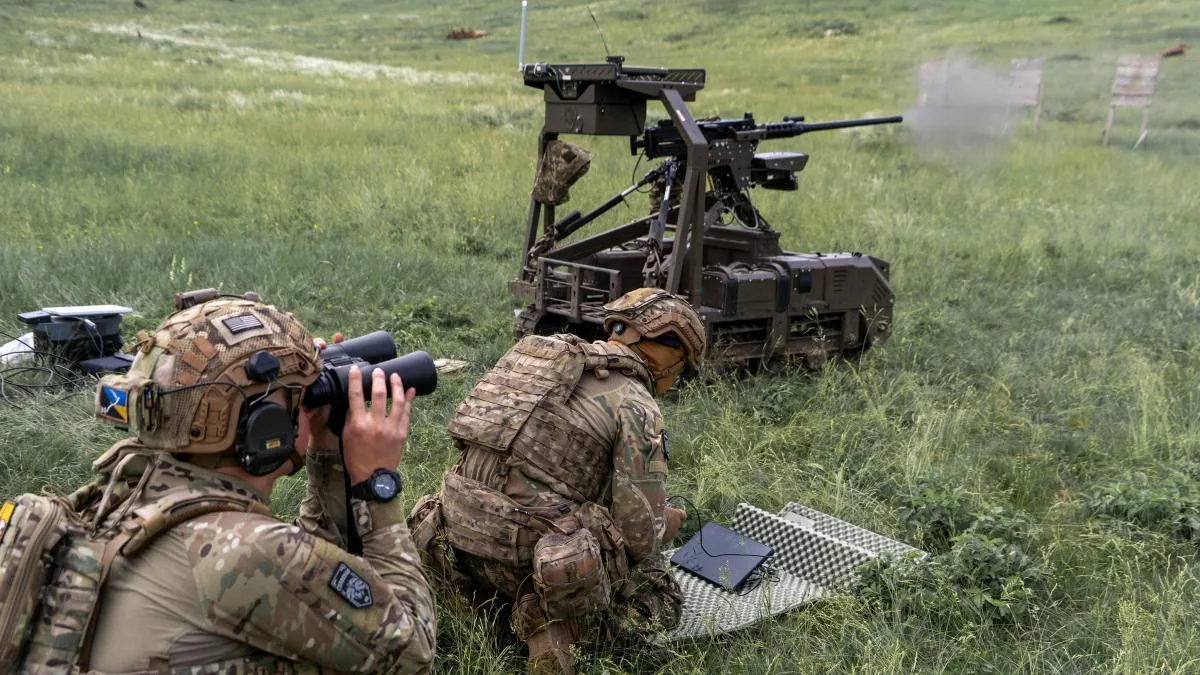
In four years of war, Ukraine has managed to reinvent itself as a modern military industrial power. During these years, a rich ecosystem has emerged, made up of around a thousand tech companies, mostly private, innovative, and extremely flexible, quickly adapting to the changing needs of the army on the front. Besides missiles or ammunition, Ukrainians have made a leap in the mass production of unmanned aerial vehicles (UAVs) or drones—which also include ground and maritime types—whose use is proving decisive in the war. While in 2022 it produced a few thousand per year, today it exceeds 4 million units.
“Ukraine’s current production capacity exceeds its own needs, even amid a defensive war,” states a recent report from the Bank of Finland. So much so that it has begun exporting and plans the joint construction of production centers in Northern Europe (in addition to offering advice to NATO armies). A fundamental role in this takeoff has been played by the government platform Brave 1, which channels collaboration between the government, the army, and companies. According to data from European Security & Defence, Ukraine’s annual defense production currently reaches 35 billion dollars (about 29.9 billion euros).
The EU recognized Ukraine as an official candidate for accession already in 2022, as a political response to the Russian invasion, and in 2024 approved starting negotiations (also with another former Soviet republic, Moldova). But since then, things have not progressed much. Kyiv argues geopolitical reasons to demand accelerated accession, but until now the veto of former Hungarian Prime Minister—and great supporter of Moscow’s interests in Europe—Viktor Orbán had prevented progress. The election of Peter Magyar as the new head of government, who met yesterday in Brussels with European Commission President Ursula von der Leyen, changes the equation and, despite Budapest’s reservations, it is expected that at the European Council in June, the 27 will give the green light to the effective start of negotiations.
Read more A conflict with echoes of the independentist ‘procés’
In this context, German Chancellor Friedrich Merz proposed a middle path days ago. Aware that EU accession processes are complex and can take many years, he proposed granting Ukraine a special status as an “associated member,” allowing it—while the process advances—to participate in European councils and EU ministerial meetings, though without voting rights. Ukrainian President Volodymyr Zelensky, who has been pushing for an express accession by 2027, has rejected this path for fear of being stuck halfway forever.
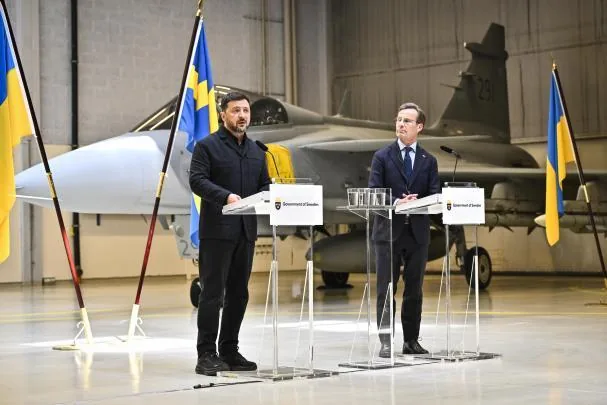
While the pace of its EU incorporation is discussed, Ukraine is negotiating bilateral defense cooperation agreements—basically for the production and export of drones—with different European countries: Germany, Spain, Italy, Norway, the Netherlands, Sweden… Its advanced technology in new combat systems, which are changing the face of war, is now one of its main assets.
Also read
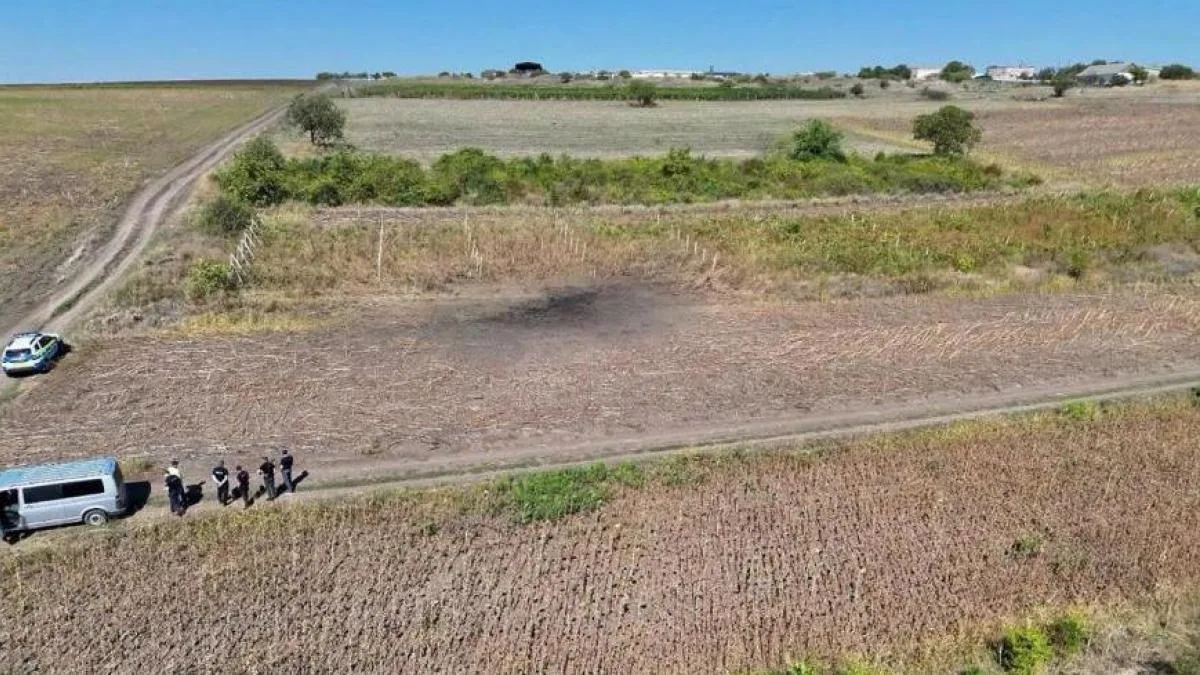
Drones up and down. The war in Ukraine continues to cause collateral damage in some European countries on the eastern flank. The Baltic countries were the first affected by drone crashes on their territory (supposedly launched by Ukraine against Russia and diverted by the Russians). Ursula von der Leyen met on Tuesday with the prime ministers of Estonia, Latvia, and Lithuania to address the situation and show EU solidarity. On the night from Thursday to Friday, it was Romania’s turn, where a Russian drone hit a residential building in the city of Galati—close to the border with Moldova and Ukraine—causing two injuries. NATO Secretary General Mark Rutte accused Russia of “reckless behavior,” while Russian President Vladimir Putin challenged Bucharest to prove with evidence that the drone was Russian.
Moscow threatens Armenia. Approaching the EU does not come cheap for the former Soviet republics that gained independence in the early 90s. If not, just ask Ukraine. The latest to make a move is Armenia, which felt abandoned by Russia in its war with Azerbaijan. This turn has not pleased Moscow at all, as shown in the recent bilateral summit featuring President Nikol Pashinyan with António Costa and Ursula von der Leyen earlier this month. After temporarily banning the import of flowers and mineral water from Armenia, the Kremlin informed the Armenian government by letter that it will suspend oil and gas supplies if the Caucasian country continues its approach to the EU. Yerevan depends energetically on Russia, from which it buys 85% of the natural gas it consumes.
‘Made in Europe’ satellites. Russia has paid dearly for its dependence on satellite communications through Elon Musk’s Starlink network in the war in Ukraine. The American tech magnate’s decision to disconnect Russian troops is one of the reasons explaining why the course of the fighting is turning in favor of the Ukrainians. Europe is fully aware of this and the need to ensure the EU’s strategic independence in telecommunications. This has been proposed by the European Commission, which intends to reserve satellite mobile services for governmental and military communications to European companies. The initiative coincides with the upcoming renewal of these service contracts, currently held by the American companies Viasat and EchoStar, whose licenses will expire in May 2027.
Read more No one dares to take on the motion