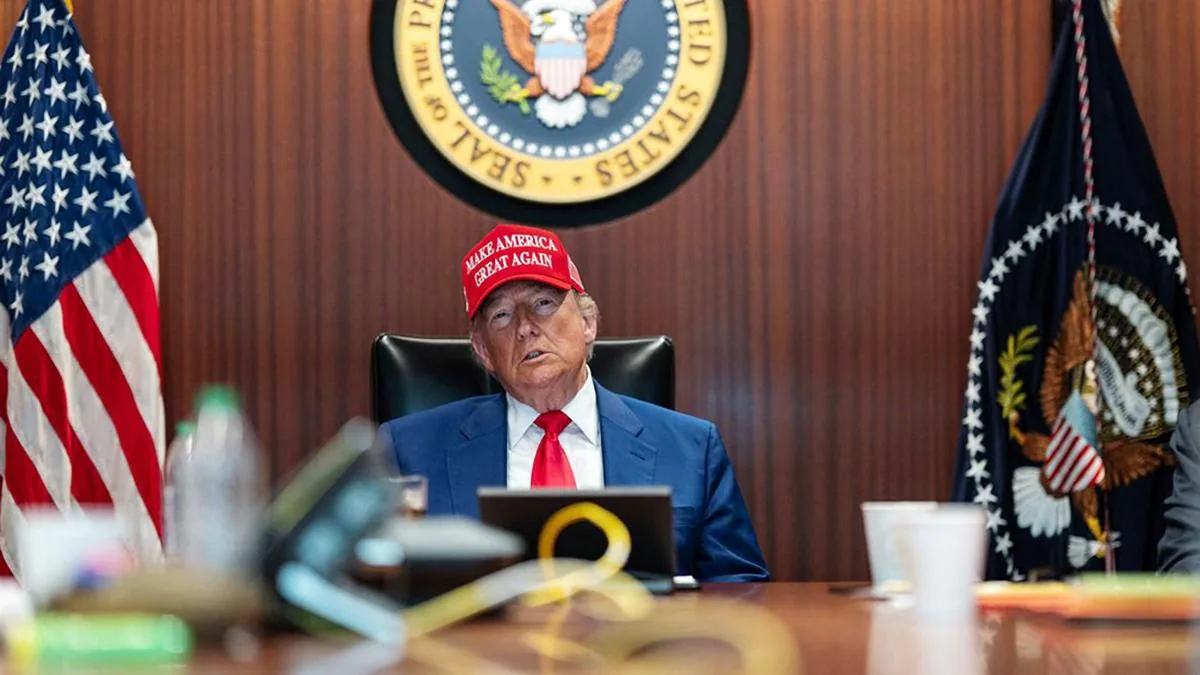
Donald Trump is meeting in the White House ‘situation room’ to make a “final determination” on the conflict with Iran. According to his explanation on his Truth Social account, Iran must commit to not building the nuclear weapon, to opening the Strait of Hormuz in both directions, and to demining its waters.
These demands are in line with the memorandum of understanding on which both parties have been working in recent days and which has been described by senior White House officials – both Marco Rubio and J.D. Vance – as a point “very close” to a final agreement. That preliminary agreement, as they would have called it, establishes the opening of the Strait of Hormuz, the extension of the ceasefire for sixty days, and the subsequent discussion of the Iranian nuclear issue.
In his message, Trump commits to lifting the blockade on Iranian ports. This issue, and the vagueness of his requests, raise skepticism among analysts, but also indicate a rush by the president, who does not mention the Iranian missile program at any time. Likewise, the references to renouncing the nuclear weapon are not supported by a concrete request on such an important issue.
Tehran remains silent on the matter. Sources close to the Persian country indicate that the Iranian regime is dissatisfied with some points of that preliminary agreement. But they are waiting to see if Trump’s message means entering a more measured phase of the talks: the U.S. favors negotiating everything jointly, while Iran wants to advance point by point.
Read more Putin and his allies approve a declaration against Armenia to choose between them or the EU
The loser of an agreement with so many vaguenesses would be Israel
If the United States and Iran were to move toward such an agreement, the loser would be Israel, which is pushing the machine as hard as possible to avoid a pact that would leave the Iranian regime intact and with a greater strategic awareness of its power (thanks to the Strait of Hormuz).
Trump’s announcement also reflects the president’s attempts to end “the war,” a blot that hangs over the November midterm elections and the concern about the existence of a significant part of the Republican base that rejects U.S. participation in the conflict.
Read more Israel breaks with Guterres and his office over its inclusion in the list of sexual aggressors